

It was our last day in the Konkan, and we had just three more things to cross off our bucket list. We had been receiving frantic phone calls from home, warning us that Mumbai was lashed with heavy rains and to be careful while walking around.
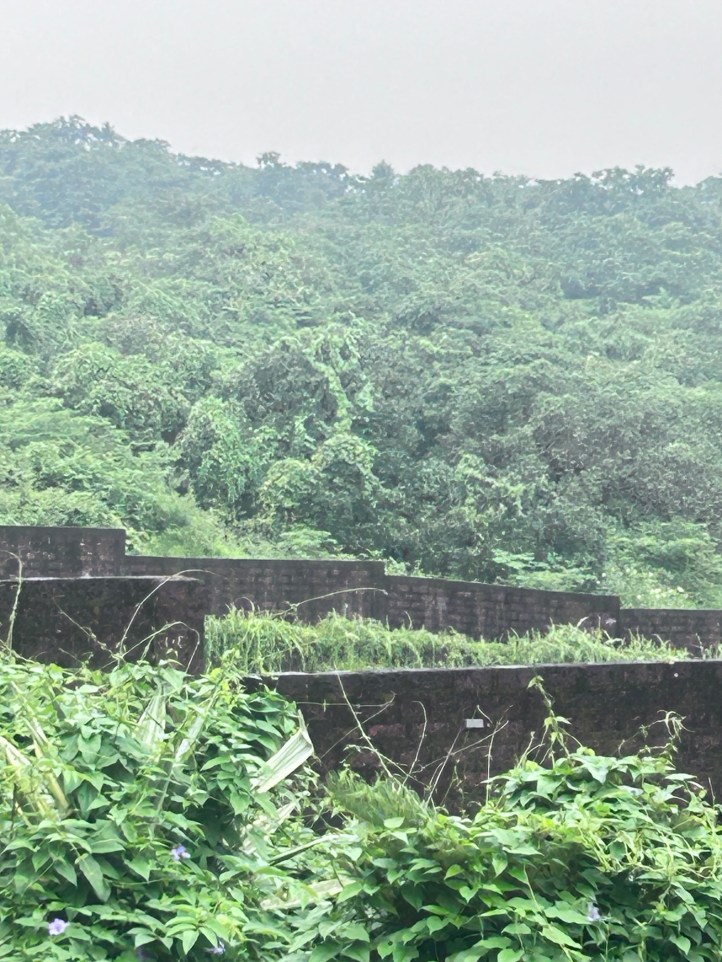
But as we were sipping tea on the verandah, I saw a Ganesha standing out amongst the green in the distance.
I knew it would be a good day despite the clouds hanging low and the occasional drop of rain plopping down.
Anna Shetty had once gone to Ganpatipule with her gang of medical students and they had had such a good time, that I was curious to find out for myself what magic this temple held. Besides, the name itself has a nice ring to it.
The Ganesh Temple
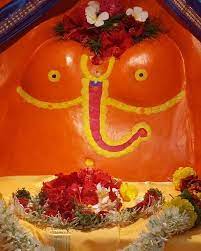
Ganpatipule is famous for its beach temple of a self generated or swayambhu idol of the elephant-headed god Ganesh. This idol doesn’t have the usual flapping ears normally seen on a Ganesh but it mesmerises you with its serene expression. The bulging eyes and curved trunk somehow make it seem that Lord Ganesh is having a good chuckle.
It had started drizzling by the time we reached the temple so we had to be careful as we made our way inside. We bought our trays of flowers and incense from one of the numerous vendors before going in.
The Ganpati festival was just over yet the festive air still lingered despite the fact that it was part of Pitrupaksh. (the fifteen days when Hindus offer prayers to their ancestors). The temple was relatively empty and we got a peaceful darshan. The priest said a special prayer as he offered our flowers to the idol. And while going out I whispered a special wish in the mouse’s ear.
Unfotunately it was really raining hard by the time we left the temple and couldnt go to the beach to see how it looked from afar. In any case, the awning erected for the waterproofing made it quite difficult to see the temple itself.
An unexpected literary treasure
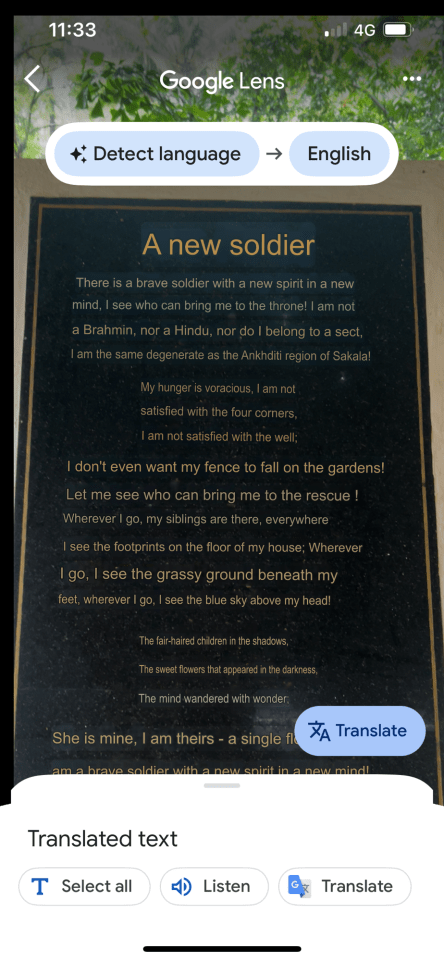
I’m ashamed to admit that neither Mrs B nor I know much about Marathi literature. So a visit to acclaimed Marathi poet Krishnaji Keshav Damle’s ancestral home that has been converted to a memorial, wasn’t really on our itinerary. But when we went to the restaurant at Malgund, we found it still closed. The manager advised us to go further ahead and visit the memorial instead of sitting in the car for over half an hour waiting for the restaurant to open.
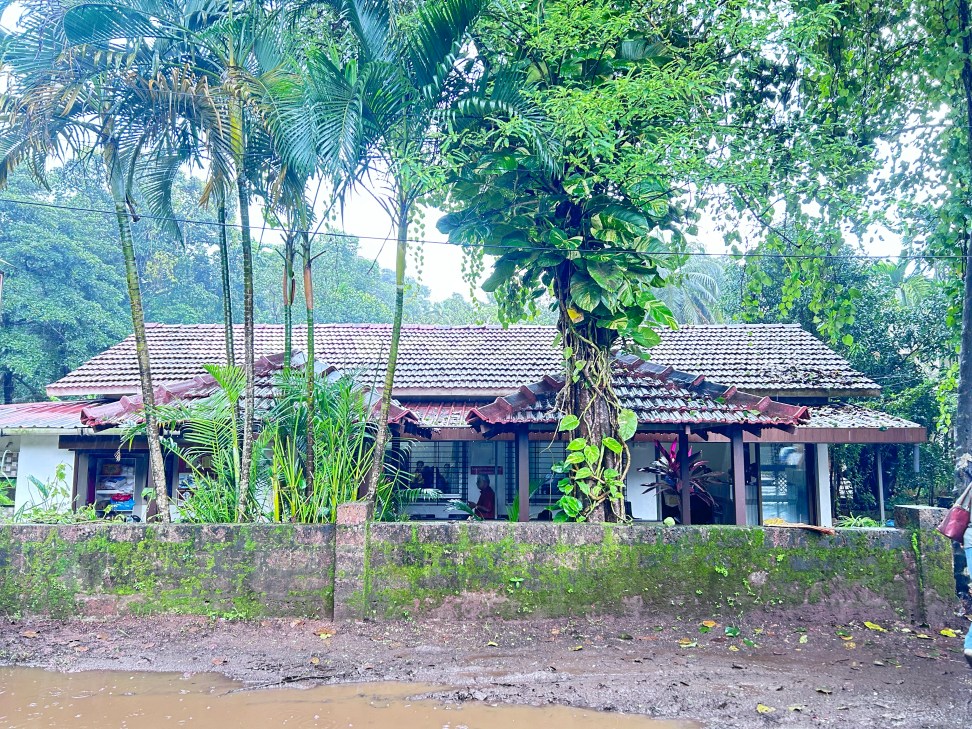
And I’m glad we did because Keshavsut ( meaning son of Keshav) the pen name under which he wrote his poems was one of the major poets of Modern Marathi literature, breaking away from the tradition of writing poems in praise of the gods or mythology. Since it was raining, we didn’t go inside ( there was a huge puddle near the entrance ) and I just took a few pictures of his house.
For more detailed information please visit Brown Wildflower’s blog at https://www.thebrownwildflower.com/kavi-keshavsut-smarak-memorial-malgund-ratnagiri/
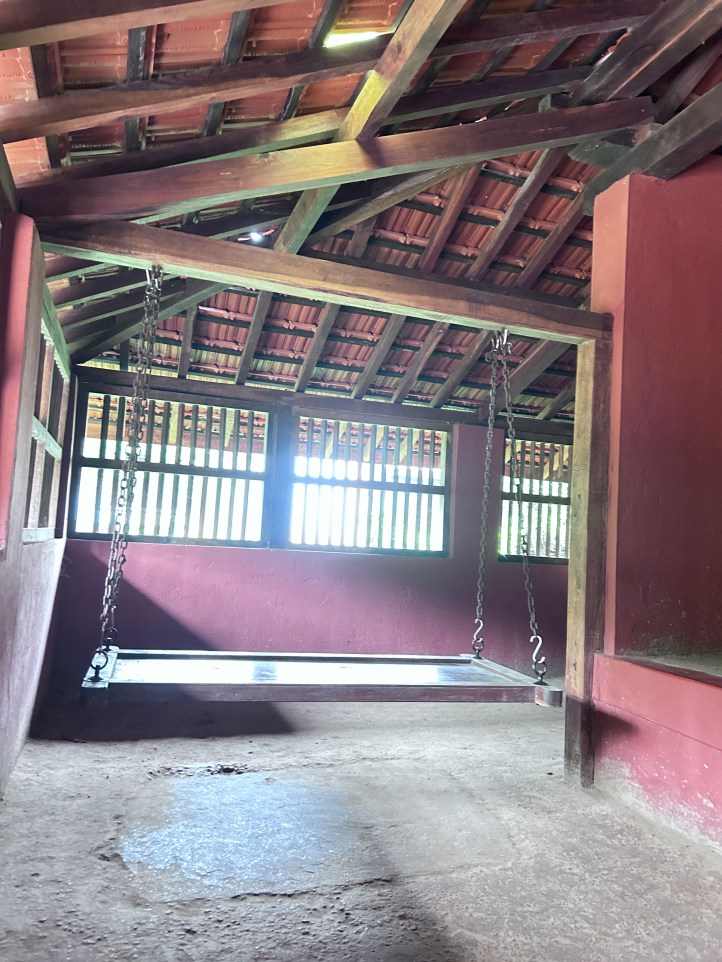
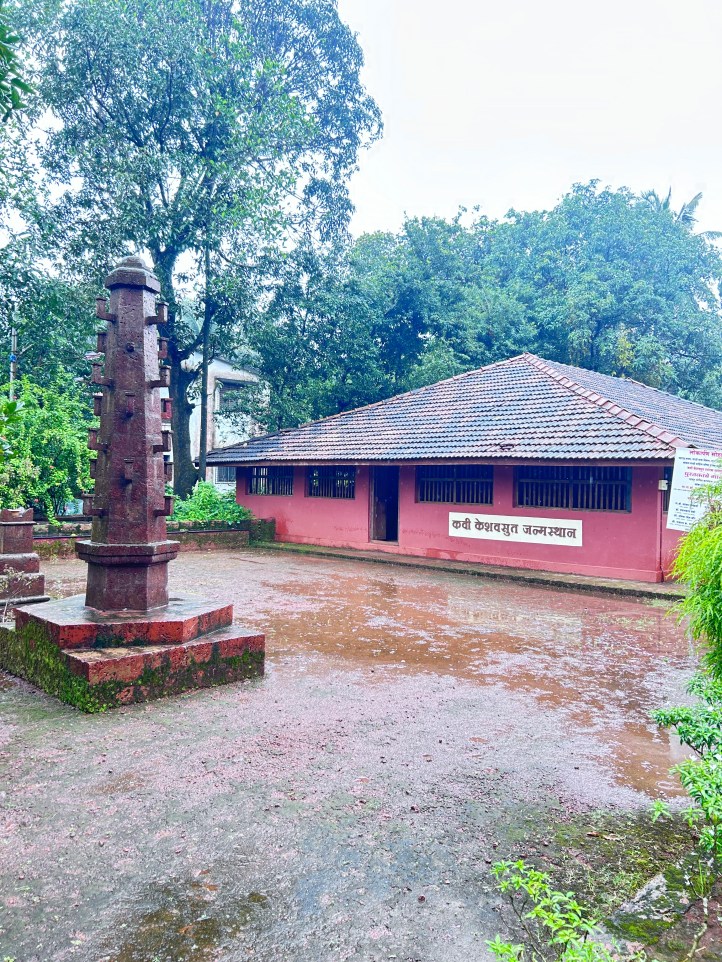
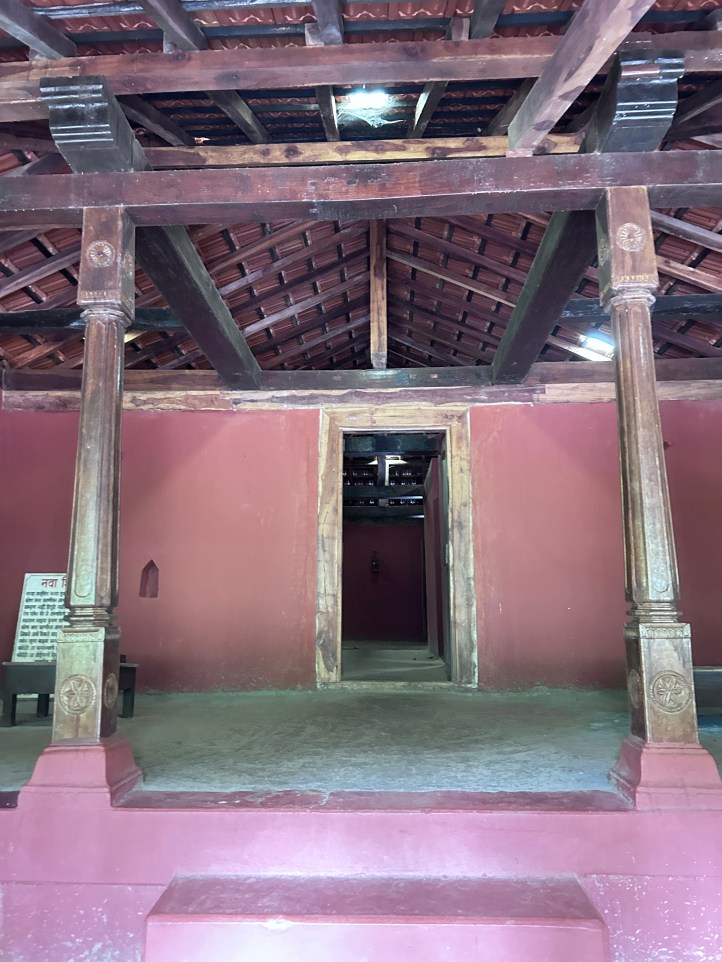
Behind the house was a pavillion that had slabs of the poet’s work engraved on stone tablets. I thought it was a beautiful way to present his work to the uninitiated like me
I tried reading the poems but gave up trying to understand them and resorted to Google Translate instead.
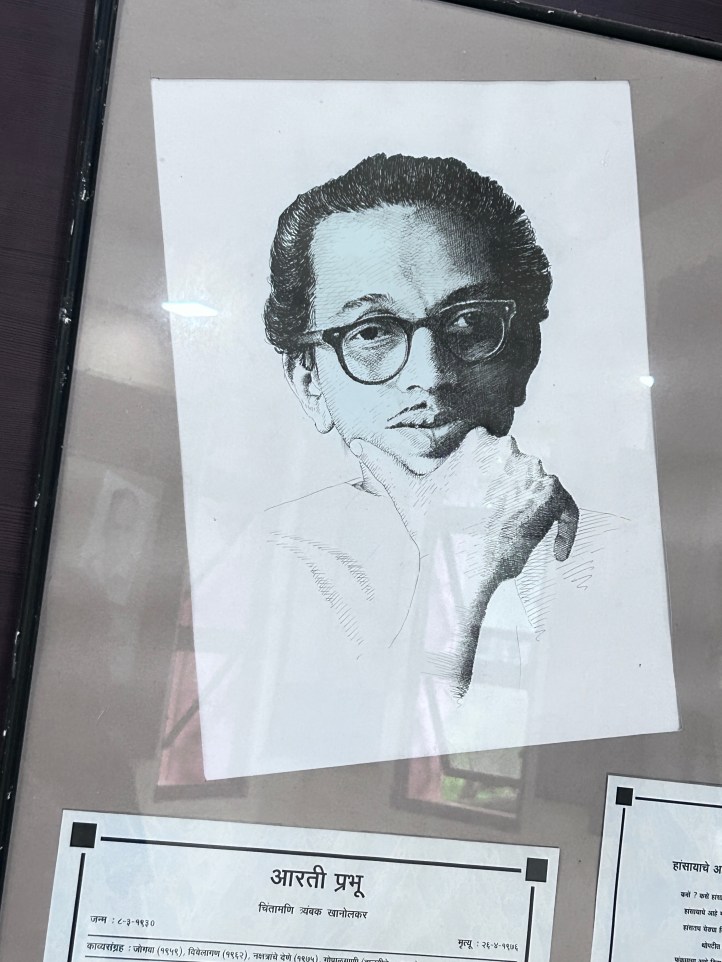
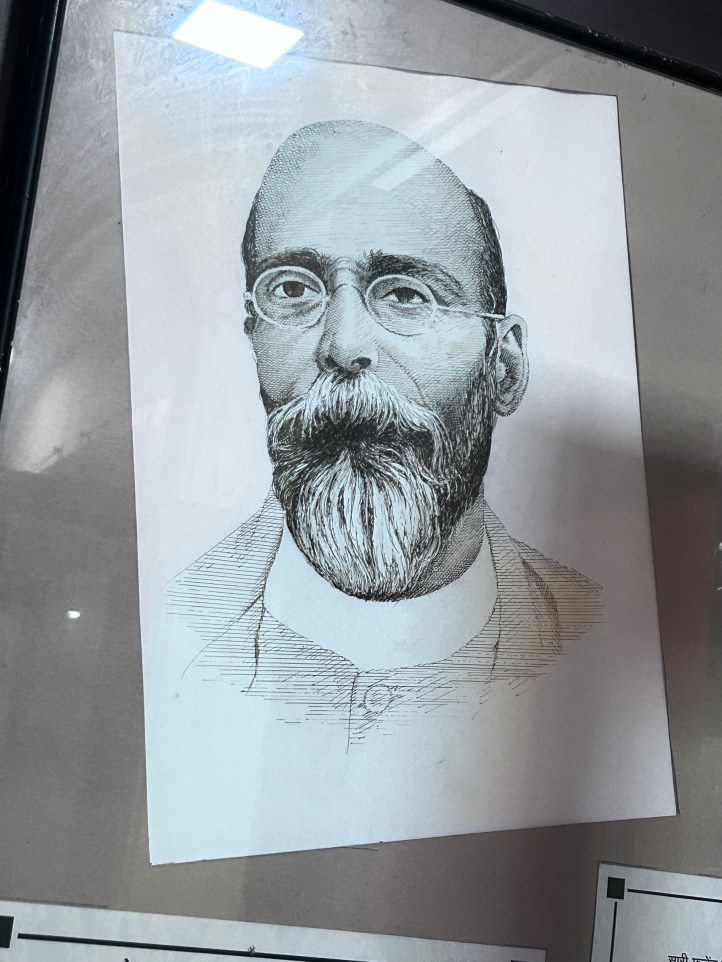
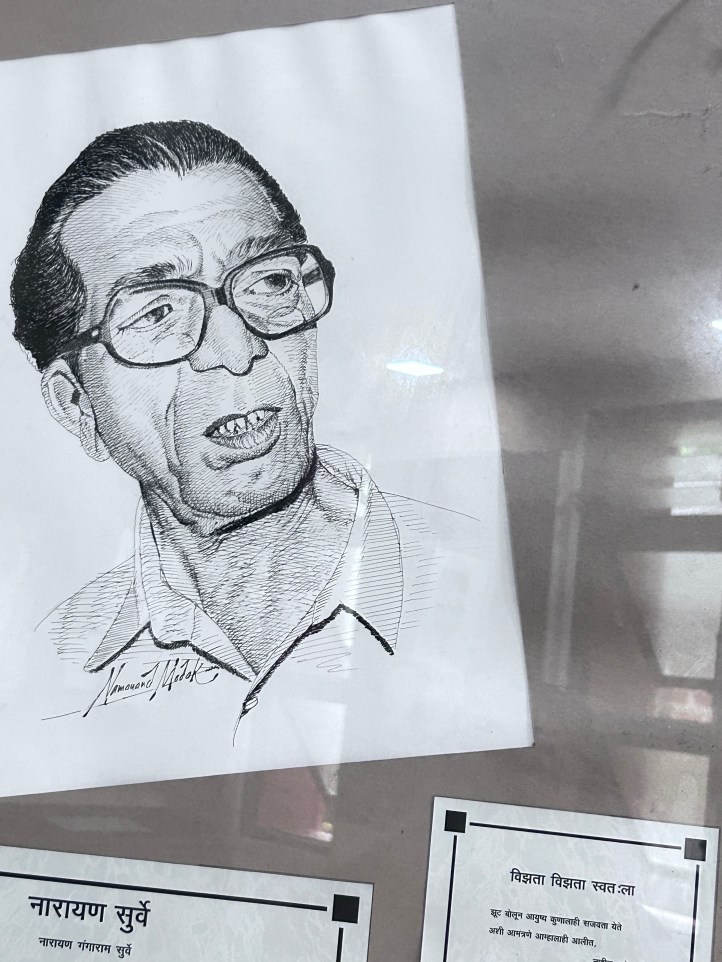
The building behind had a library, a small, covered space for events and a large room with stunning pencil sketch portraits of Marathi poets and authors in the last hundred years.
For more on Keshavsut’s work, please visit Pensha’s blog at https://pensha.blogspot.com/2013/05/portrait-of-poet.html
Typical Homestyle lunch
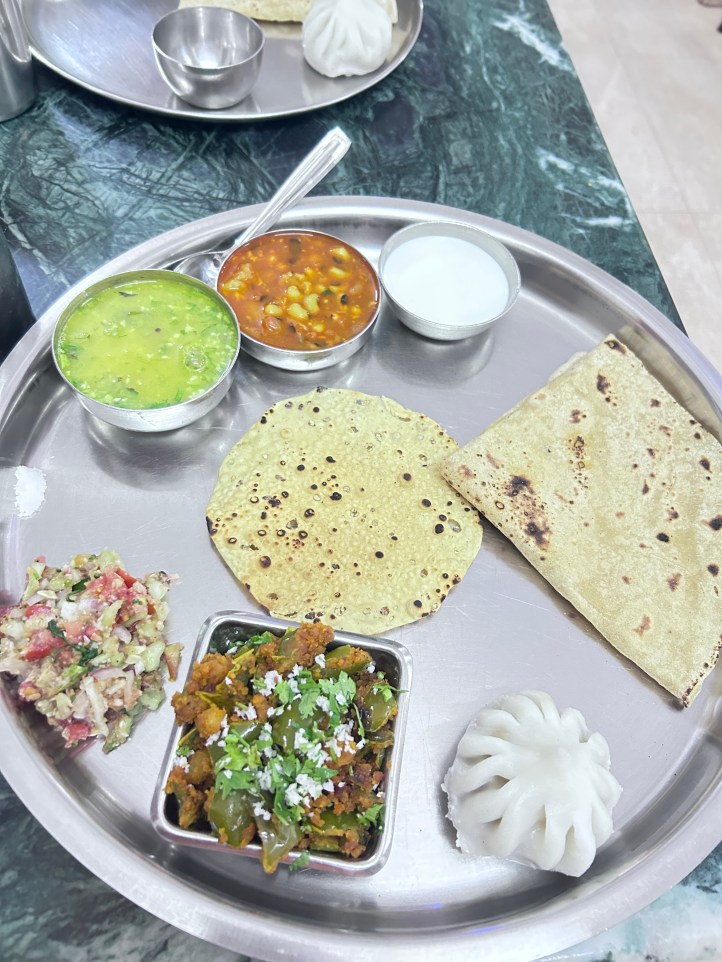
It would seem strange to drive hundreds of miles to eat the food I eat at home but it’s always nice to eat food that’s cooked by someone else.
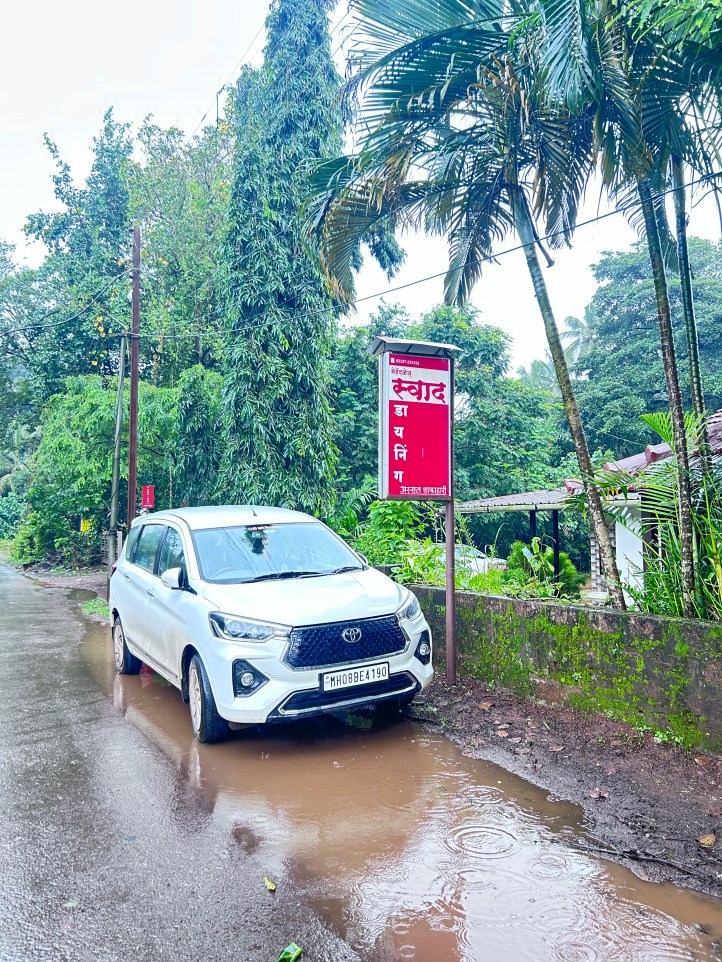
Swad by Mehandale is a good example of our homecooked food and is very popular with my clansmen who come from near and far to visit this part of the world.
Savarkar’s Temple
The road back to Ratnagri was nothing short of picturesque. It was a narrow winding road with lush green on either side, going up and down the hilly mountainside. From time to time we would get glimpses of untouched beach, with foamy waves breaking on the sand. Unfortunately, I couldn’t take any photos as it was raining quite heavily by now. But this road was scenic and would have been a wonder to drive on a sunny day.
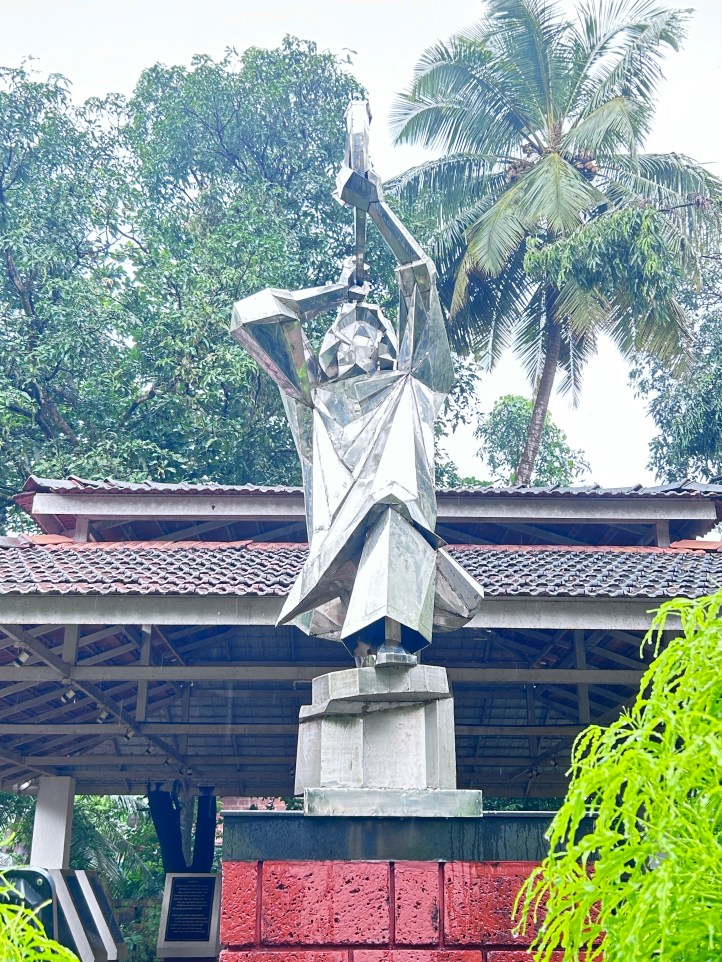
There was one more historic spot in Ratbagiri we had to visit: the Savarkar Memorial.
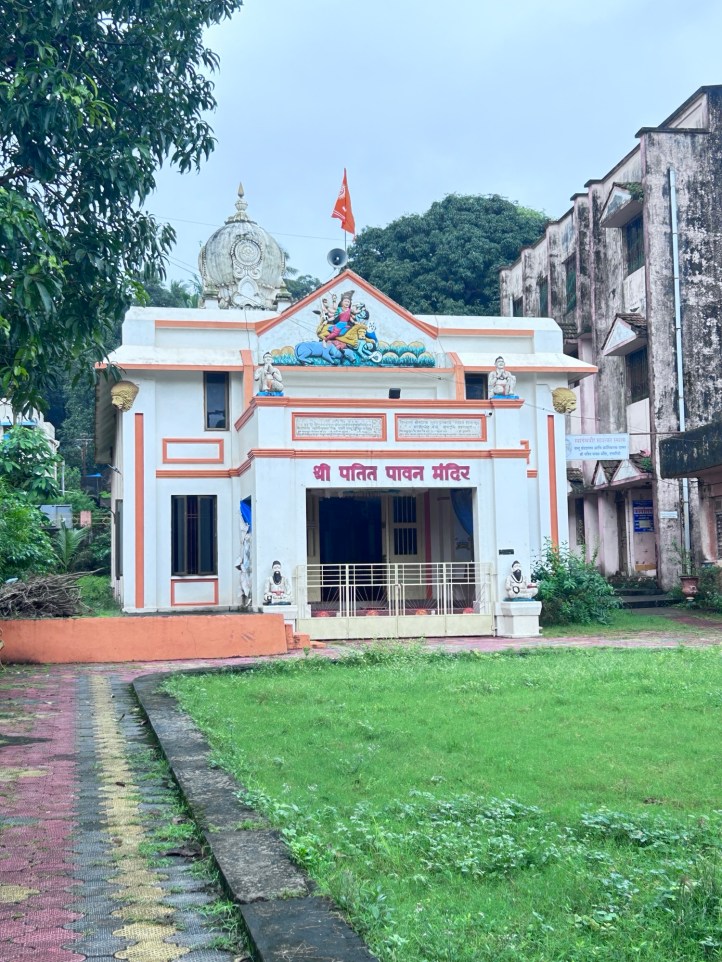
Apart from the statue at the beginning of the complex, the memorial itself was a real let down. Vinayak Damodar Savarkar was an early freedom fighter who not only fought for freedom but also advocated social change in the fabric of our caste driven society. The Patit Pavan temple that stands as a memorial to him is actually built as per his design, specifically for all Hindus even those outside the caste system to worship in.
Unlike Gandhi, he actually encouraged armed resistance against the British and was one of the first people to put forth the idea of a Hindu nationalist identity. He always courted controversy and was even imprisoned in the notorious Cellular Jail in the Andamans, a place where the British consigned the political prisoners to.
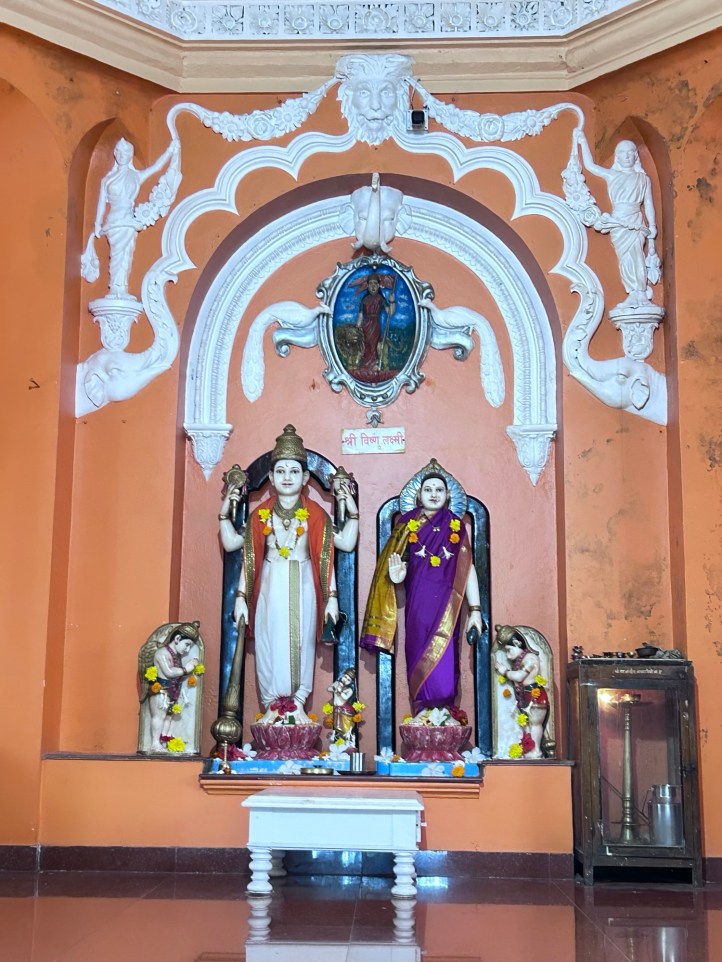
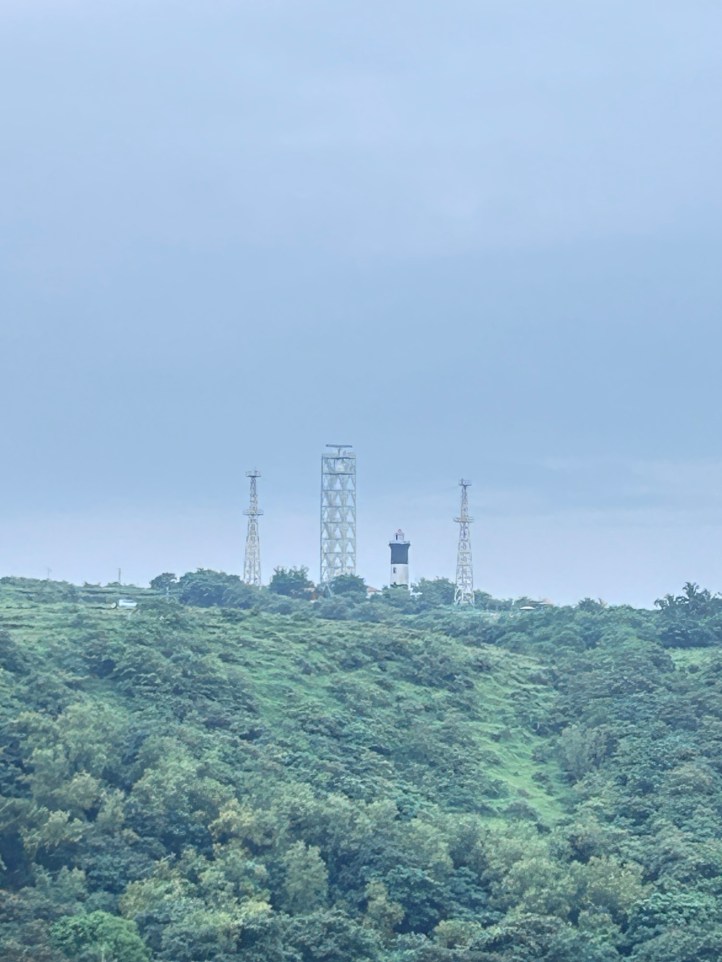
We still had some time to spare so we decided to see the Ratnadurga Fort which was an important fortication during the 17th and18rh Century. But it was really disappointing with new construction and lots of stairs to climb We also gave the lighthouse a skip because the road was steep and slushy.
With that, our Konkan trip came to an end and we retired for the night hoping that the next day would be dry. It was going to be a 7 hour drive back.
Going to the Konkan made a me understand why so many people love this part of the world. Even though my ancestors left this place hundreds of years ago, I felt I had come home.
I also understood why most of my clansmen left this place. After all, we weren’t fish eaters, so how many mangoes, coconuts and rice could we subsist on?
But with better communication and connectivity both virtual and real, it won’t be long before this part of the world loses some of its innocent charm.
Visit it now before modernity transforms it into another cookie cutter urban sprawl.
Ciao,

 Twenty- five Seven
Leave a comment