


How Vijayapura became Bijapur and then again Vijayapura
Vijayapura or the City of Victory was first established in the 10th Century CE by the Chalukyas. Its name was changed to BIJAPUR after the area was conquered by the Bahmani kings.
The gradual decline of the Bahmani Kingdon due to its incompetent rulers and internal conflict led to the establishment of five independent Sultanates :
- Bijapur: Adilshahi dynasty founded around 1490.
- Ahmadnagar: Nizamshahi dynasty founded around 1490.
- Berar: Imadshi dynasty founded around 1490.
- Golconda: Qutubshahi dynasty in 1518.
- Bidar : Founded by the Baridshahi dynasty in1528, marking the final collapse of Bahmani rule.
Yusuf Adil Shah, who founded the Bijapur Sultanate, retained Bijapur as his capital until it was annexed by Aurangzeb. It still remained BIJAPUR till finally its name was changed to the original VIJAYAPURA in 2014.
VIJAYAPURA
After settling into the Fern Residency, our hotel for the night, we set off to explore the city.
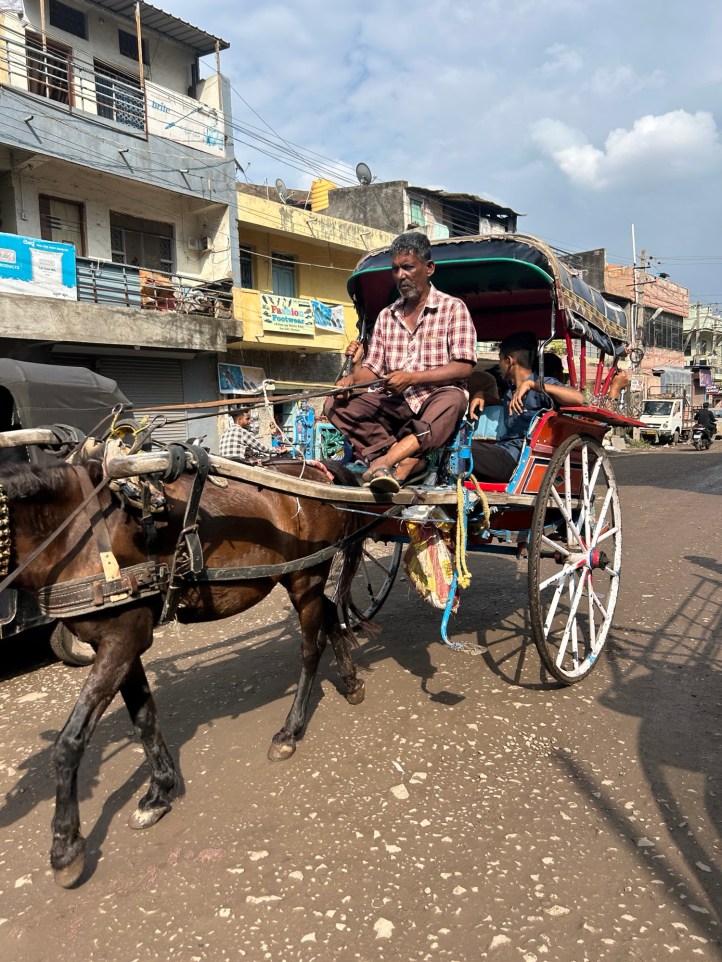
I had last visited the city over thirty years ago to see my newly born nephew and had faint memories of it being a dusty, small town somewhere in Karnataka.
The Friday Mosque & first hiccup
Our first stop was to pick up our guide, Jehangir, a tiny, scruffy looking young man. For a moment, we were taken aback by his appearance and for a moment, thought the driver was giving a ride to a friend. But by the end of the day, we were all impressed by his knowledge and totally floored by his photography.

We were all ready to get off the bus when Jehangir looked at S in his shorts and announced that he wouldn’t be allowed in because of his ‘immodest ‘dress, since it was an active mosque. He suggested that S drape his legs with one of the curtains in the bus! Luckily, one of the girls’ shawls came to the rescue and S was spared the ignominy of wearing a curtain and got by with a shawl as a lungi.
The Friday Mosque or Jumma Masjid is the largest mosque in Bijapur and was built by Ali Adil Shah 1 to commemorate his victory over the Vijayanagar Kingdomw. This victory mosque is grand and can easily accommodate around 2500 people .
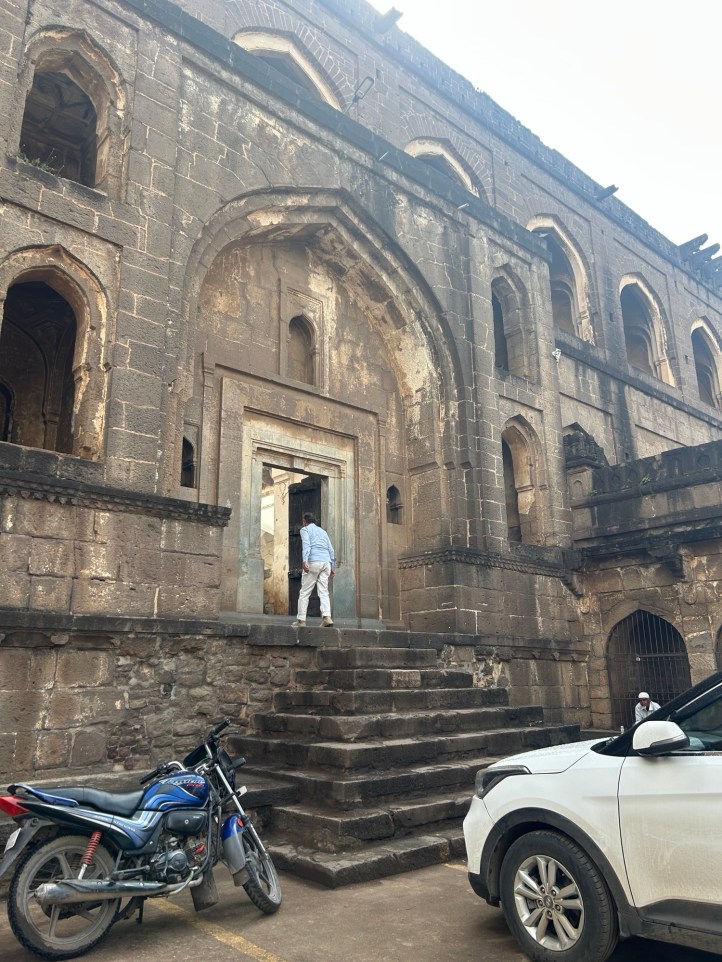
We entered the mosque through the Royal entrance and were amazed by the sheer size of its courtyard, the dome and the arched colonnades that accommodated the faithful who came to pray.
Jehangir pointed out the huge Eastern gate built by Emperor Aurangzeb or Alamgir who was tasked by his father Shah Jehan to conquer the Deccan to prove his worthiness to inherit the throne, after he acquired the Sultanate of Bijapur.

What really impressed was the mihrab ( a recessed wall) decorated with verses of the Koran in black and gold calligraphy.

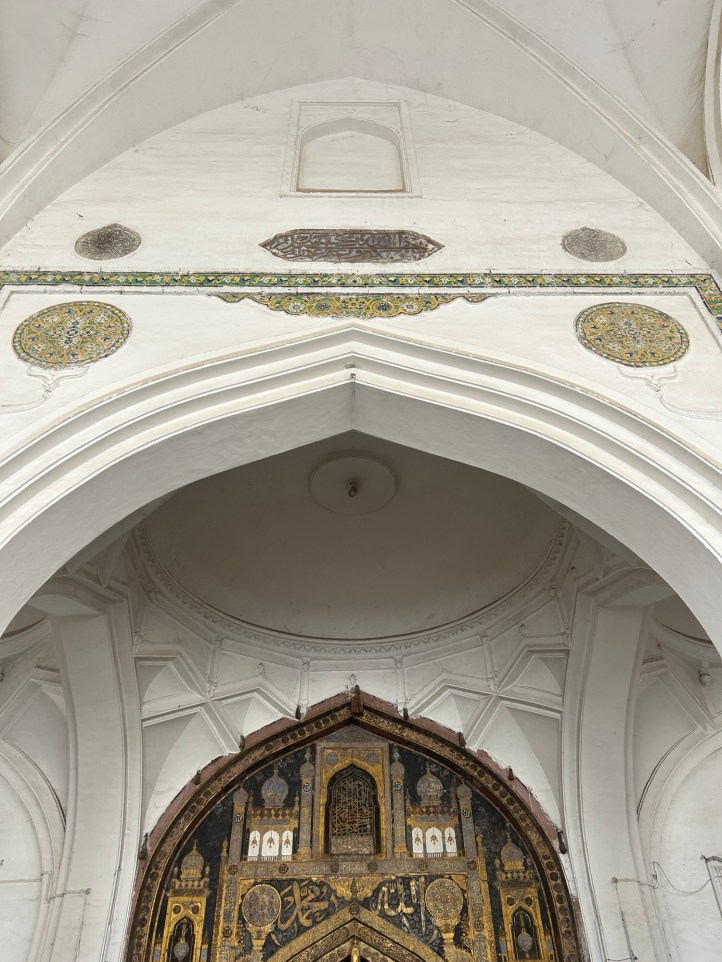

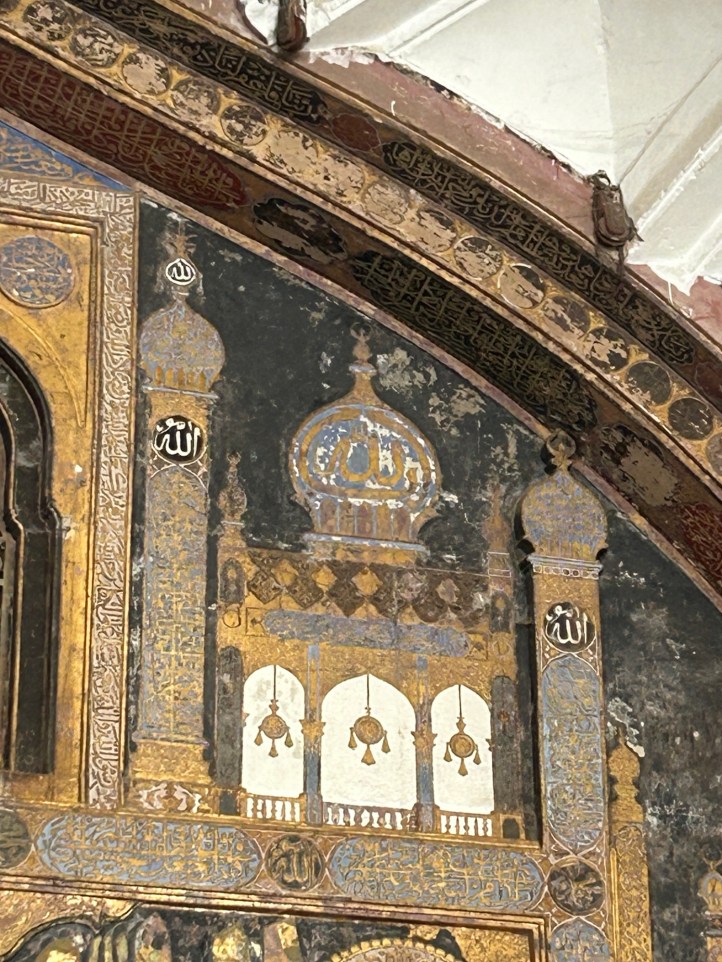

On the floor you can see traces of the ‘carpets’ marked out to fit the worshipers in perfect lines
The ‘carpet ‘ marked out on the floor

.

Jehangir would have spent more time talking about the finer architectural aspects of the mosque – its intertwined arches that held up the dome, the fine-lay work in the main prayer but we had to move on to the next monument that awaited us – The Gagan Mahal.
Ciao,

 Twenty- five Seven
Leave a comment