

Like any old city, Bijapur abounds with historic ruins. On the way to the Gagan Mahal, we passed a magnificent gateway called Mehtar Mahal. . This tall beautiful structure, built in the Indo-Sarcenic style is in a state of total disrepair. As late as July of this year, a dome from one of the minarets came crashing down.


Some people say this is the entrance to the Palace built by a sweeper to the king. Some say it is the entrance to the mosque made by the sweeper to the king. But Jehangir pooh-poohed this as rubbish.
GAGAN MAHAL
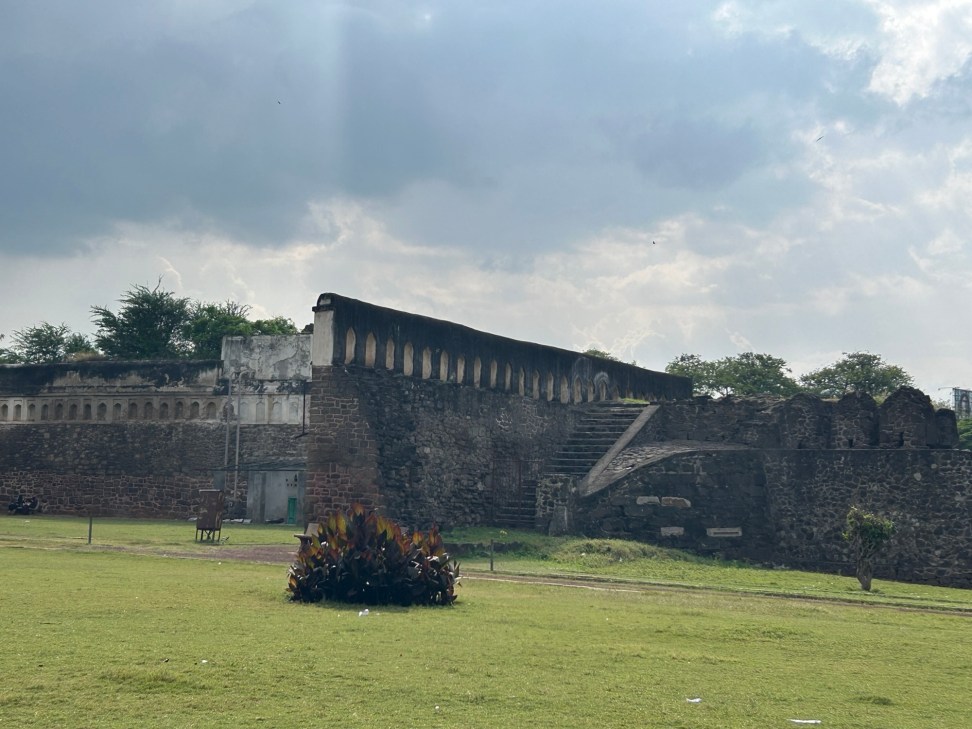
Unlike most of the ruins that we saw that were of mausoleums or mosques, this particular ruin was the first palace built by Adil Shah. It is set in a citadel that had six palaces built by each succeeding king of the Adil Shahis. Traces of a crumbling fortifying wall and a moat sadly floating with rubbish, can still be seen.

The Central archway with its 90 ft span is impressive indeed. Now open to sky, this once was a huge two-storey structure with a durbar hall on the ground floor to receive special guests. Wooden columns held up a ceiling . The royal family lived on the first floor. Vestiges of the beautiful building are still visible but largely this remains a ghostly relic of the past.



THE TWELVE ARCHES OF THE UNFINISHED TOMB
As per Islamic tradition (according to Jehangir) each king built his own mausoleum and began its construction upon his accession to the throne. This was because they wanted to die as rich as they had lived. Ali Adil Shah ll wanted a tomb that would overshadow his father’s Gol Gumbaz but sadly it remains unfinished. Thus, the unfinished mausoleum of Ali Adil Shah ll remains a grand structure with 12 rows of arches placed lengthwise and breadthwise on a huge plinth, open to the sky. This structure is known as Bara Kaman.
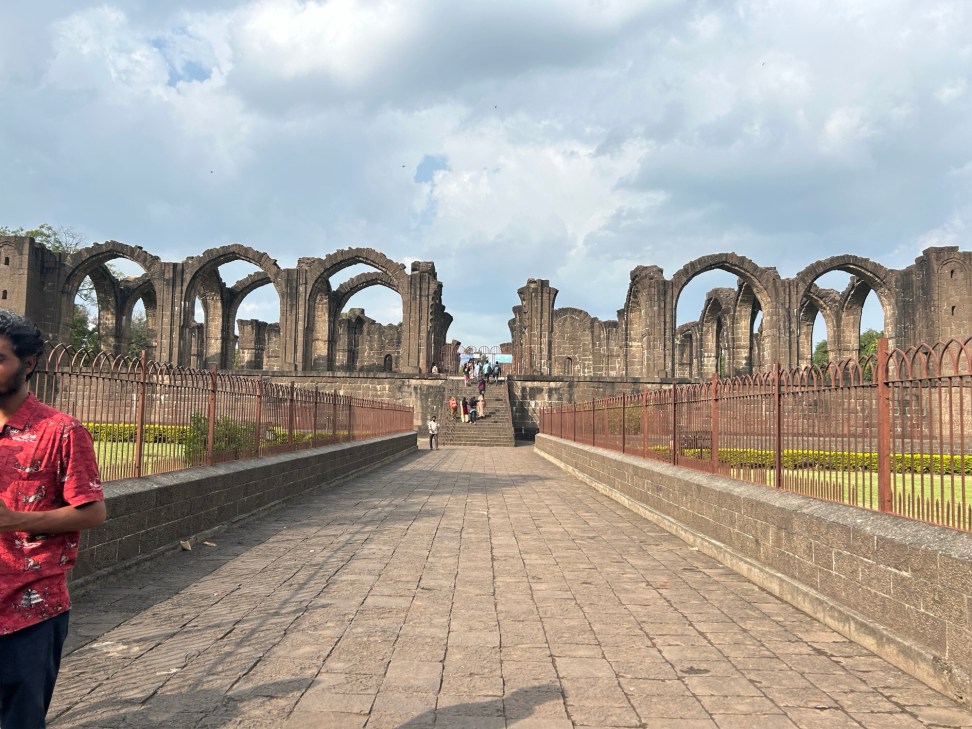
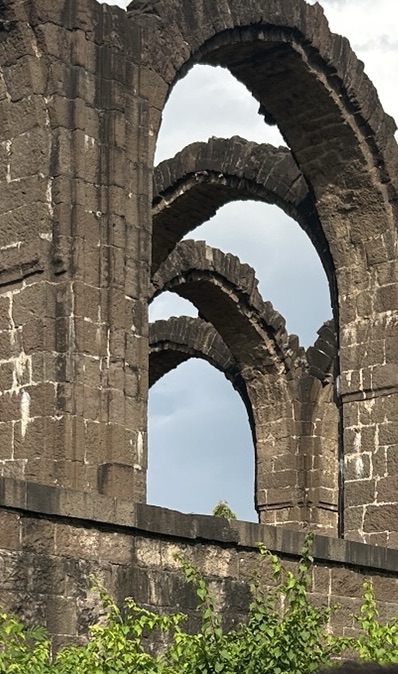
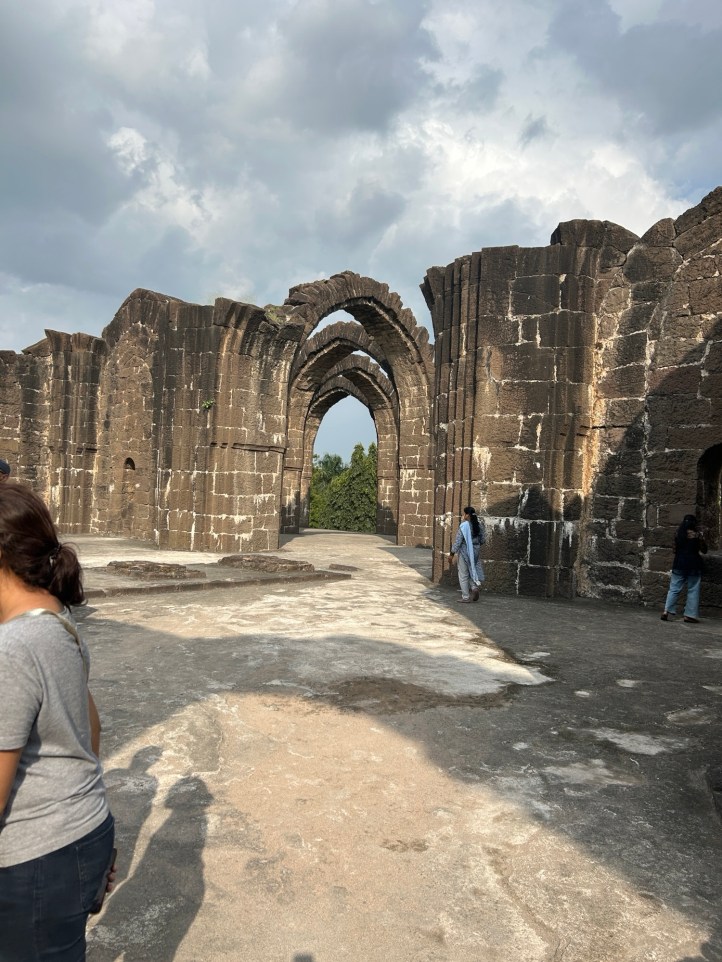


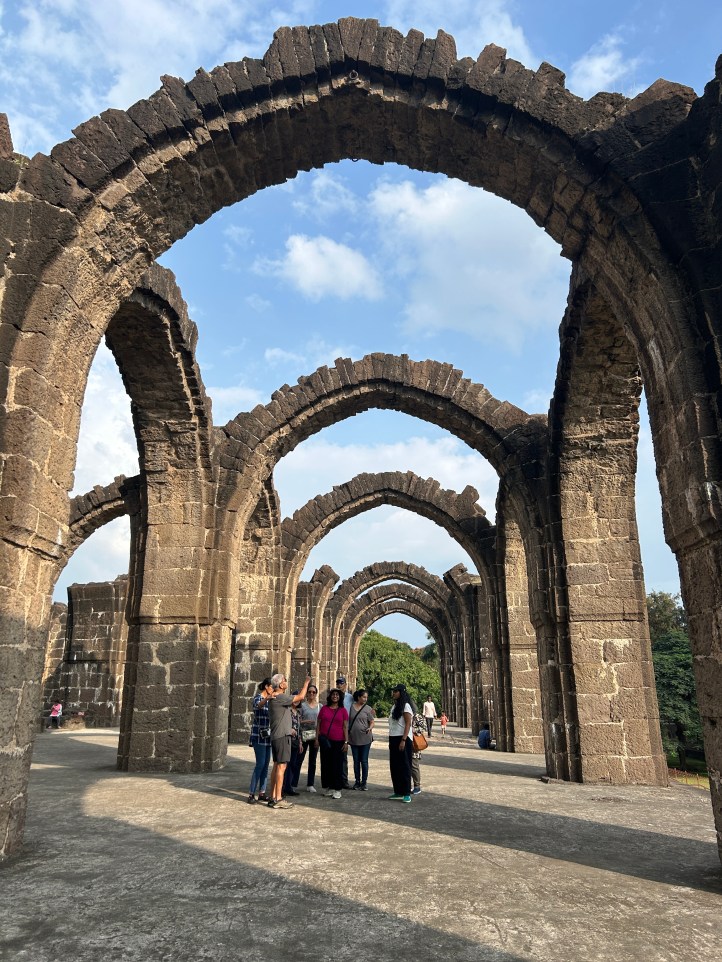
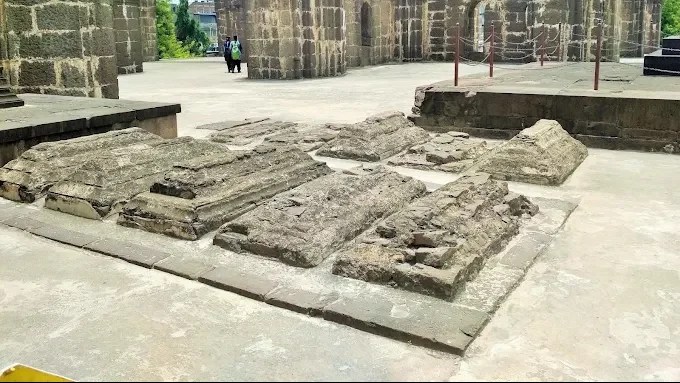
And in this unfinished mausoleum lie buried the king and his family.
The Lord of the Battlefield
As we drove up to the battlements of the fort, if Jehangir were to be believed, we actually on a road which was once a moat. Bijapur, he proudly told us, was like Venice. It’s hard to imagine, though but with the grand edifices, albeit in ruin, it must have been a truly majestic capital city.
The 16th Century cannon made of bell metal or panchadhatu , Malik-e-maidan or Lord of the Battlefield is on top of a cannon tower.
This monster of a gun was made in Ahmednagar and used in the battle of Talikota in which the Vijayanagar empire was defeated. It was in Solapur for several years before it was brought to Bijapur by elephants .
With a 14-foot-long muzzle beautifully embellished with three inscriptions on the top, and an elephant being devoured by a lion at its mouth. The first half of its chamber was packed with gunpowder and then stuffed with huge cannon balls that shot out when the fun was fired. It made such a loud sound that the gunman had to jump into a well after the wick was lit to prevent his ears from shattering. Jehangir told us that the aim of this gun was not to kill humans but to create such a fierce sound that all the horses and elephants of the approaching army would flee I panic.


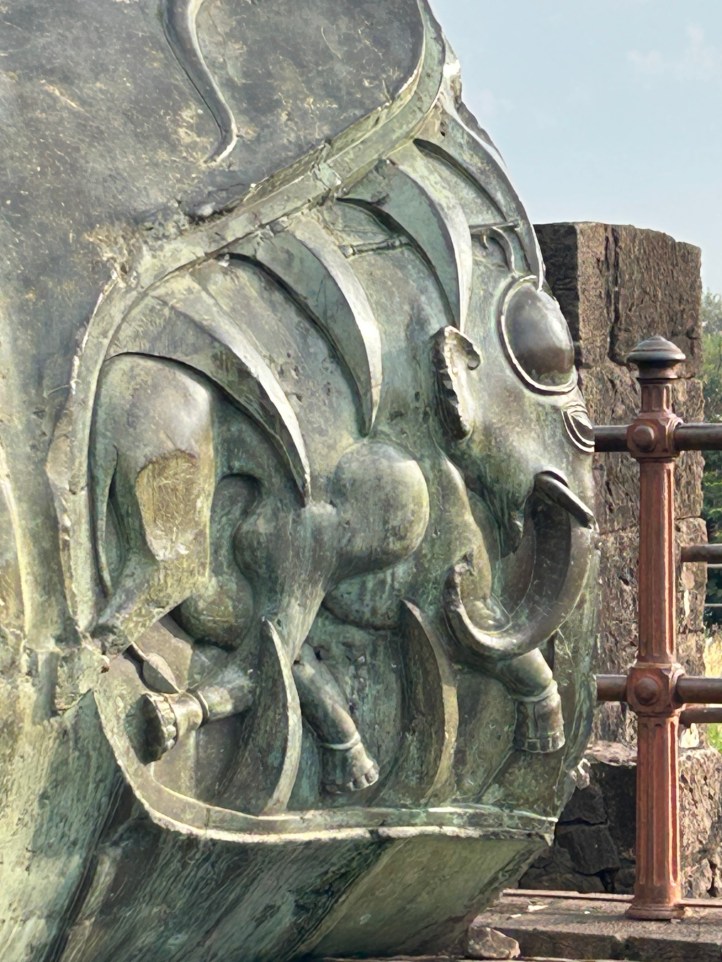
The shadows were beginning to lengthen and it was time to move on to our last monument for the day.
The Black Taj
It was a treat to see this monument in the dying day. The blue sky with a few clouds made for a dramatic setting, and we enjoyed a leisurely walk through the complex as Jehangir pointed out the minute details that distinguished this monument. He wound it up with some fantastic photographs which I cannot unfortunately reproduce here without the permission of my friends
Made of black basalt, this truly is a magnificent mausoleum. Called the Black Taj, this was the inspiration for the Taj Mahal in Agra was modelled.
The Black Taj was begun by Ibrahim Adil Shah as a mausoleum for his wife queen Taj. Unfortunately, he predeceased her so she completed it and was buried beside him.


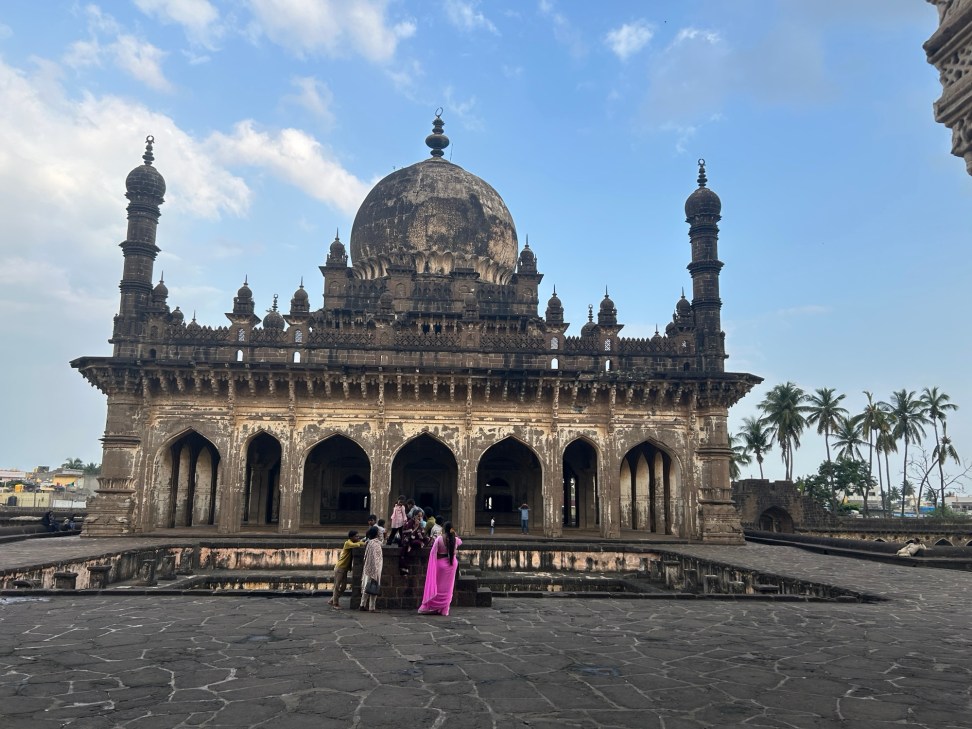
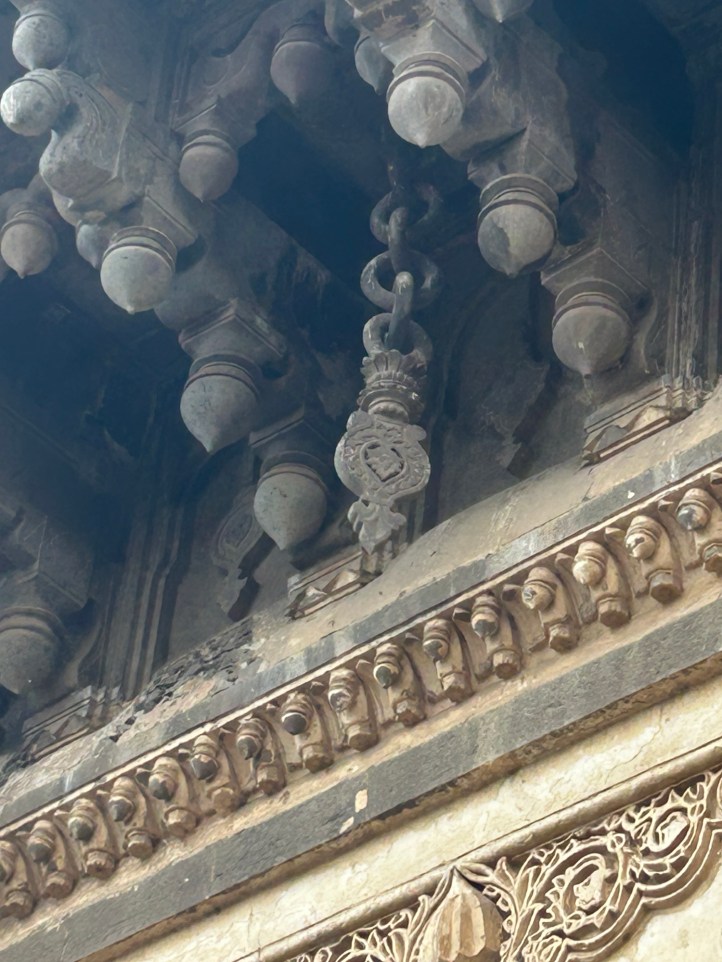

Once again beautifully carved out of black stone, there are some panels that remain unfinished after the queen passed on.
After bidding goodbye to Jehangir we went back to the city to have a look at my sister-in-law’s ancestral home and family temple.
It was lovely to stand in front of the goddess who smiles so benevolently on all who stand before her. There were devotees lighting oil lamps before her and a special calmness surrounds you as you offer your prayers.


 Twenty- five Seven
Leave a comment