

Aihole, Raju told us, was a temple town that got its name when Parshuram saw the river and exclaimed “Ai Hole” ( Oh River) as he washed his bloody sword in its waters, turning it red.
By the time we reached Aihole, our heads were swimming with tales from Hindu scriptures, the Panchantra and the history of the Chalukya dynasty.. Galagnath Temple easily became Galangal, and the temples of Jambulinga and Sangameshwar became almost indistinguishable.
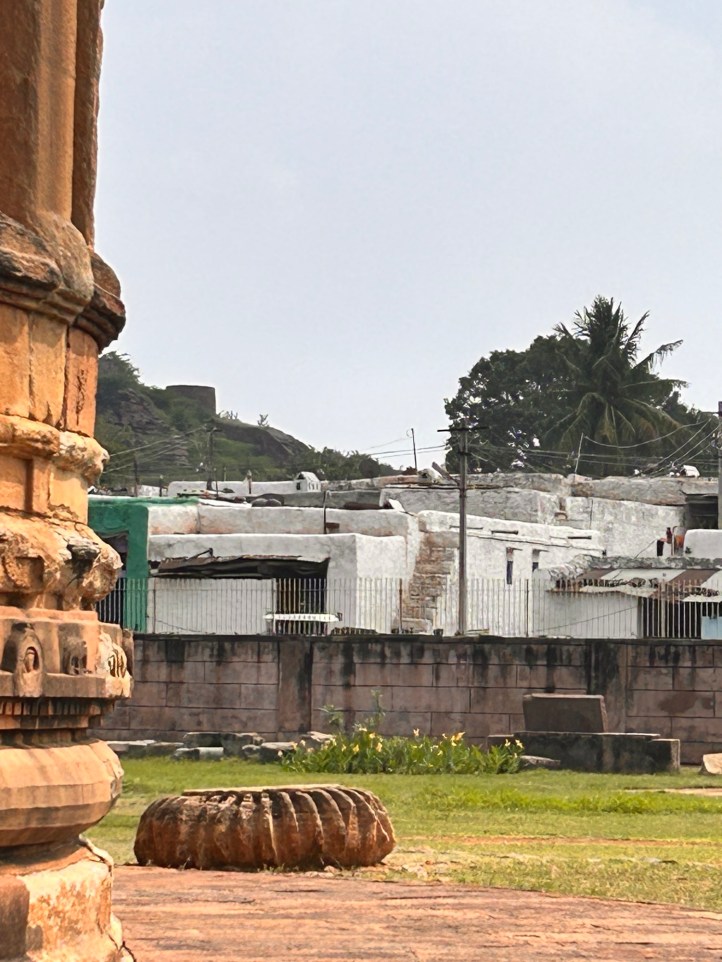
The sleepy little town of Aihole looked more like an overgrown village with tourism as the major activity. As we approached the site, we could see houses built around the temple ruins. Apparently, this was the condition of the temples at Pattasakal, too at one time, pointed out Raju. Soon, he said, these villagers of Aihole would be rehabilitated and the temples restored to their original state, just as they were in Pattadakal, to create another UNESCO-worthy site.

As seen by the board, there are at least 100 temples in this area. Since the original idols were long missing, the temples, it was hard to identify and name them. So, the excavators/archeologists named them after the inhabitants of each temple. Hence, a temple structure inhabited by a mad woman was called Madwoman temple! And another temple was called Lad Khan temple after a Muslim Army commander who was living there.
Unfortunately, none of us could spare more than 4 days on a trip so this being to our last day, it was a bit of a rushed visit to Aihole. Besides, the sun was pretty high. And some of us were beginning to get roasted. Moreover, we had to get back to Bijapur for the night.
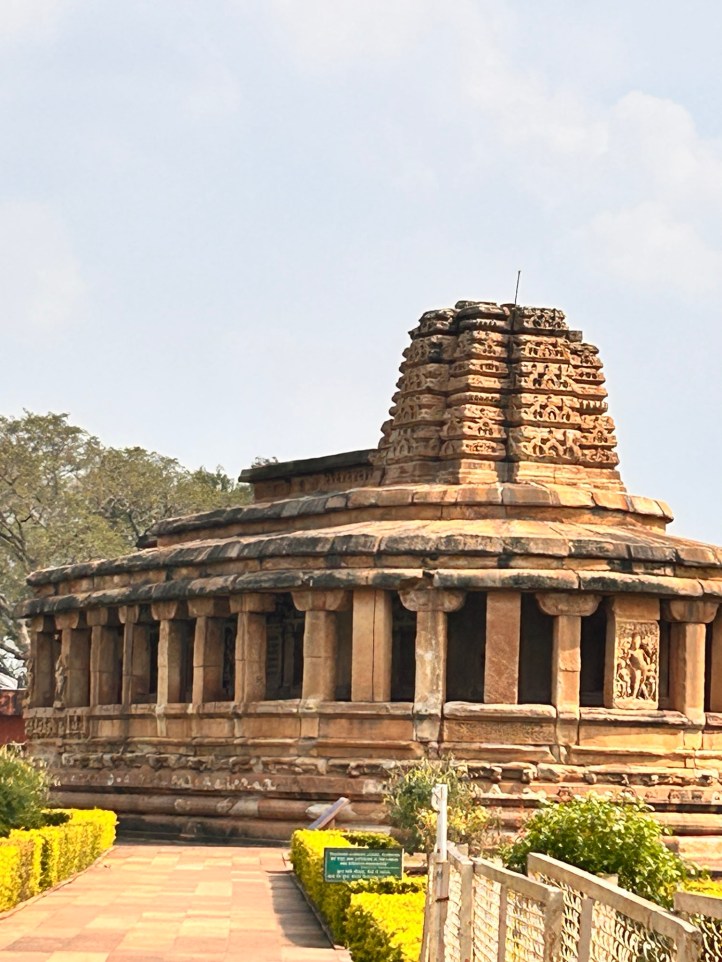
The Durga temple which incidentally, is the most most visited, is unique for several reasons. First off, it is not named after the Goddess Durga but is so called because it is a Fort ( Durga) temple!
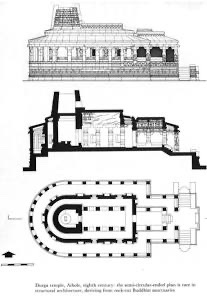
Secondly, it is made in a Buddhist style in a horseshoe shape.
The first or lowest row was for the common man, the second for courtiers and officials while the third or topmost one was for royalty. This had comfortable sofa like seating to relax on.
Lastly, it doesn’t have an idol.
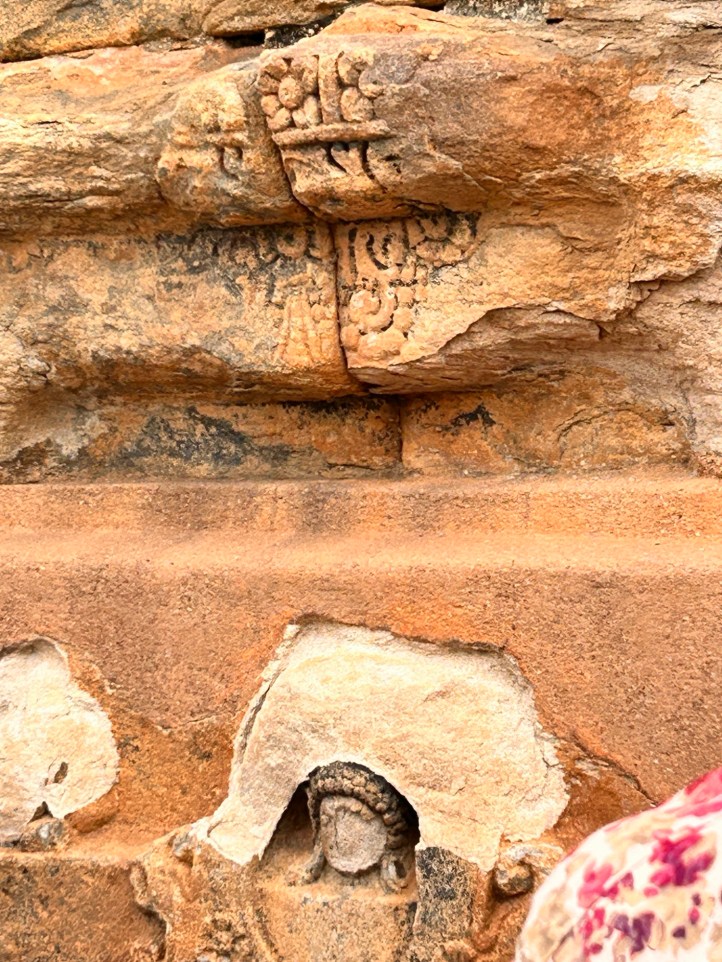
A fair bit of the temple was covered by mud as can be seen from the photo below. The figures beneath the inscription were underground and some of the figures were damaged during the excavation.
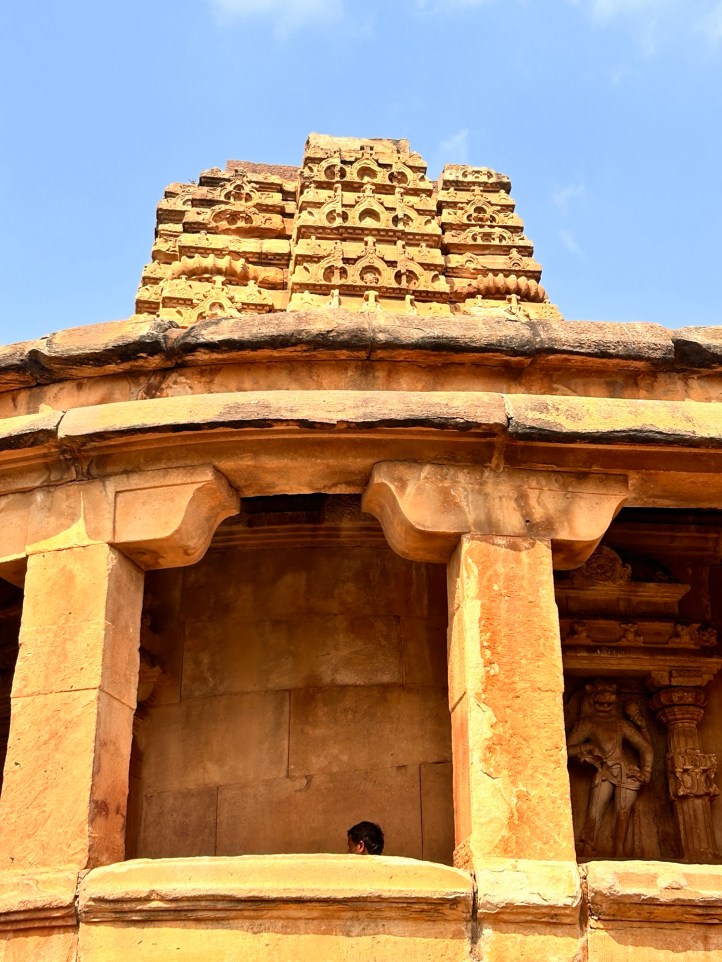
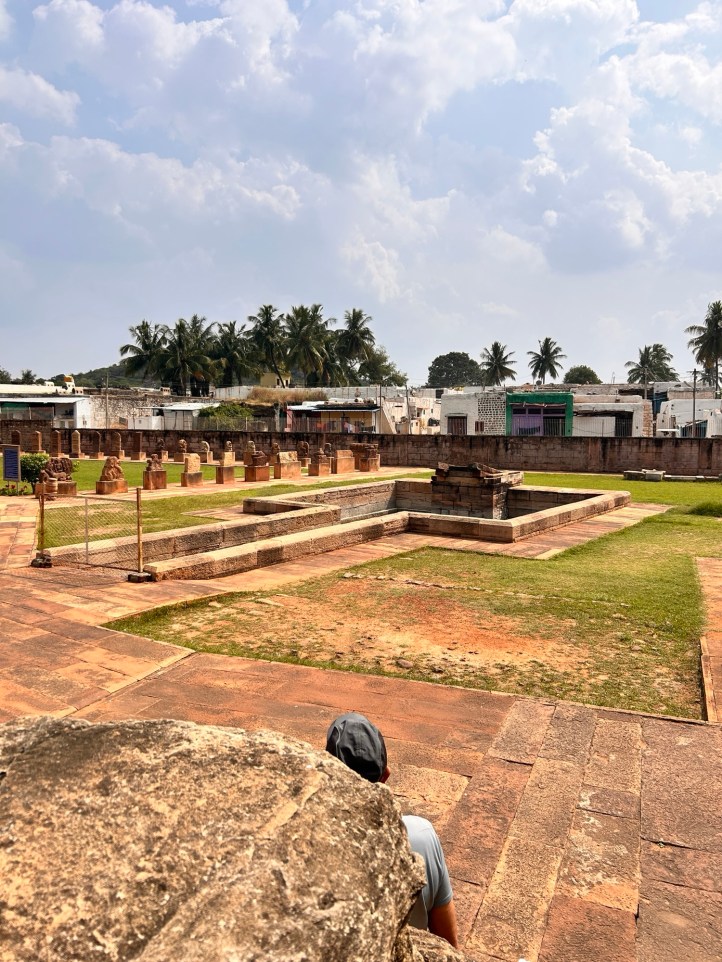
As with all temples, it was essential to have a water body to bathe in before a temple visit so a step well was built alongside.
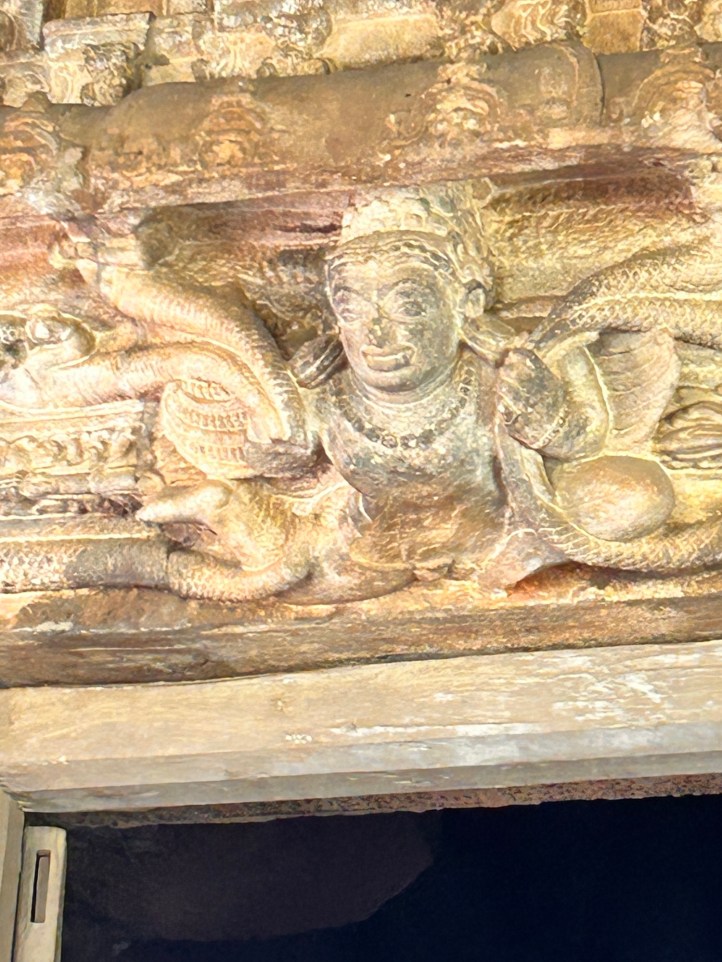
Several beautiful carvings embellish the walls of the temple.


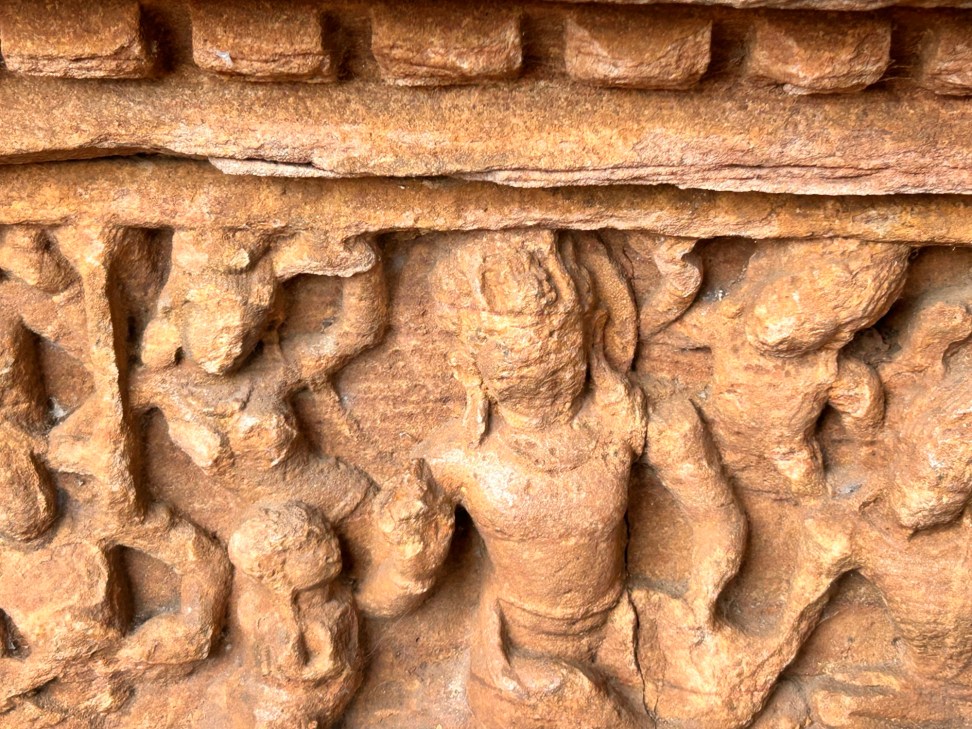
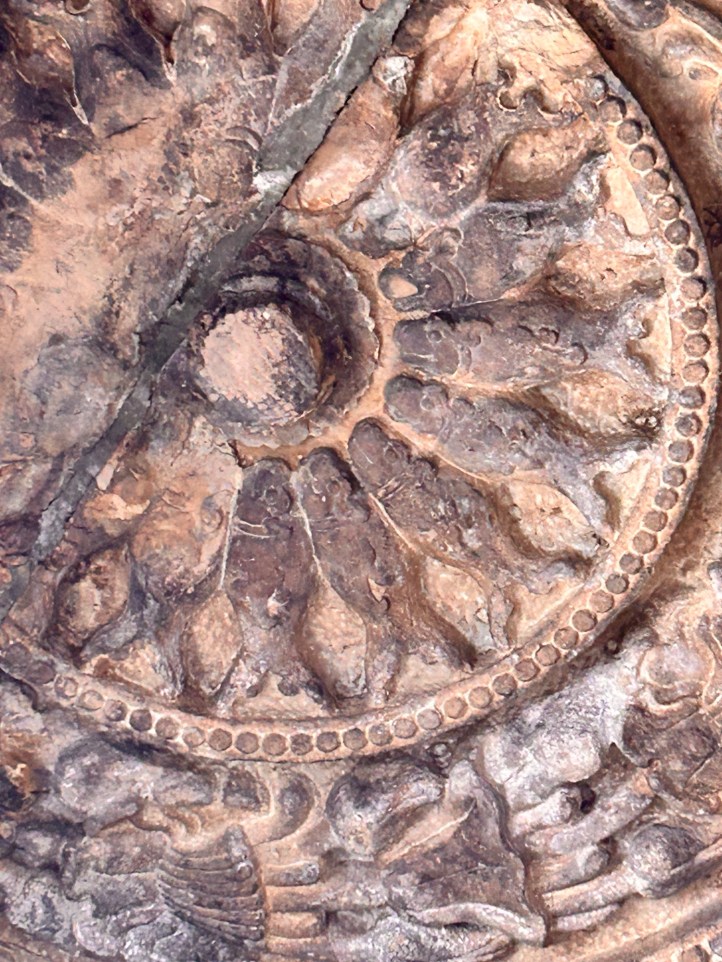
On the ceiling

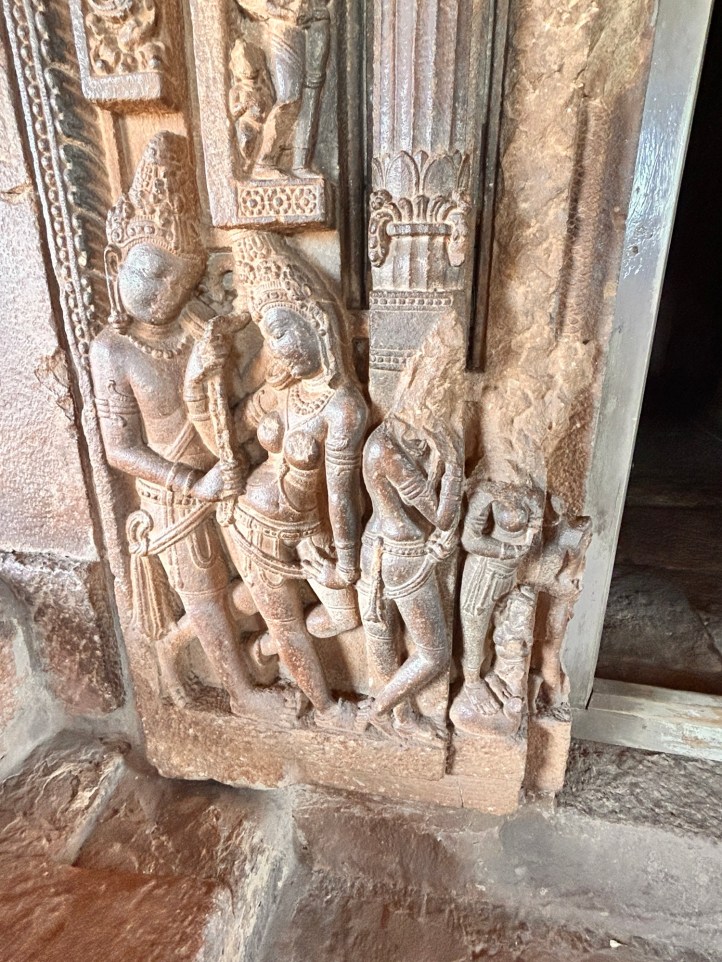
Doorway
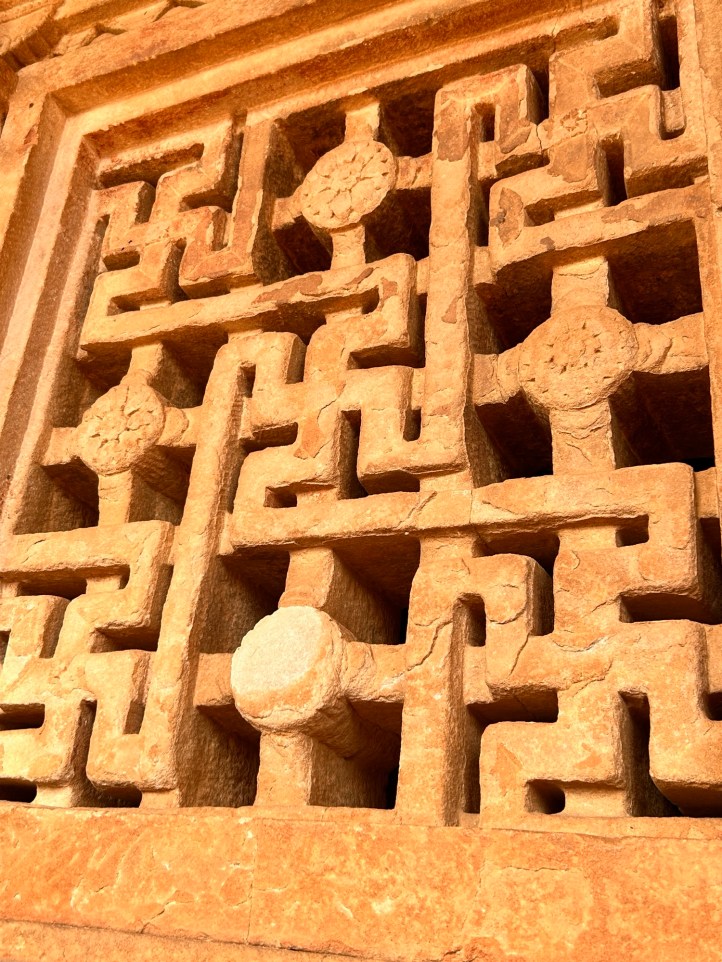
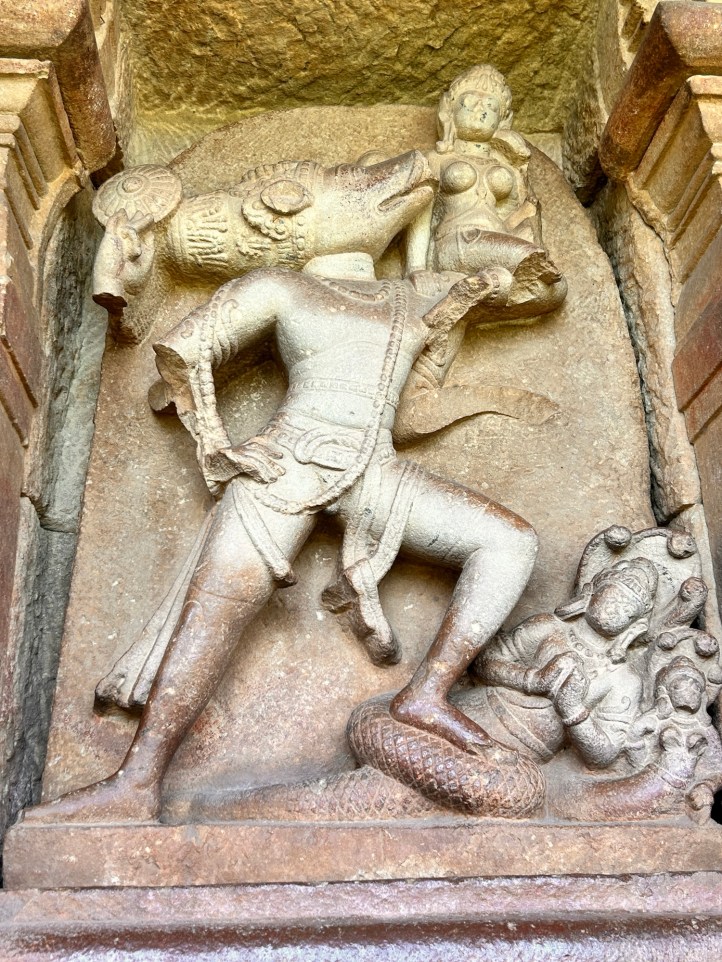
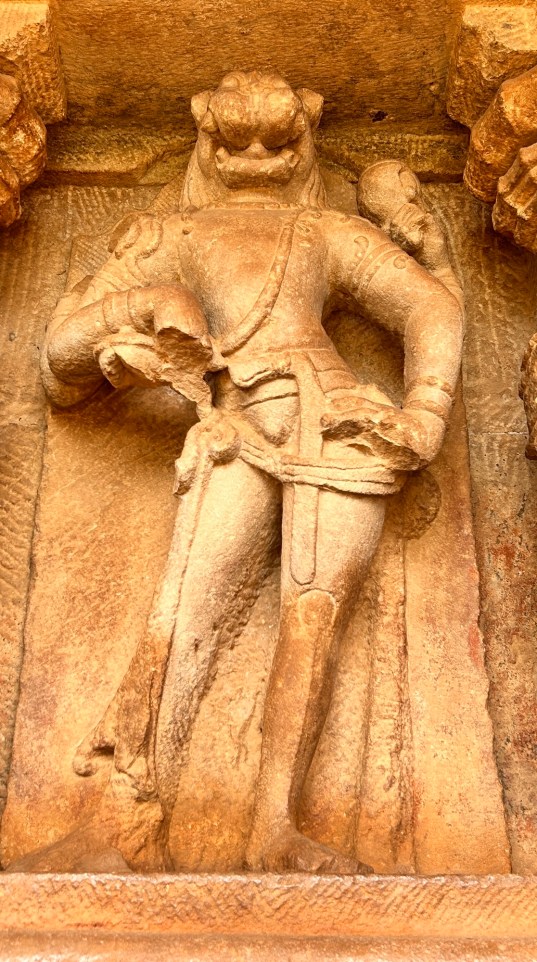
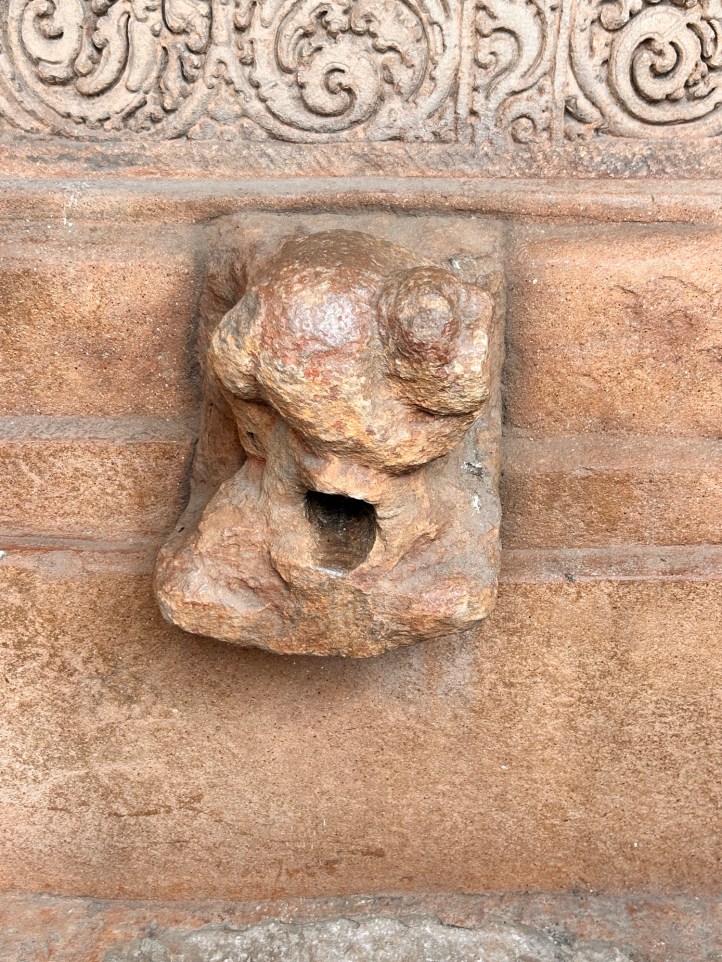
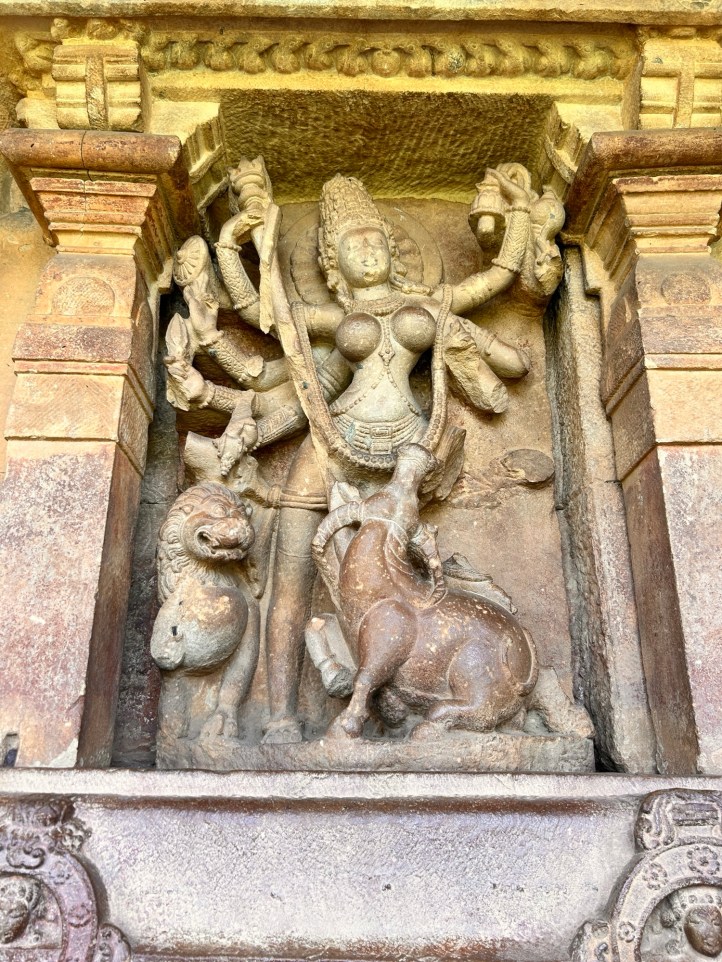
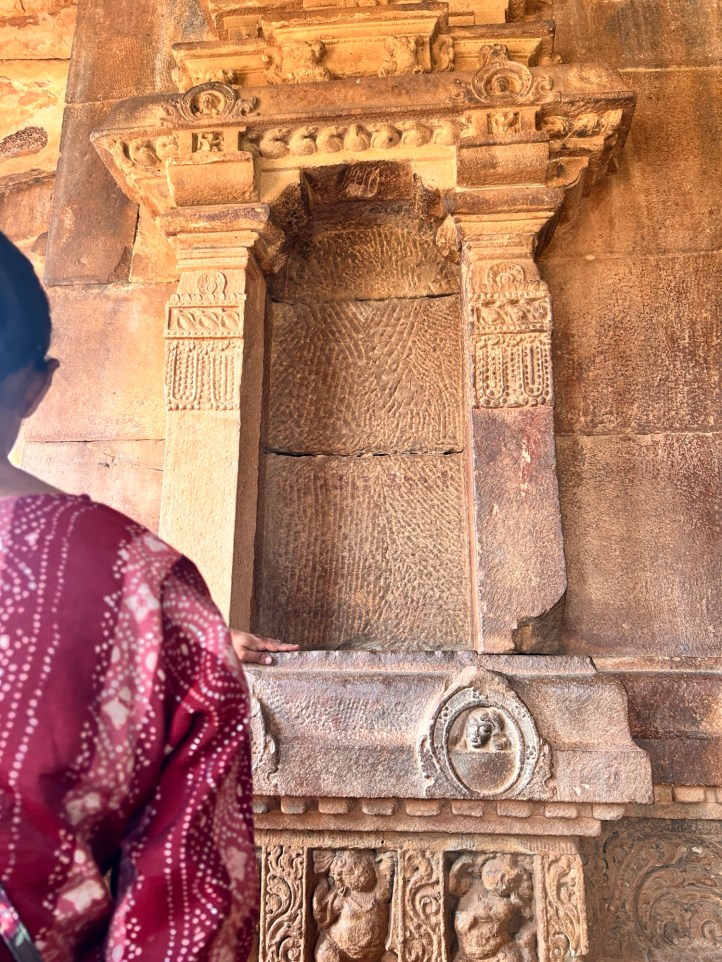
niche
Multipurpose
According to Raju, the temple served as more than a place of worship. It was a multi-purpose hall of sorts which served many purposes.
For instance at the entrance the four pillars are like an interior designer’s catalogue of sorts, with each pillar showing the kind of embellishment that can be provided by the craftsmen .
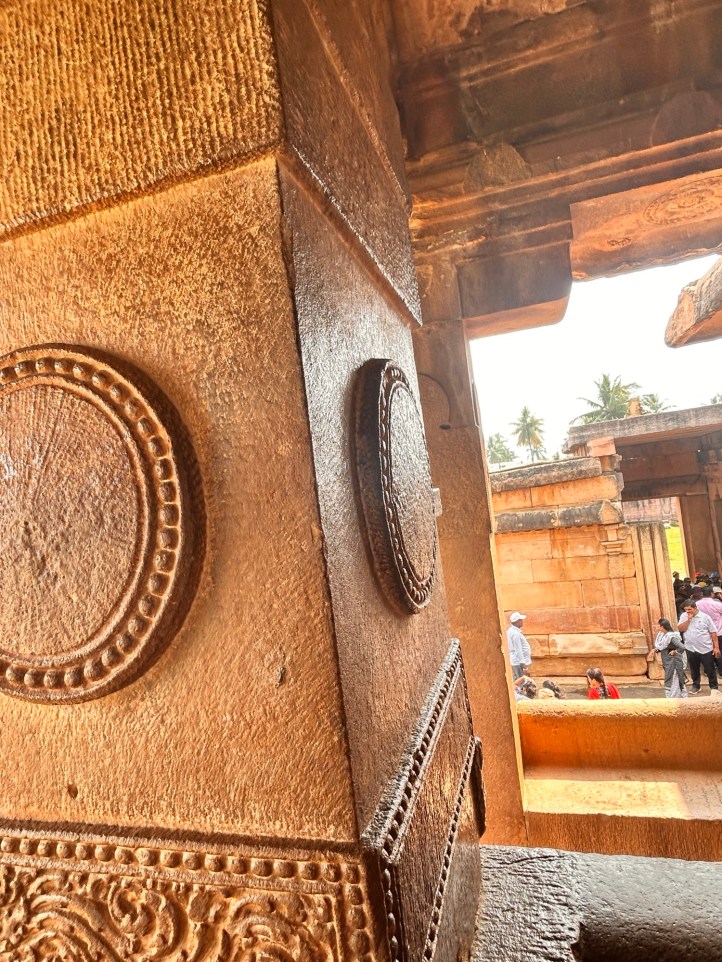
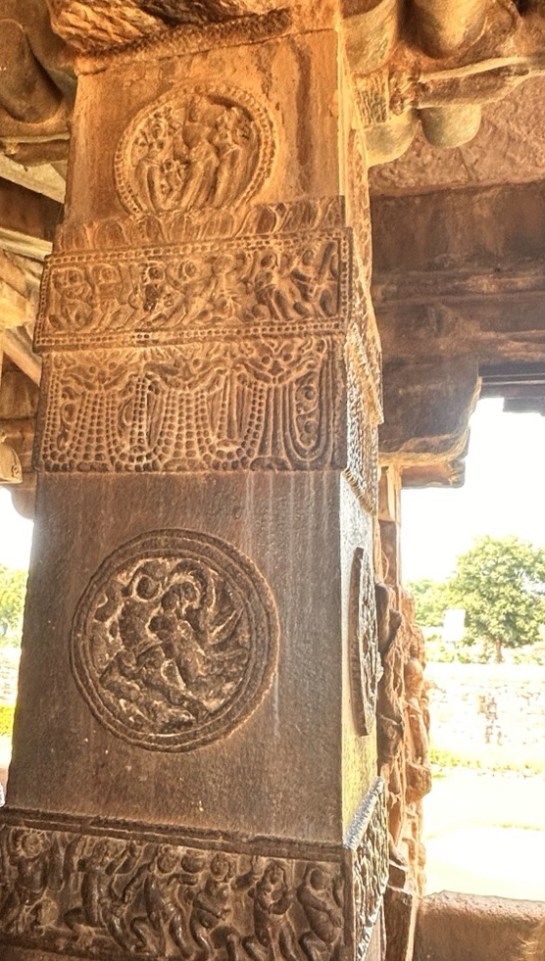
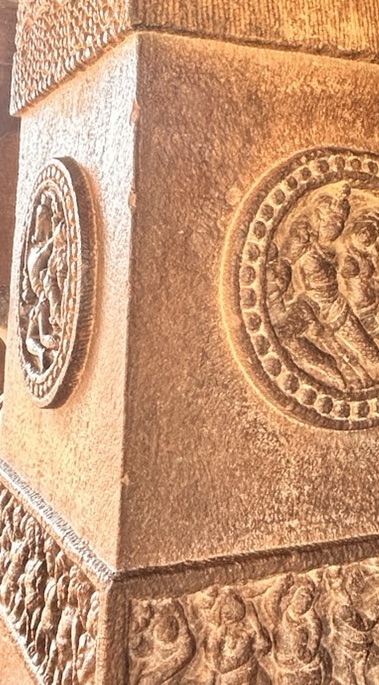
Life lessons
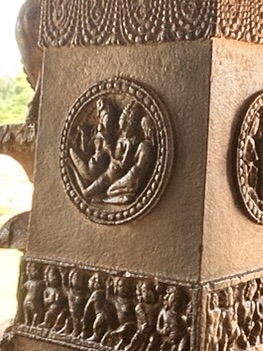
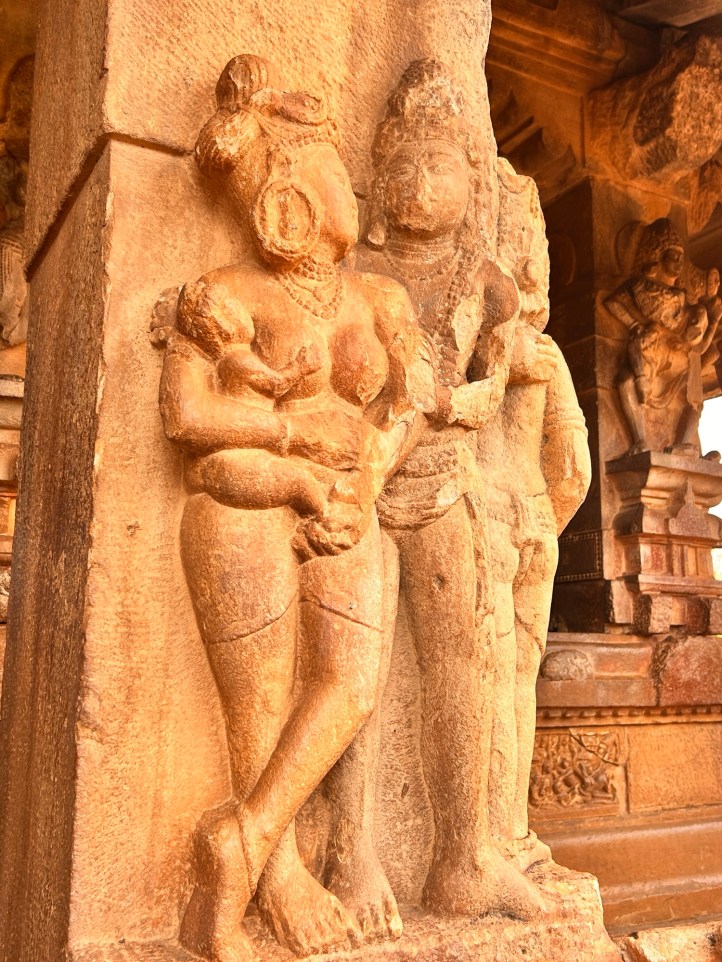
The temple, Raju explained to us was a microcosm of social life. Through the stories of the Panchatantra, and the legends associated with gods and goddesses, this was also a place for learning life skills and life’s lessons. For instance, he said pointing out to a carving of an amorous couple, he said that newly wed couples were went to the temple to learn about ‘intimacy’!
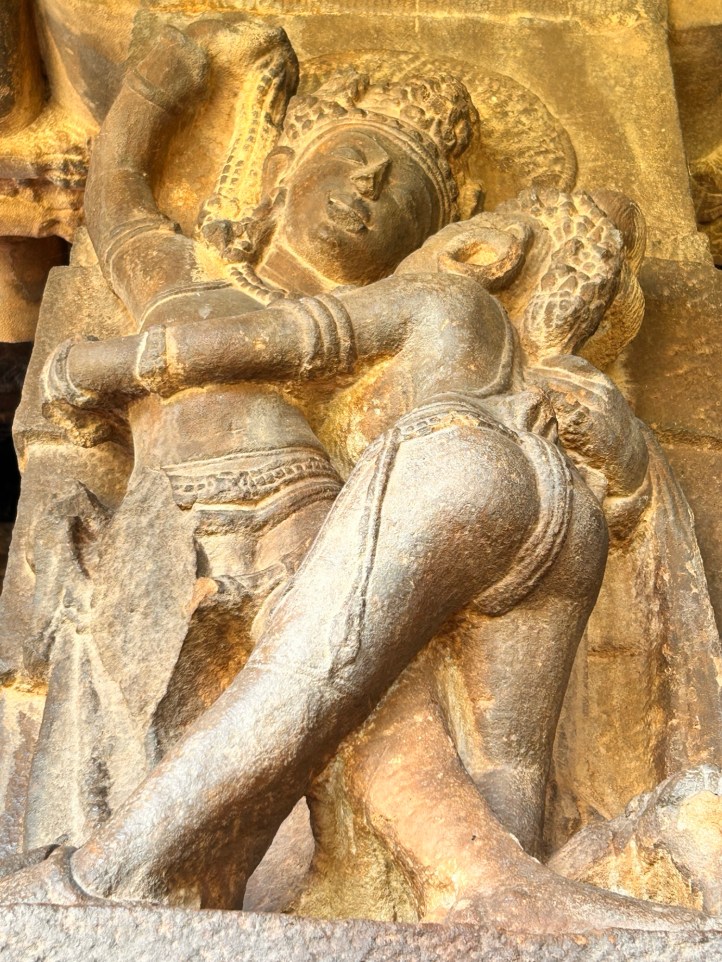
But when it came to explaining the horse faced woman below, he got all hot and flustered. According to him the horse symbolised power like the Ashwamedha Yagna conducted by kings of yore, hence the lady with the horse-face in the photo below.
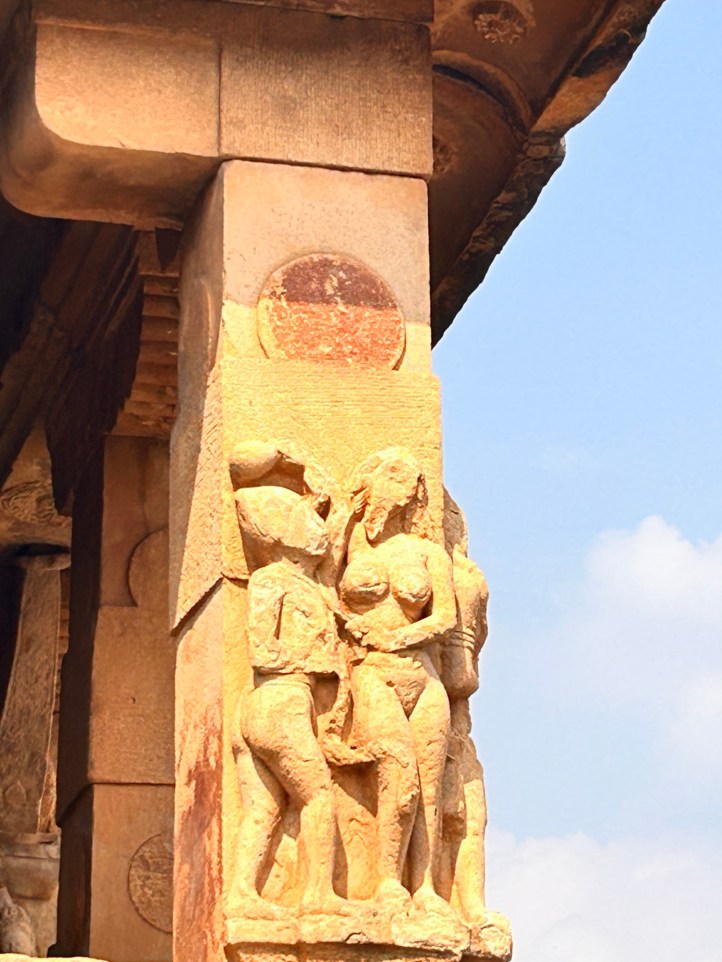
Then he mumbled something about the horse’s semen, which was collected and given to alcoholics to cure them of their addiction.
Noting our puzzlement, he got even more enthused and muttered something else about Ashwagandha which he said was a horse’s sweat which was given to people to boost their immunity and virility.
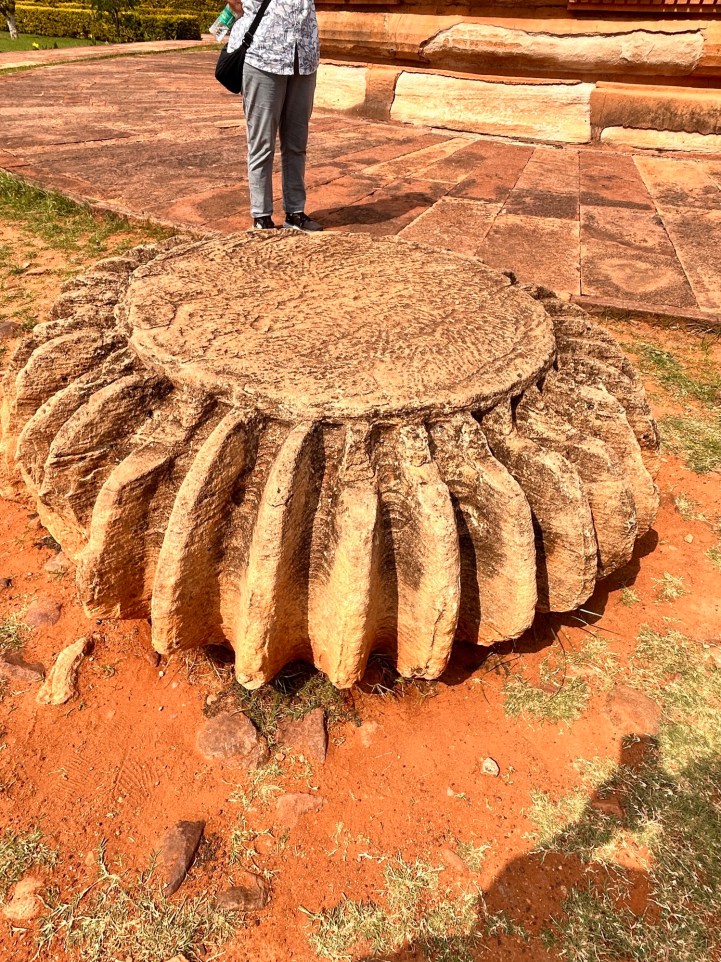
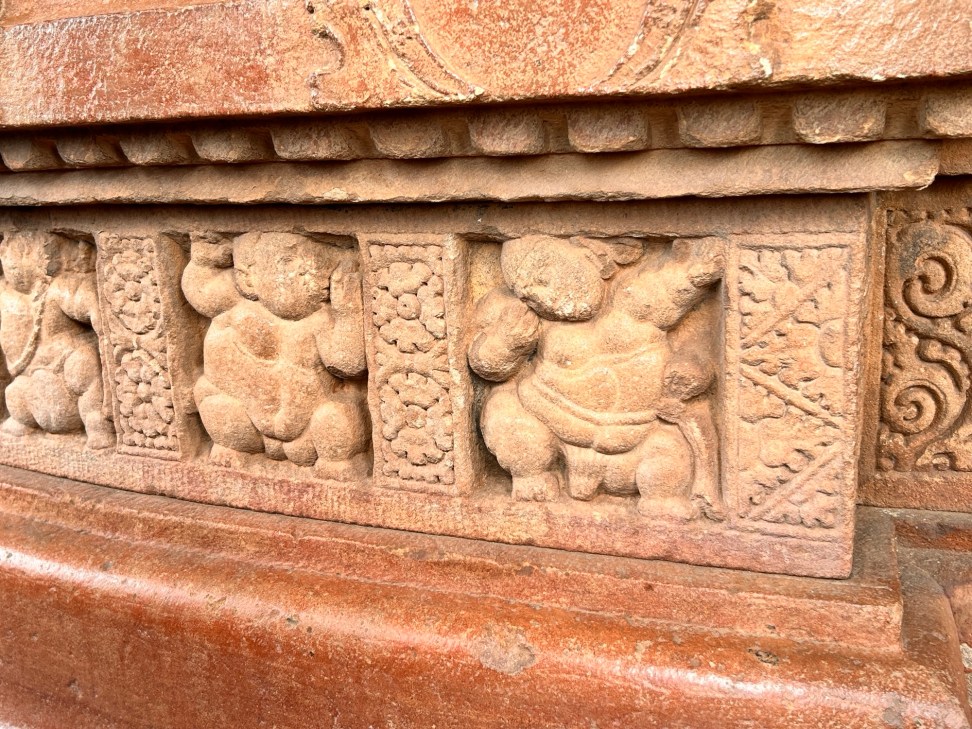
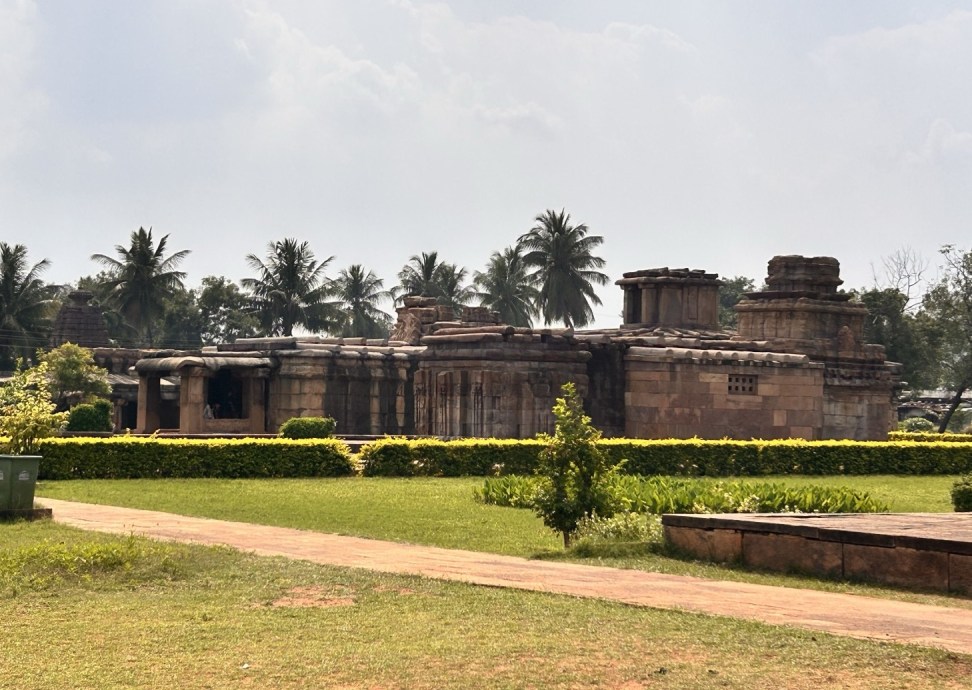
It was really hot by the time we finished seeing the Durg temple so we didn’t even venture across the lawns to see the group of temples that were so near and yet so far.
Perhaps, if we had started earlier or if the sky had been overcast as it had been the previous day, we would have seen them and even more temples that lay beyond.
For it seems that there were more gems to see by the riverside. The river that gave the town its name ‘Ai hole! ‘
Ciao

For a detailed account of the temples at Aihole, please visit the two sites mentioned below.
https://thefloatingpebbles.com/aihole-how-to-discover-an-ancient-temple-town/town/
https://turuhi.com/story/aihole-the-cradle-of-indian-temple-architecture
 Twenty- five Seven
Leave a comment