• A Heavenly Palace and A large Gun

    Like any old city, Bijapur abounds with historic ruins. On the way to the Gagan Mahal, we passed a magnificent gateway called Mehtar Mahal. . This tall beautiful structure, built in the Indo-Sarcenic style is in a state of total disrepair. As late as July of this year, a dome from one of the minarets came crashing down.

    Some people say this is the entrance to the Palace built by a sweeper to the king. Some say it is the entrance to the mosque made by the sweeper to the king. But Jehangir pooh-poohed this as rubbish.

    GAGAN MAHAL

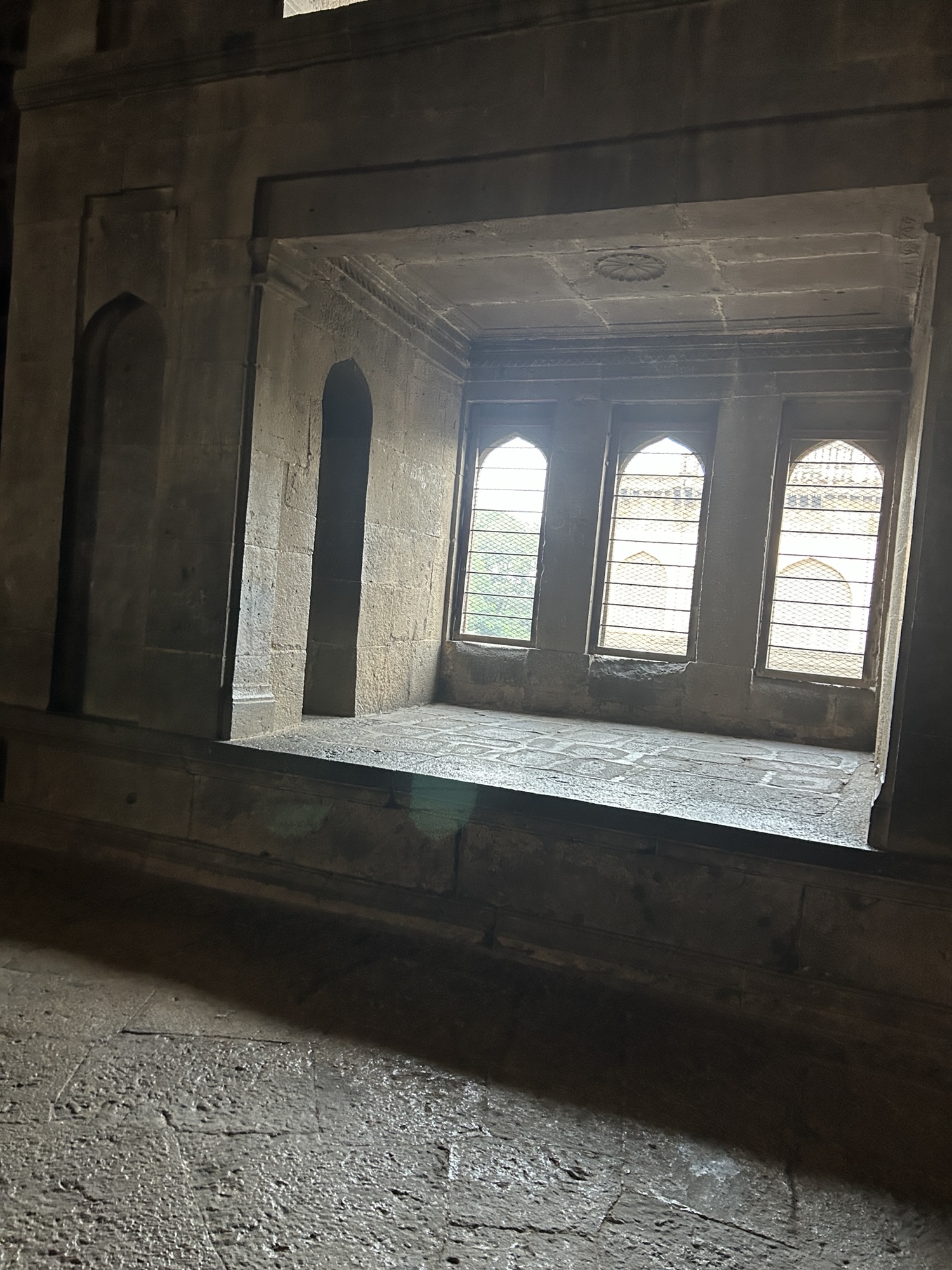
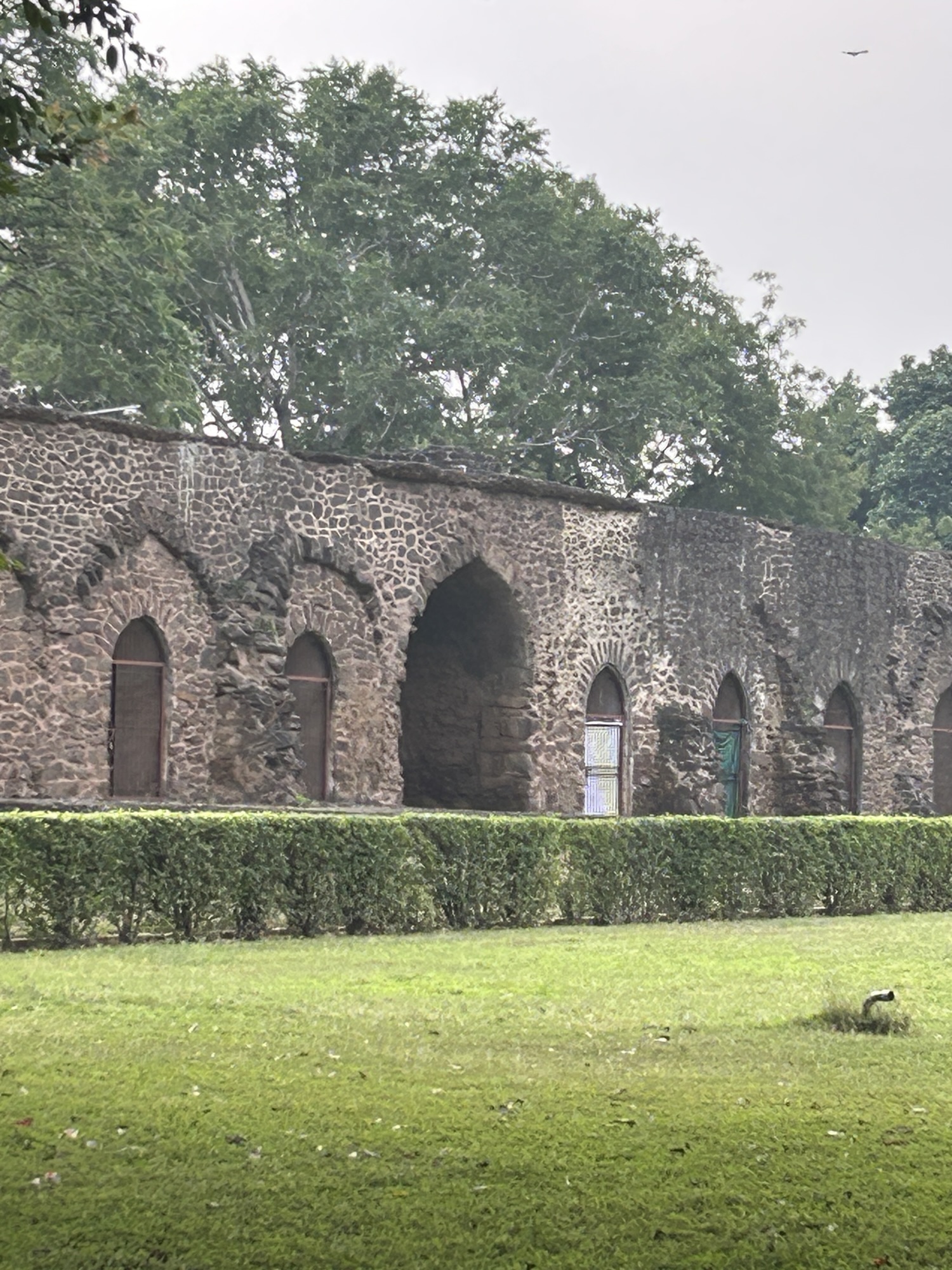
    Unlike most of the ruins that we saw that were of mausoleums or mosques, this particular ruin was the first palace built by Adil Shah. It is set in a citadel that had six palaces built by each succeeding king of the Adil Shahis. Traces of a crumbling fortifying wall and a moat sadly floating with rubbish, can still be seen.

    Ruins of the Gagan Mahal with its central archway

    The Central archway with its 90 ft span is impressive indeed. Now open to sky, this once was a huge two-storey structure with a durbar hall on the ground floor to receive special guests. Wooden columns held up a ceiling . The royal family lived on the first floor. Vestiges of the beautiful building are still visible but largely this remains a ghostly relic of the past.

    THE TWELVE ARCHES OF THE UNFINISHED TOMB

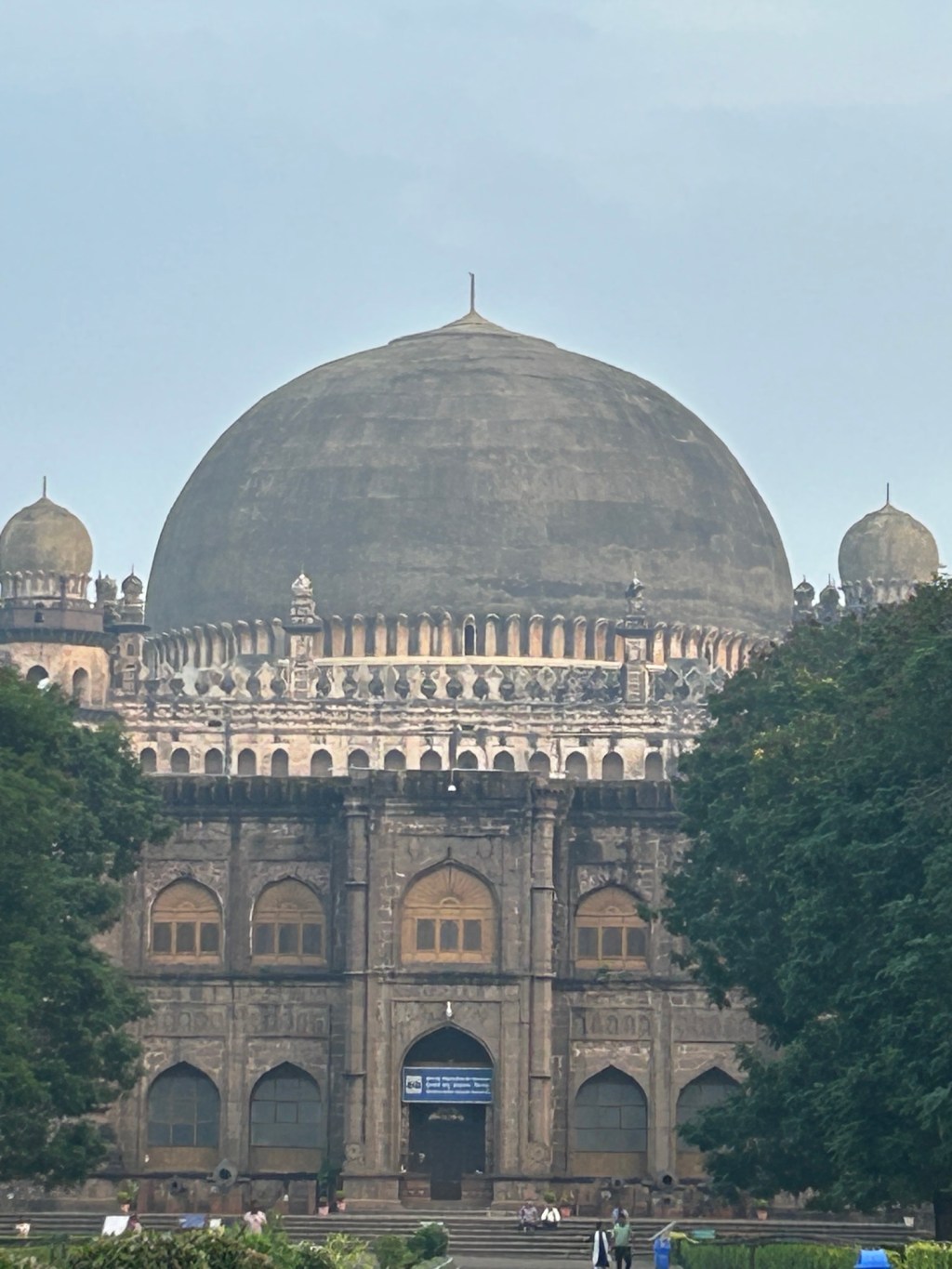
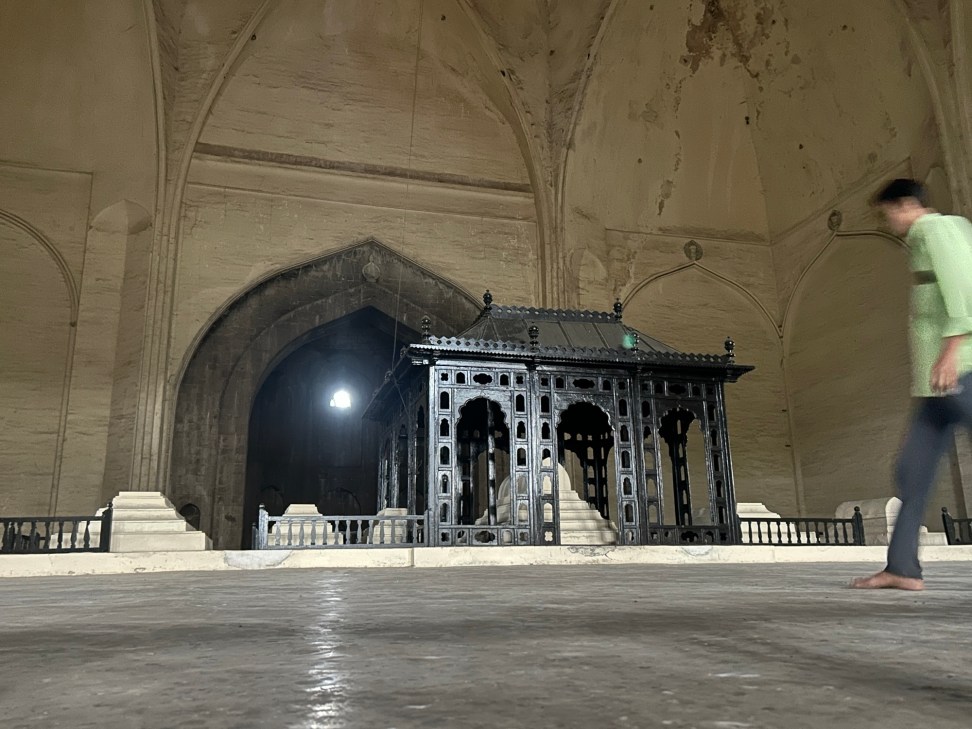
    As per Islamic tradition (according to Jehangir) each king built his own mausoleum and began its construction upon his accession to the throne. This was because they wanted to die as rich as they had lived. Ali Adil Shah ll wanted a tomb that would overshadow his father’s Gol Gumbaz but sadly it remains unfinished. Thus, the unfinished mausoleum of Ali Adil Shah ll remains a grand structure with 12 rows of arches placed lengthwise and breadthwise on a huge plinth, open to the sky. This structure is known as Bara Kaman.

    And in this unfinished mausoleum lie buried the king and his family.

    The Lord of the Battlefield

    As we drove up to the battlements of the fort, if Jehangir were to be believed, we actually on a road which was once a moat. Bijapur, he proudly told us, was like Venice. It’s hard to imagine, though but with the grand edifices, albeit in ruin, it must have been a truly majestic capital city.

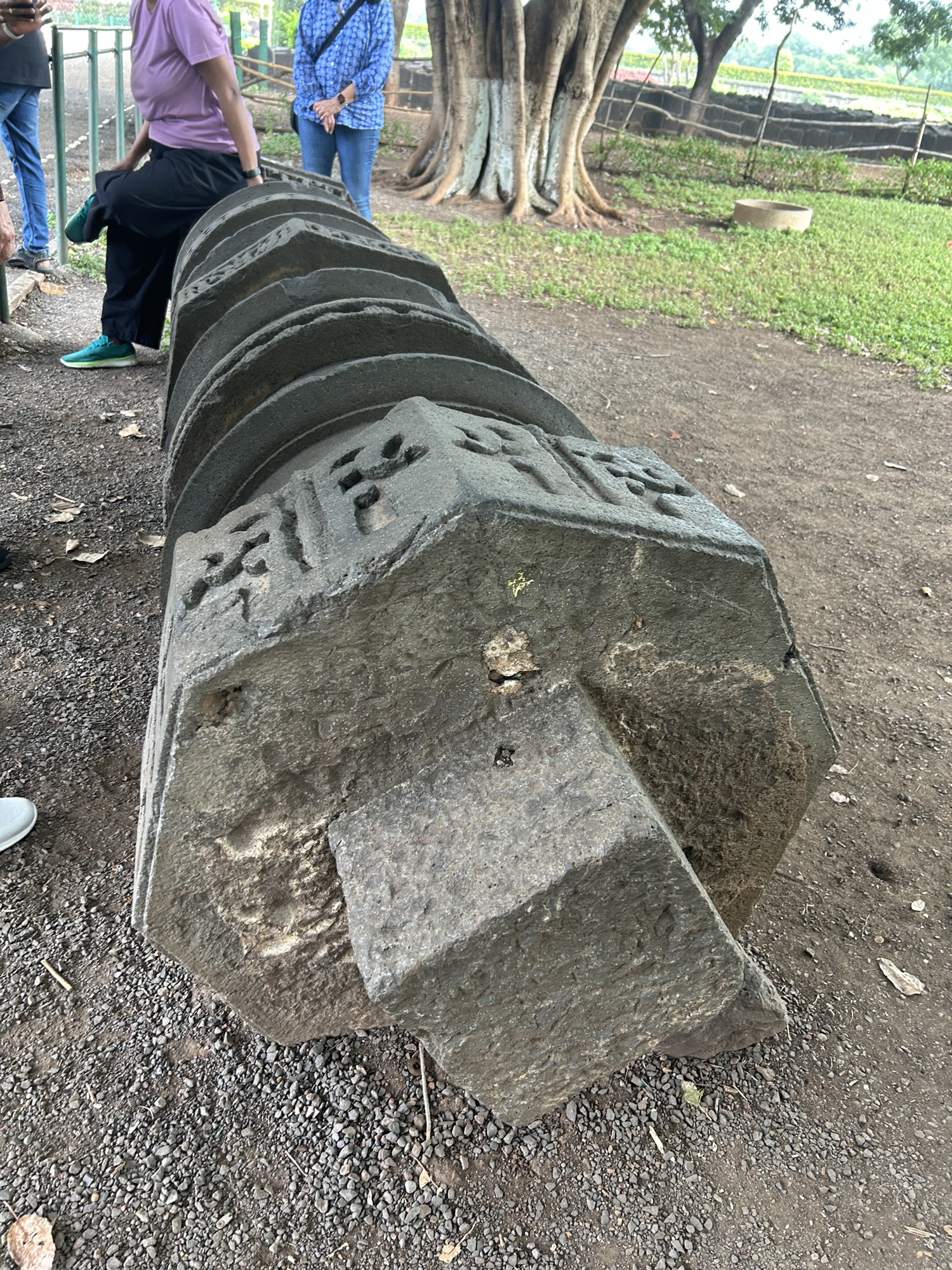
    The 16th Century cannon made of bell metal or panchadhatu , Malik-e-maidan or Lord of the Battlefield is on top of a cannon tower.

    This monster of a gun was made in Ahmednagar and used in the battle of Talikota in which the Vijayanagar empire was defeated. It was in Solapur for several years before it was brought to Bijapur by elephants .

    With a 14-foot-long muzzle beautifully embellished with three inscriptions on the top, and an elephant being devoured by a lion at its mouth. The first half of its chamber was packed with gunpowder and then stuffed with huge cannon balls that shot out when the fun was fired. It made such a loud sound that the gunman had to jump into a well after the wick was lit to prevent his ears from shattering. Jehangir told us that the aim of this gun was not to kill humans but to create such a fierce sound that all the horses and elephants of the approaching army would flee I panic.

    The shadows were beginning to lengthen and it was time to move on to our last monument for the day.

    The Black Taj

    It was a treat to see this monument in the dying day. The blue sky with a few clouds made for a dramatic setting, and we enjoyed a leisurely walk through the complex as Jehangir pointed out the minute details that distinguished this monument. He wound it up with some fantastic photographs which I cannot unfortunately reproduce here without the permission of my friends

    Made of black basalt, this truly is a magnificent mausoleum. Called the Black Taj, this was the inspiration for the Taj Mahal in Agra was modelled.

    The Black Taj was begun by Ibrahim Adil Shah as a mausoleum for his wife queen Taj. Unfortunately, he predeceased her so she completed it and was buried beside him.

    Once again beautifully carved out of black stone, there are some panels that remain unfinished after the queen passed on.

    After bidding goodbye to Jehangir we went back to the city to have a look at my sister-in-law’s ancestral home and family temple.

    It was lovely to stand in front of the goddess who smiles so benevolently on all who stand before her. There were devotees lighting oil lamps before her and a special calmness surrounds you as you offer your prayers.

  • Bijapur & Vijayapura

    Bijapur & Vijayapura

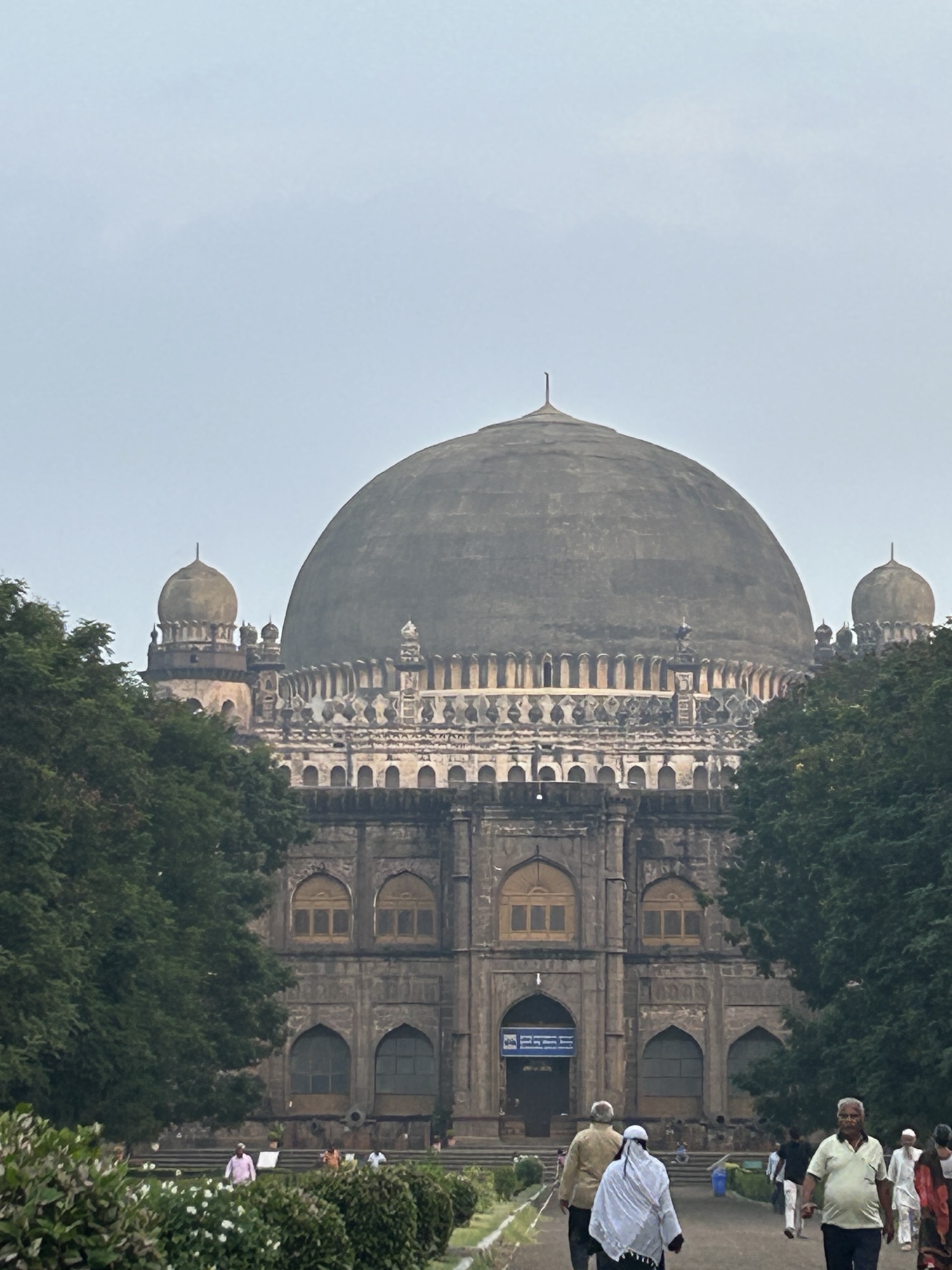
    A first glimpse of Bijapur

    How Vijayapura became Bijapur and then again Vijayapura

    Vijayapura or the City of Victory was first established in the 10th Century CE by the Chalukyas. Its name was changed to BIJAPUR after the area was conquered by the Bahmani kings.

    The gradual decline of the Bahmani Kingdon due to its incompetent rulers and internal conflict led to the establishment of five independent Sultanates :

    Yusuf Adil Shah, who founded the Bijapur Sultanate, retained Bijapur as his capital until it was annexed by Aurangzeb. It still remained BIJAPUR till finally its name was changed to the original VIJAYAPURA in 2014.

    VIJAYAPURA

    After settling into the Fern Residency, our hotel for the night, we set off to explore the city.

    Tonga in Bijapur

    I had last visited the city over thirty years ago to see my newly born nephew and had faint memories of it being a dusty, small town somewhere in Karnataka.

    The Friday Mosque & first hiccup

    Our first stop was to pick up our guide, Jehangir, a tiny, scruffy looking young man. For a moment, we were taken aback by his appearance and for a moment, thought the driver was giving a ride to a friend. But by the end of the day, we were all impressed by his knowledge and totally floored by his photography.

    The Friday Mosque

    We were all ready to get off the bus when Jehangir looked at S in his shorts and announced that he wouldn’t be allowed in because of his ‘immodest ‘dress, since it was an active mosque. He suggested that S drape his legs with one of the curtains in the bus! Luckily, one of the girls’ shawls came to the rescue and S was spared the ignominy of wearing a curtain and got by with a shawl as a lungi.

    The Friday Mosque or Jumma Masjid is the largest mosque in Bijapur and was built by Ali Adil Shah 1 to commemorate his victory over the Vijayanagar Kingdomw. This victory mosque is grand and can easily accommodate around 2500 people .

    The Royal Entrance to the mosque

    We entered the mosque through the Royal entrance and were amazed by the sheer size of its courtyard, the dome and the arched colonnades that accommodated the faithful who came to pray.

    Jehangir pointed out the huge Eastern gate built by Emperor Aurangzeb or Alamgir who was tasked by his father Shah Jehan to conquer the Deccan to prove his worthiness to inherit the throne, after he acquired the Sultanate of Bijapur.

    The Eastern Gayteway to the mosque

    What really impressed was the mihrab ( a recessed wall) decorated with verses of the Koran in black and gold calligraphy.

    The exquisite decoration of the mihrab is often compared to the mihrab of the cathedral at Cordoba
    Traces of the fine tile inlay on the arches show the Coat of Arms of the Shahis.
    Detail of black and gold decoration of the mihrab, interspersed with lapis

    On the floor you can see traces of the ‘carpets’ marked out to fit the worshipers in perfect lines

    The ‘carpet ‘ marked out on the floor

    The long arched colonnades

    .

    view from inside the mosque
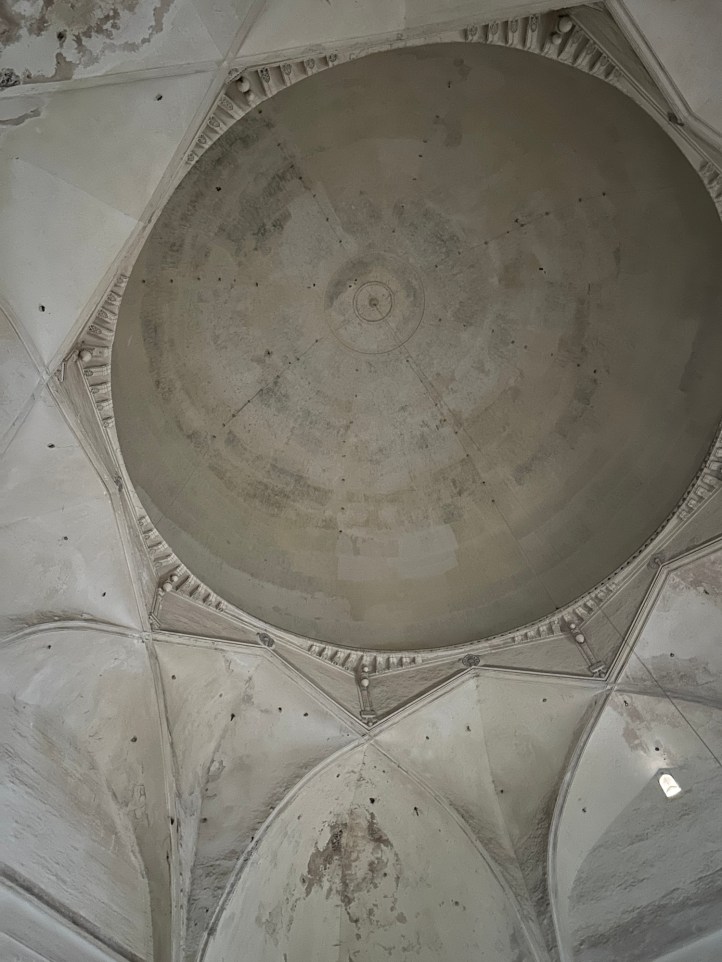
    A view of the dome with its incomplete crescent moon made from five metals from the inside

    Jehangir would have spent more time talking about the finer architectural aspects of the mosque – its intertwined arches that held up the dome, the fine-lay work in the main prayer but we had to move on to the next monument that awaited us – The Gagan Mahal.

    Ciao,

  • Discovering the Lesser Known History of the Deccan

    While growing up, Indian history for us meant learning about the ancient Indian civilisations of Mohenjo-Daro, the Guptas , the Mauryas the early Muslim invasions, the Mughals, the British and then the Indian Freedom Movement.

    We did have a page or two devoted to the rulers of the Deccan, such as the Chalukyas, the Cholas, the Rashtrakutas, the Pallavas, and the Marathas, but they were literally touched upon to tick the boxes. The temples of South India, along with a few other architectural marvels such as Khajuraho and the cave temples of Ajanta, were only mentioned as part of the glory of ancient India. Apart from the Mughal Era which we learned about in great detail, much of India’s history remained unfamiliar to most of us.

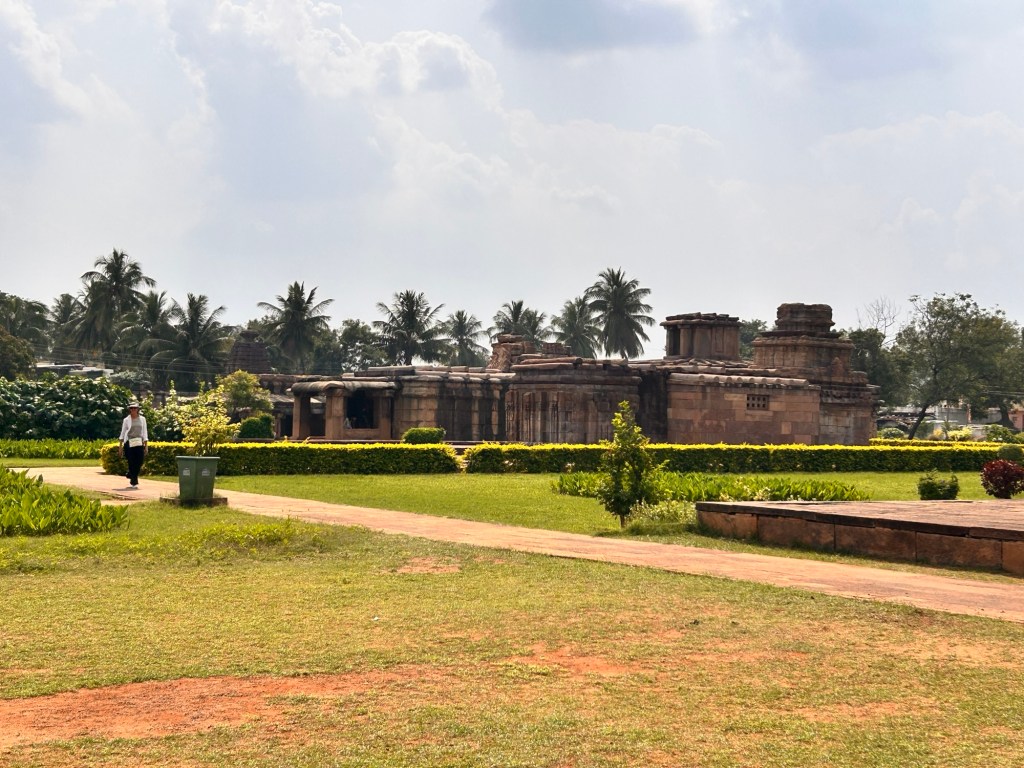
    So when my sister-in-law, who hails from Bijapur, was organising a trip to her hometown, I just had to jump on the Intercity to join up with her 4-day trip to Bijapur, Badami, Aihole and Pattadkal.

    The trip begins

    We began our road trip from Pune with a 3-hour train journey to Solapur. Though it was an early start to catch the 6 am Pune Hyderabad Intercity, we enjoyed the ride.. With nine of us chattering away, the three hours went by in a jiffy. The Rajlways surprised me with their ‘airline’ style welcome tea and breakfast. It was definitely an improvement on the limp paper plate with a bread-draped omelet that I had had the day before on the Intercity.

    View from the train

    Ciao

Design a site like this with WordPress.com
Get started