• Christ Church, Flower gardens, & Some Traditional Culture , Munnar

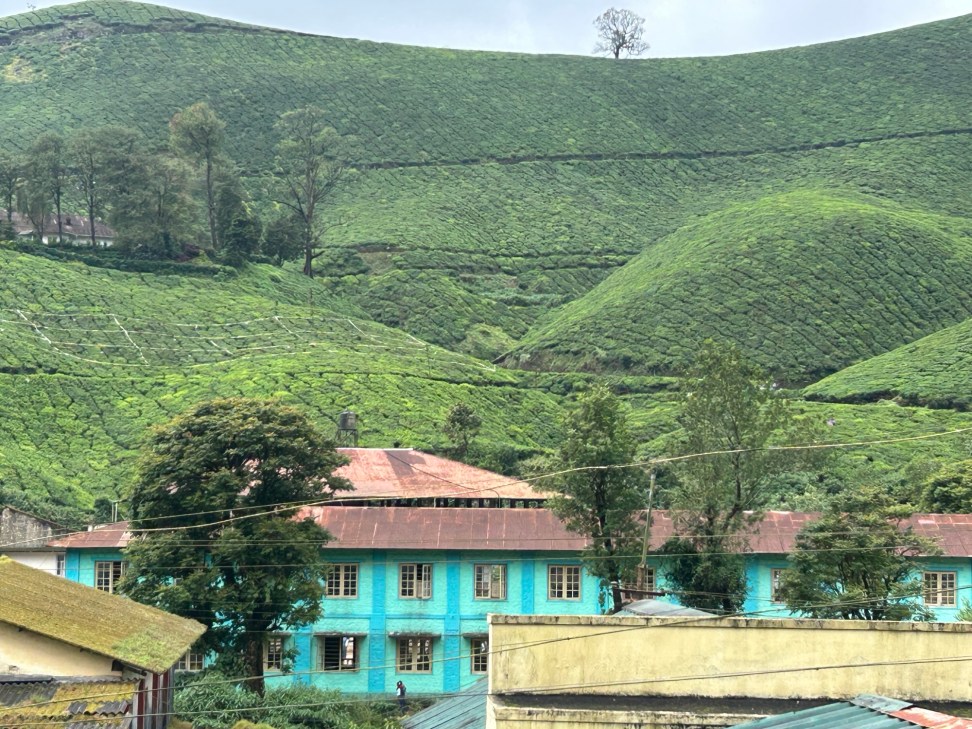
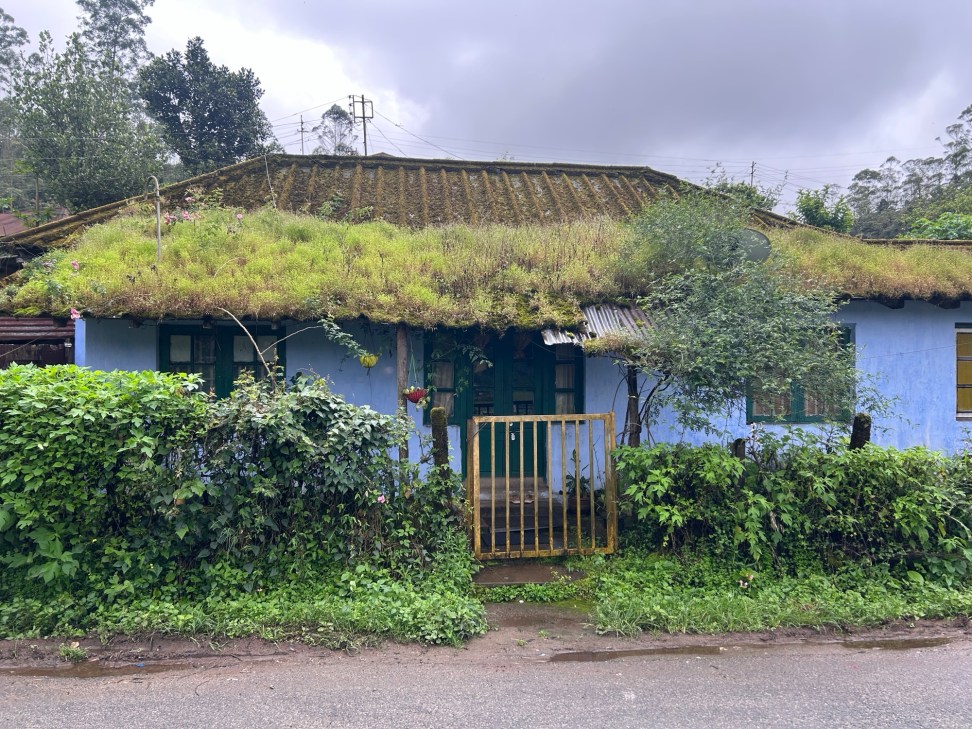
    I was expecting a larger Colonial presence in Munnar since it was essentially created by the British. But since it was a small town to begin with, consisting mainly of a few planters and their Indian workers. Besides it wasn’t a garrison town nor was it a British administrative summer capital. So essentially, the buildings were bungalows belonging to the planters ( many of which are now converted into Hotels) ,The Top Station, The Tea Museum, which is housed in a former colonial era tea factory and of course the High Range Club where we stayed.

    Most colonial towns have two quintessential British footprints – a Church and a Botanical Garden.

    Christ Church, a stone structure, typically made of stone as were most British colonial buildings, is perched on a hill. It is just over a 100 years old.

    There were some repairs work going on while we were there so I couldn’t get proper photo of the church from the outside.

    Once inside, you could feel the peace and quiet. As always, there is an air of poignancy as one imagines the people who worshiped there , in an alien land, far away from home, trying to recreate a bit of the world they left behind.

    The Flying Spider Monkey Fern Tree

    Since our local driver was our guide, I’m not too sure whether what we saw was the Botanical Garden, the Rose Garden or just a plant Nursery. On the map there are two marked gardens: The Government Botanical Garden and the KFDC Flower Garden. In addition, we also visited the Carmelgiri Spice Garden.

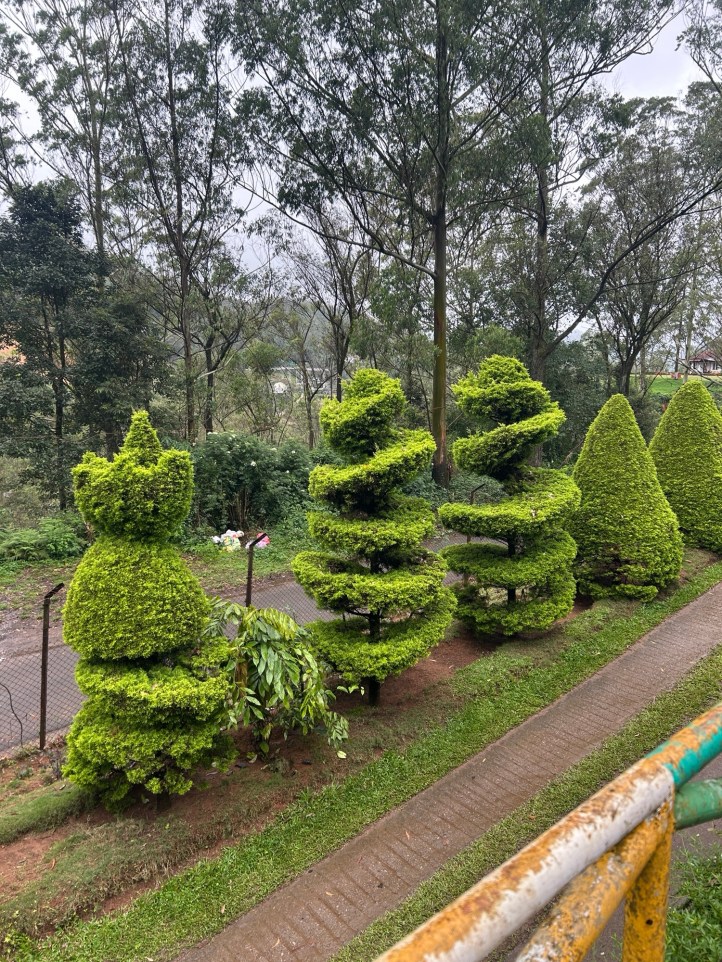
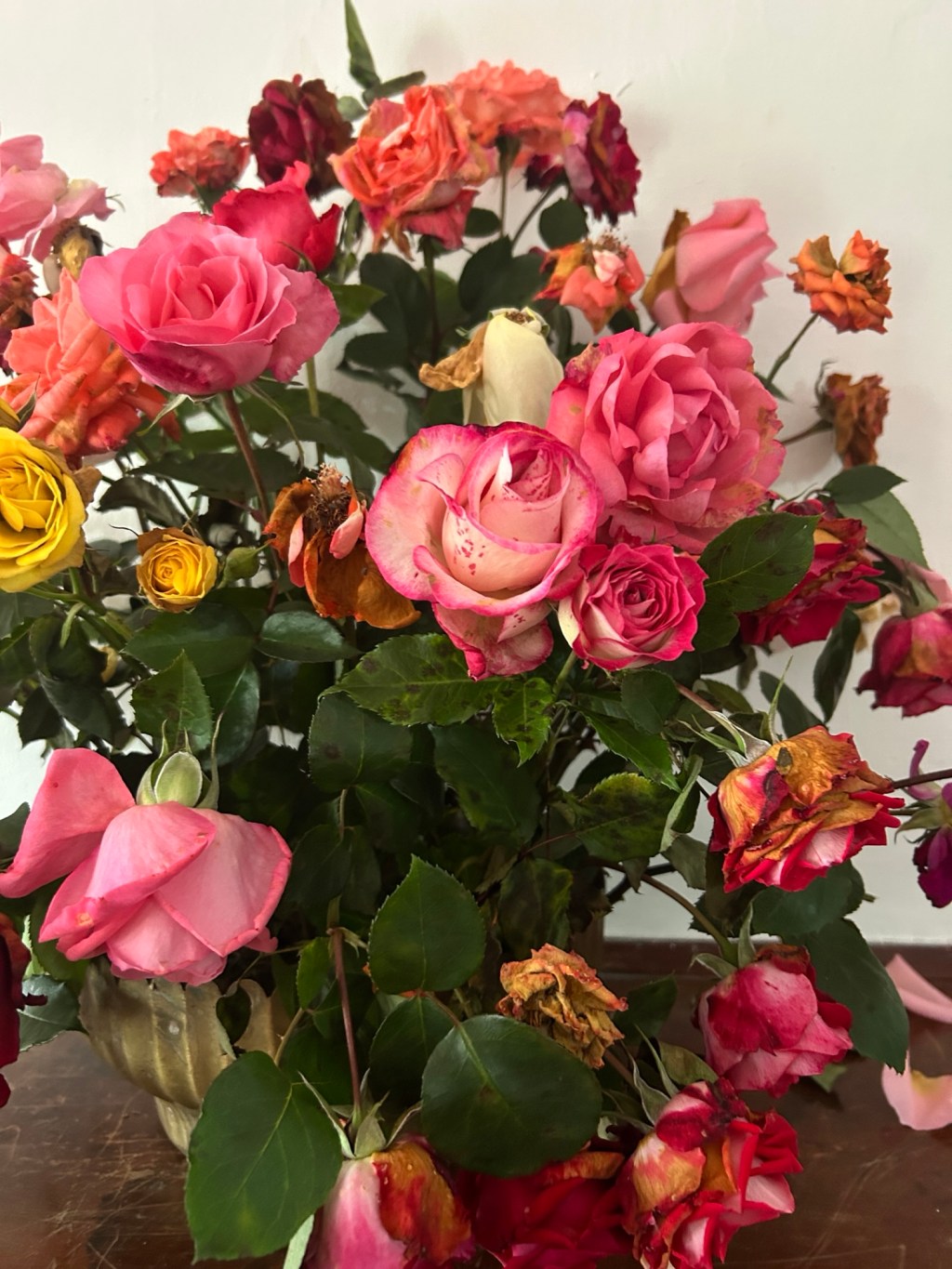
    It seems that we saw the KFDC Garden which was also known as the rose garden. Sadly we didn’t see many roses and the whole garden had more of a plant nursery feel to it with potted plants placed terraced steps.

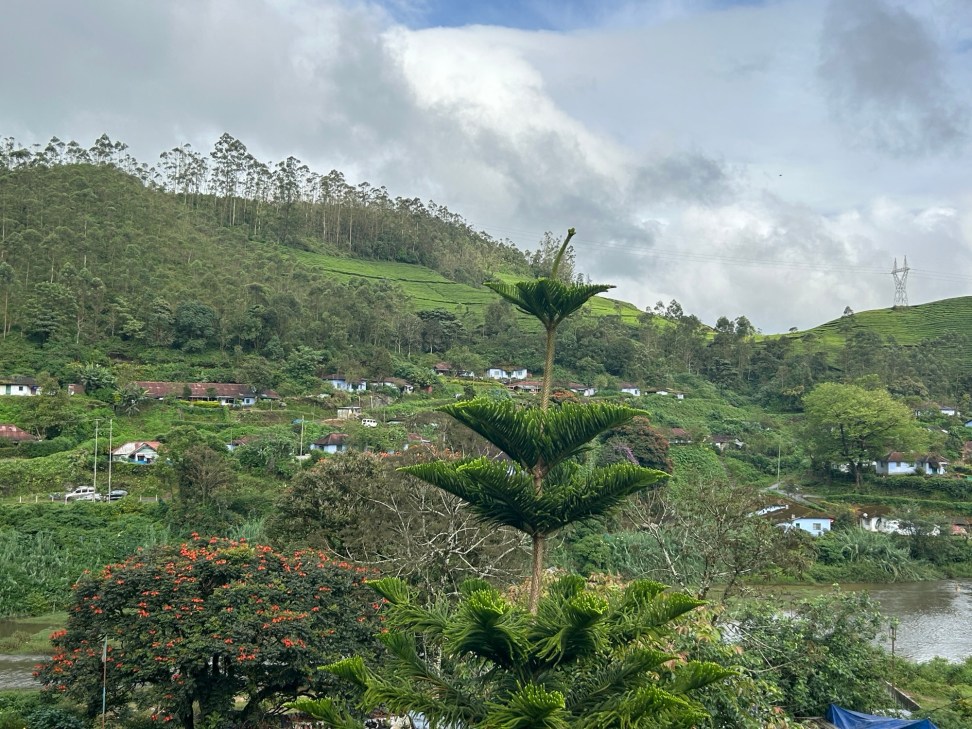
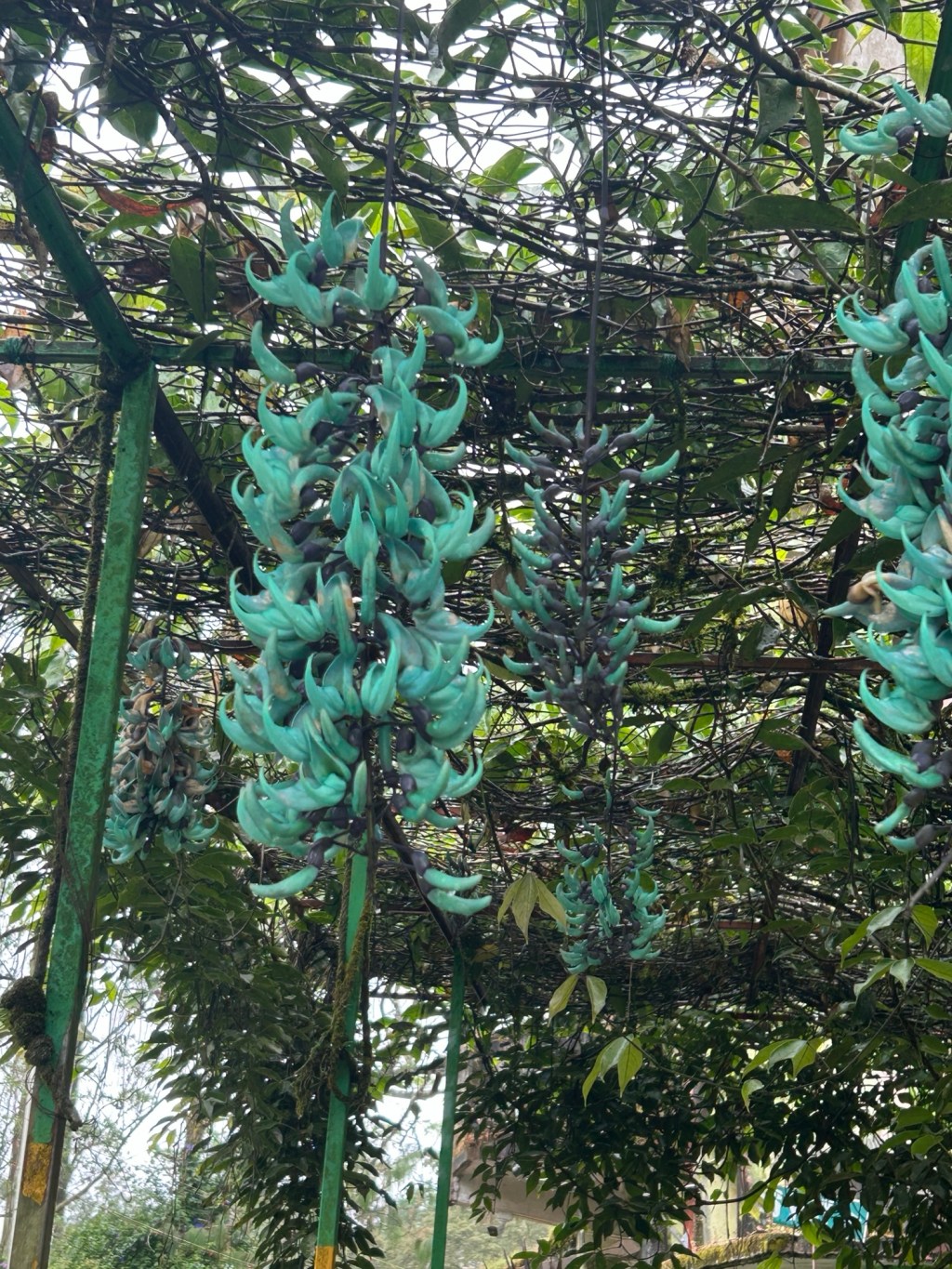
    We spotted some really exotic plants like the Flying Spider Monkey Fern Tree and creepy looking cacti called Monkey’s Tails at the KFDC Flower garden.

    We also spotted some Love Shoots going on and we had to be careful not to photo bomb these ardent young couples.

    Similarly, the Carmelgiri Garden which was supposed to house exotic cacti, also looked like a plant nursery. We just went through quickly, bought some genuine Kerala Cloves and Cinnamon and made our way to the last must-see for the day – the Kathakali Dance and Kalaripayattu.

    Kathakalli & Kalaripatatu

    Though we had decided to cut short our stay at Munnar, we thought we must see a dance performance and a demonstration of the Martial Art form that is supposed to be the precursor to Karate.

    The receptionist at the HIgh Range Cluyb directed us to Punarjani, a totally show and tell experience for the tourist. Expecting to see a full fledged dramatic Kathakali dance, we were a bit disappointed to find out that we had signed up for the Fusion performance which showcase all the South Indian dances. It was enjoyable with a mix of modern music, special effects on the stage and was well received by the audience.

    But we were not prepared for the packed performance for the later show of Kalaripayatu where the audiences kept coming in. We cut short our show because by this time it had already become dark and we had an early start the next day to drive down to Kochi for our return flight. Besides, the HRC stopped its dinner service by 9 pm and we didn’t want to sleep hungry that night.

    So we missed the dramatic fire scenes and we will have to visit Munnar at a better time when the road work is over, when there is no rain in sight and the accommodation lives up to its promise of a truly colonial experience.

    Ciao,

  • Life is like a cup of tea
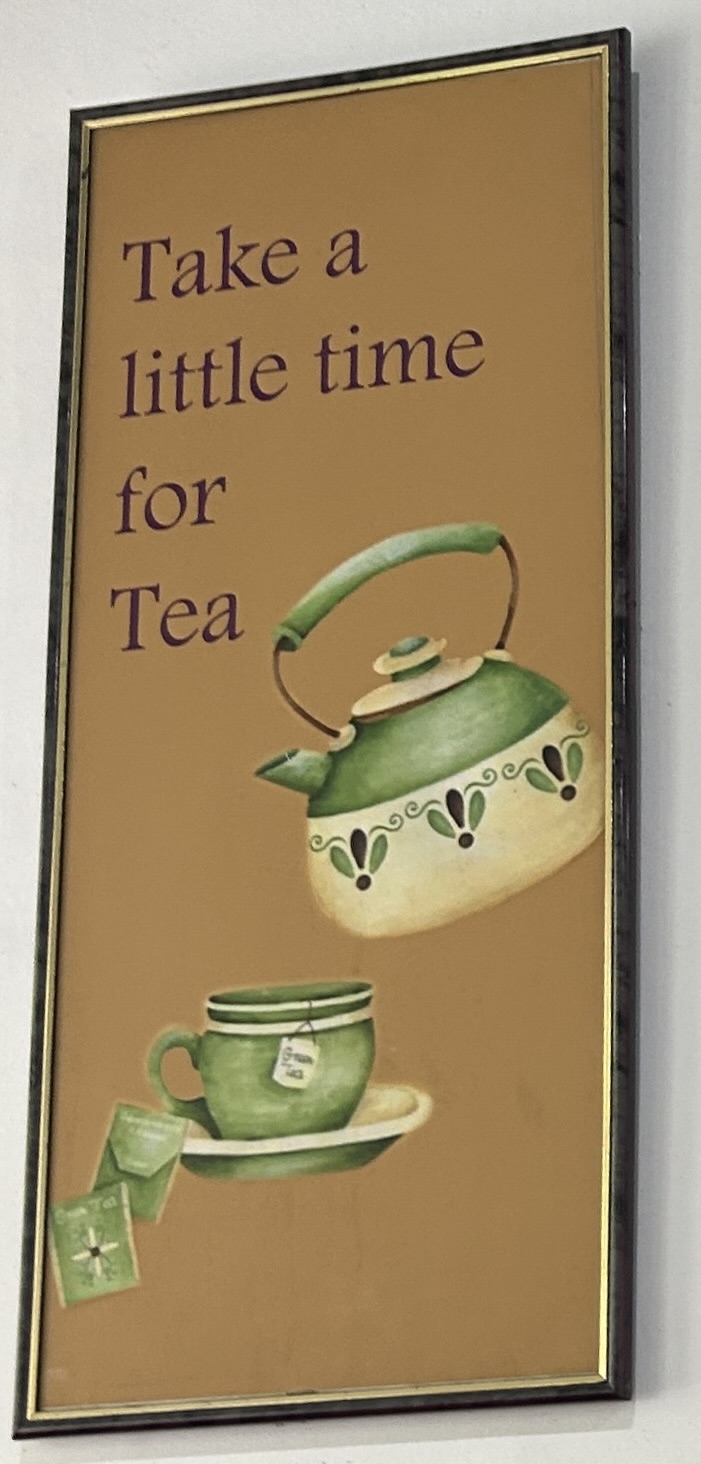
    A poster at the tea factory

    There’s more to a tea pot than what you thought

    Years ago (almost half a century ago), I remember going with my class to the Tea Board Office at Churchgate, where we were told what went into a pot of tea. As eight-year-olds, we were hardly interested in tea or tea parties. If ever we went to one, we had to mind our p’s and q’s, talk in hushed whispers, nibble at the cucumber sandwiches, and politely decline the second slice of cake while our mums sipped tea from delicate bone china cups. Luckily, we had hot chocolate instead.

    Not just a cup of tea

    But what I do remember after all these years is how to make a good pot of tea.

    “Rinse the pot in boiling water before adding one teaspoon of tea for each person and an extra one for the pot.

    Then pour the required amount of boiling hot water, put the lid on tight and let it steep or brew for five minutes before pouring out each cup.

    Tea should be drunk without any milk or sugar, but if milk is a must, then only a drop of cold milk will do.”

    Now in an Indian household, these instructions are like water off a duck’s back. In most kitchens, a pot of tea would be boiling for at least five minutes after the leaves are added and for another two after the milk is added so that you get a nice, strong brew. This is the cup that we all want. Strong, robust chai. One where you dip in your biscuit or khari, one which you pour into a saucer and blow over to cool before slurping it noisily and letting out an ‘aaah’ of pure satisfaction .

    How to really Make a cup of tea

    Well, all these years of slurpy chai went for a toss when I visited the Kannan Devan Hills Plantation Tea Museum at Munnar. Formerly known as Tata-Finlay, this tea company is unique in that a large part of the shareholding belongs to the workers!

    Tea was known to India before the British, but it was only the British who cultivated this plant and introduced the chai culture.

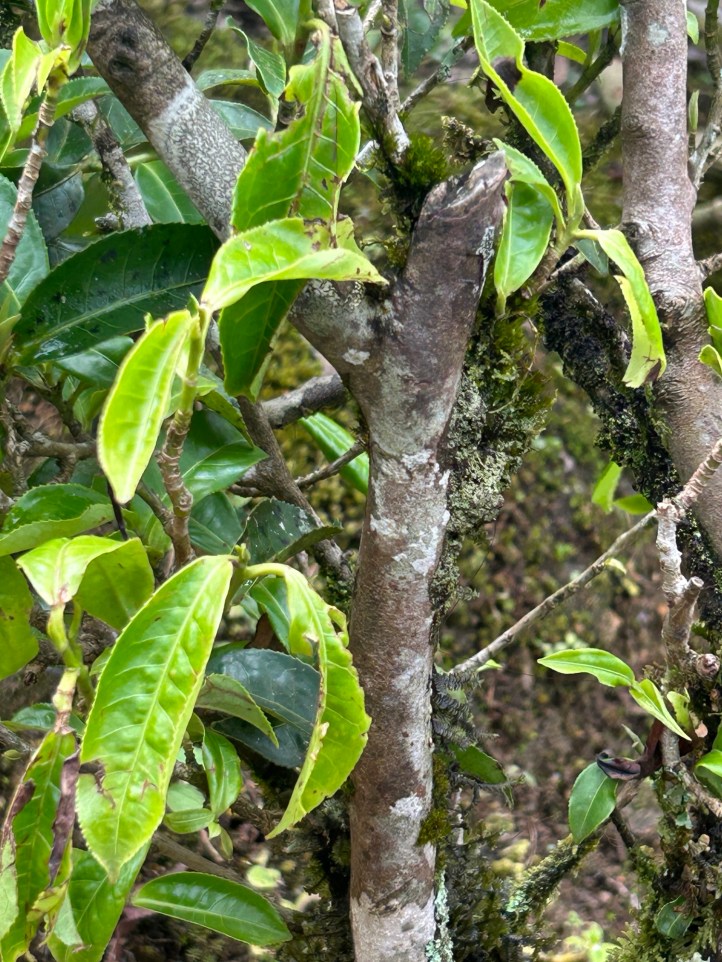
    Brought to the Kannan Devan hills, by the British in the 1870s, the high ranges of Munnar produce some of the best teas in the world.

    Since photography at the museum is prohibited, I kept my phone in my pocket and admired instead the artefacts from planters’ homes, concentrated on the documentary and the visit to the factory.

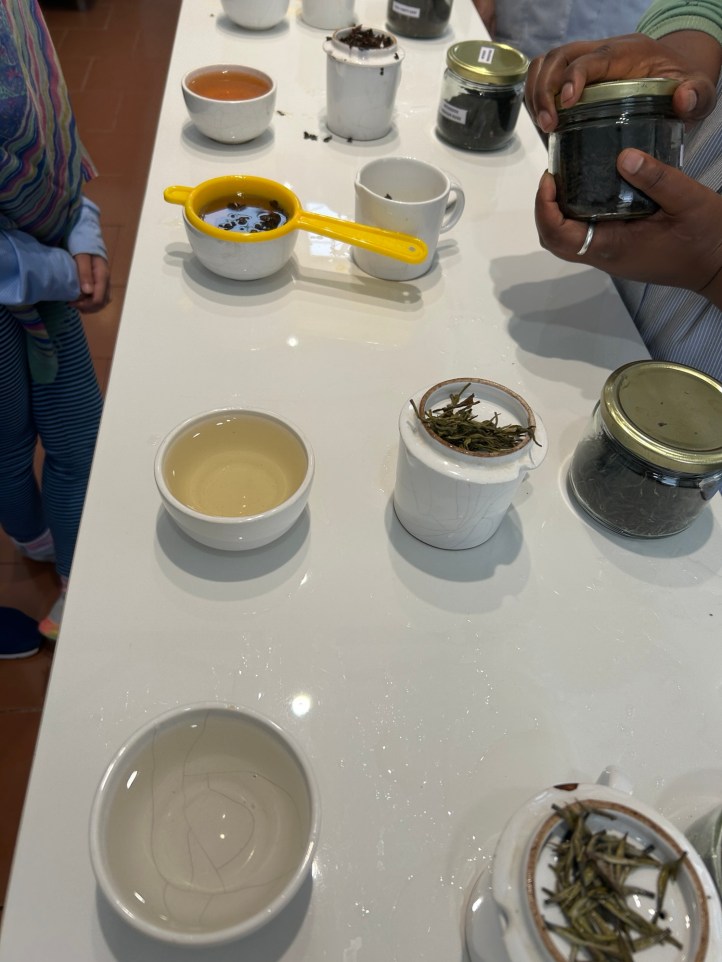
    The highlight for us, of course was tasting the tea.

    The Tea Taster took us through a variety of teas, ranging from White Tea, which is the most expensive as it is made from the tender leaves in bud form. These are naturally sun-dried and produce a light liquor when brewed, to the tea dust or powder that is much loved by roadside tea vendors.

    The Green Tea is the second pair of leaves and is mechanically dried. But it is only rolled and produces a liquor with more colour. Both these teas are NOT to be drunk on an empty stomach and NEVER with a spot of milk, she told us.

    Thereafter, the lower leaves are used to produce black tea that is either Orthodox or Crushed Torn and Curled.

    Tea leaves that are gently rolled and regain their shape upon brewing make up Orthodox or English breakfast.This delicately tinted tea is light and flavourful. You could add a spot of milk but remember it must be cold and literally not more than a drop !

    The CTC that is most popular is robust having gone through a process of cutting, tearing and curling. These tiny leaves are graded size wise. This can make a strong black tea. We were also treated to flavoured teas and were asked to guess what the flavours were.

    No visit is complete without a look at the shop. I highly recommend the preserves that are made by the specially challenged, the chocolates and of course the various teas.

    not without the tata’s

    Even though Tat-Finlay no longer exists, the Tata’s have a large presence in Munnar.

    Tata’s High Range Hospital provides affordable healthcare to its workers and is open to the local populace, too. It runs a CBSE school. for the children of its employees. Tata’s also run a special centre called Shristi, which educates and rehabilitates the children who are specially challenged, training them in skills that can make them financially independent.

    So the next time you drink a cup of tea, especially if it’s a Tetley’s, remember that there is more than just tea leaves that go into a pot of tea.

    Ciao

  • GROWING UP

    GROWING UP

    I read somewhere that a person only grows up when they lose their parents. If this is true, both my brother and I grew up only last year. We became ADULT ORPHANS.

    We are both very close in age; he is a year and a half younger than I, and we grew up almost like twins. We went to the same school, knew each other’s friends and even thought alike at times. Although he is more outgoing and carefree than I am, our shared childhood experiences bind us together, just as they do all siblings who grow up together.

    Last year, both our parents passed away within three months of each other, and suddenly, as grandparents, we found ourselves grown up. We were probably the few people our age who still had both parents around for so long. Luckily, both parents were in good health till almost the last few months of their lives.

    Since my brother and his family lived with my parents, he and his wife landed up being their primary care givers. It was hard for me to make my parents understand that my brother was also in his mid-sixties and couldn’t go up and down the staircase a hundred times a day just to get a mobile phone they’d forgotten. My mother whose energy was boundless couldn’t understand why I felt tired or didn’t want to push myself more.

    Missing them

    The last year has been hard for me to accept the fact that they are no more. My mum was the first person I spoke to every morning while both of us were on our morning walk. Needless to say, my morning walk has become irregular since she has passed. I’ve tried to replace my conversation with EMPIRE a podcast by Anita Anand and William Dalrymple. Needless to say, nothing can compare with a daily chat.

    My Dad was my go-to Doctor because he was the only person who listened to my daily whines about my ‘health’. I have no one really to humour me these days because doctors are always short of time. I am a self-confessed hypochondriac and once wanted to follow in my dad’s footsteps. So every now and then, I try to figure out why something is going wrong and only my dad would patiently listen.

    Of course, my parents had their faults – my father had a foul temper and he would literally have tantrums when things didn’t go his way.

    And my mother would often put me on a guilt trip with her ‘poor me victim tales’ or stories about the success of other friends’ children or cousins.

    LETTING GO

    But I miss my interactions with them. For many months , they would appear in my dreams. The dreams would be bizarre but they always appeared to be reassuring me. Sometimes, of course, they would admonish me.

    Oftentimes when I caught myself looking at myself in the mirror, I felt it was my mum who was smiling at me. And sometimes when I looked at my swollen ankles, I would think of my dad.

    These fleeting moments would fill me with sorrow and I would actually feel a hollow in my stomach. But no tears would flow -just an inexplicable sadness would engulf me completely.

    Earlier this year, I was visiting their home when, on our way out, there was a loud crash from their empty bedroom. My brother and I rushed upstairs to find wooden stand on which my mum kept her gods, in pieces. All the hooks were intact and there was no way it could have fallen. So what exactly happened ?

    What was the message in this strange occurrence? Was it my parents’ final goodbye? Or, was it a message that they weren’t happy with what we were doing? Had we missed doing something that they wanted us to do?

    Ours was never a family that believed in rituals so we never observed any of the practices that Hindus perform on the death of a person. My parents wouldn’t have wanted that either. But that nagging thought kept persisting- did they secretly want any rituals to be performed ?

    I consulted a psychic and even visited a therapist. They both assured me that this was a part of the grieving process. Missing a person was normal. Grieving for them was also normal. Feelings of sadness were normal too .

    In order to cope, I would call my brother from time to time and share memories we had of our parents. Only he and I could laugh about it.

    Today, it is exactly a year since my father passed away, so I think it is finally time to let go and grow up.

    img_9442
    Being given a formal salute by the Navy

    So goodbye mum and dad .

    I hope you are happy wherever you are.

    Ciao

    Unishta

Design a site like this with WordPress.com
Get started