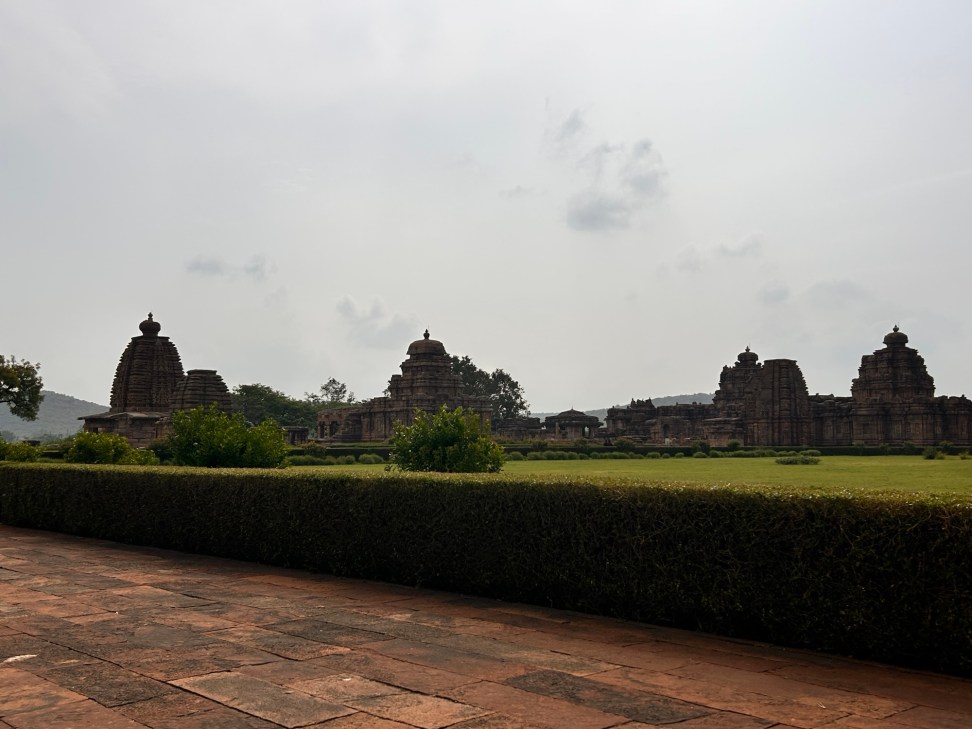
• Pattadakal : Coronation Town

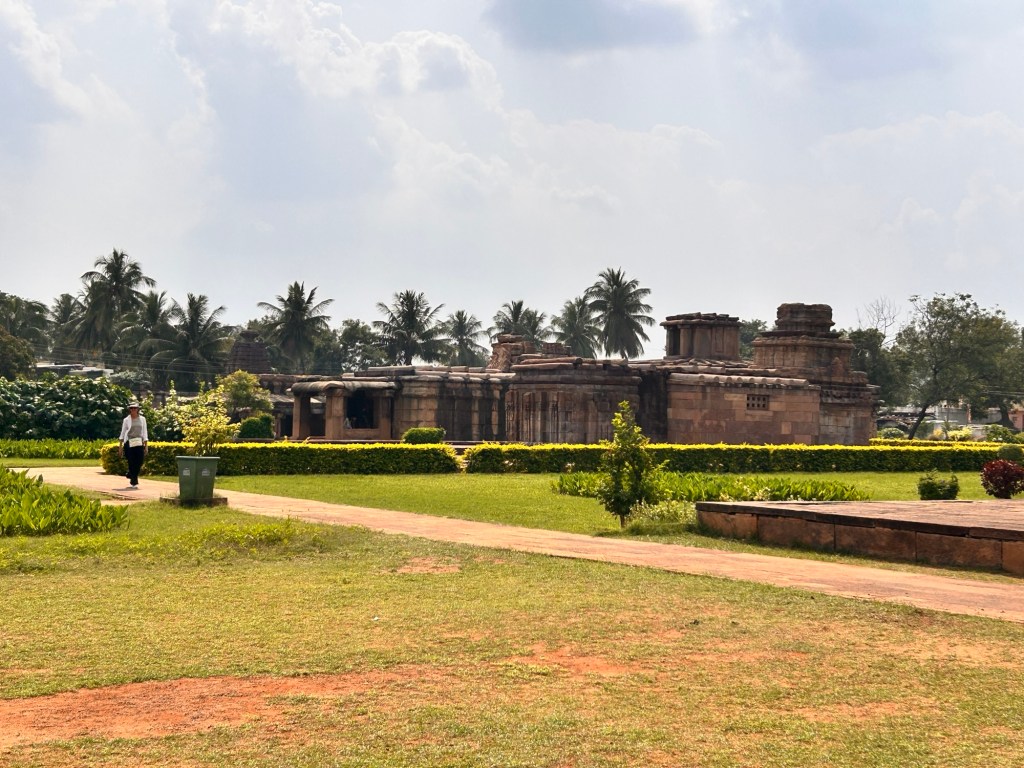
    If Aihole was known as the cradle of Hindu temple architecture.Pattadkal was the High School where it was finally perfected. This town which is called the Cambodia of India has temples in both the North and South Indian styles.

    img_9715

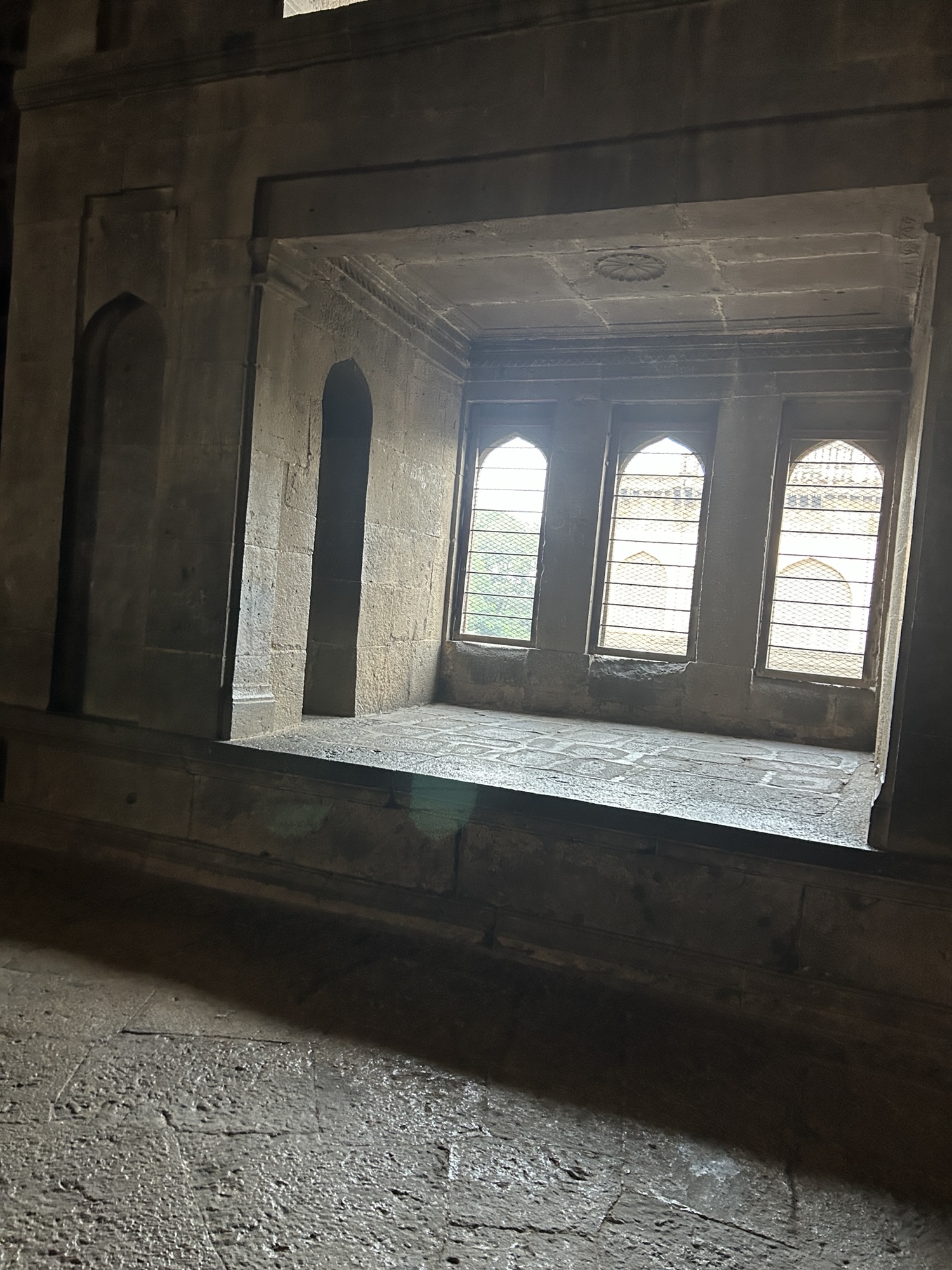
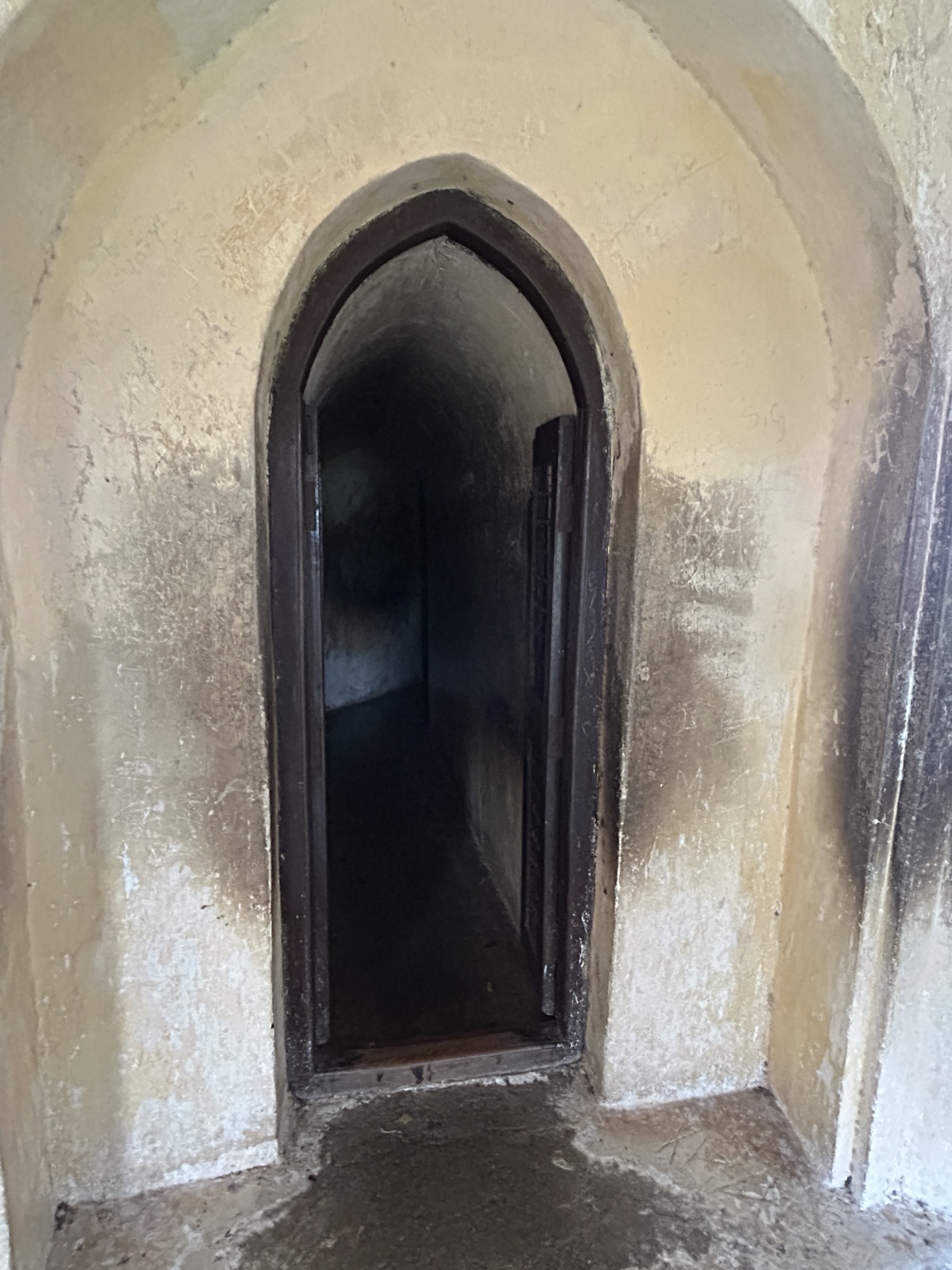
    Like many cities that fall to ruin, its treasures became part of the local population and over the years the villages have used the stones to build their own homes! Signs of temple walls being used as part of a kitchen are shown by the soot-darkened walls.

    So while it was never ‘lost’, it was only uncovered over the years and today it is recognised as a UNESCO heritage sight.

    Crowning Glory

    While most rivers of the Deccan flow eastwards, the Malaprabha river at this point suddenly flows northwards. That is why the Chalukyas chose this unique spot to crown their kings. They also used it to hold important events.
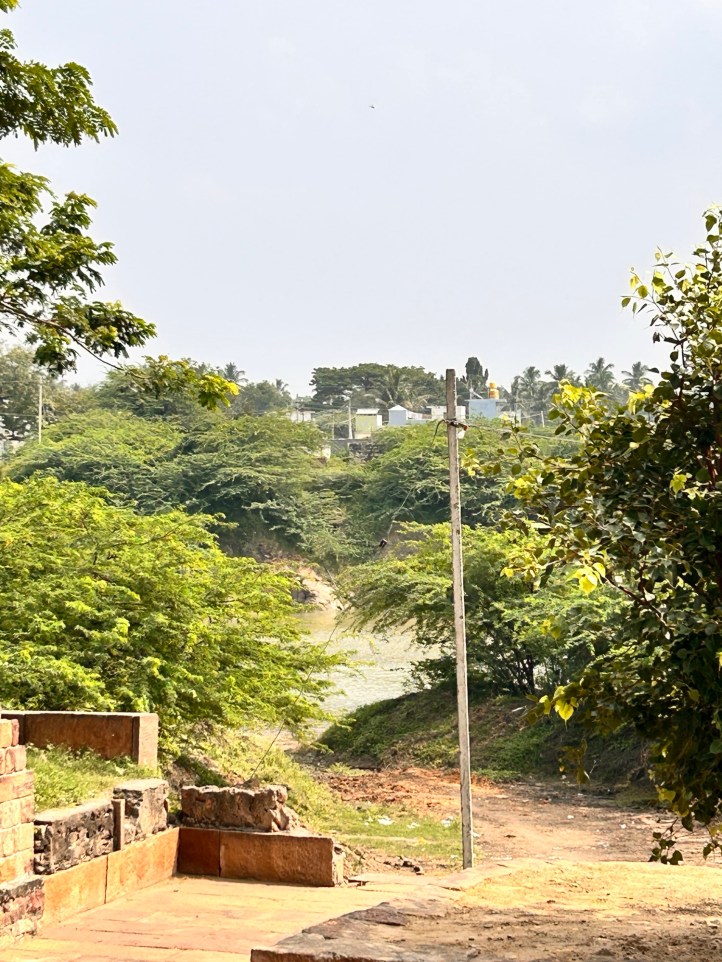
    A glimpse of the river Malaprabha. This is the place from where the kings accesssed the Virupaksha temple.

    Pattadkal was the place where 11 Chalukya kings were crowned. Subsequently 39 other dynasties also held their Coronations here hence the name Pattadakal.

    Each king was crowned in his own small temple. Here you can see several plinths of the smaller temples.

    The temples are made of local sandstone blocks that are interlocked and held in place by iron ‘staples’ as it were.

    Temples
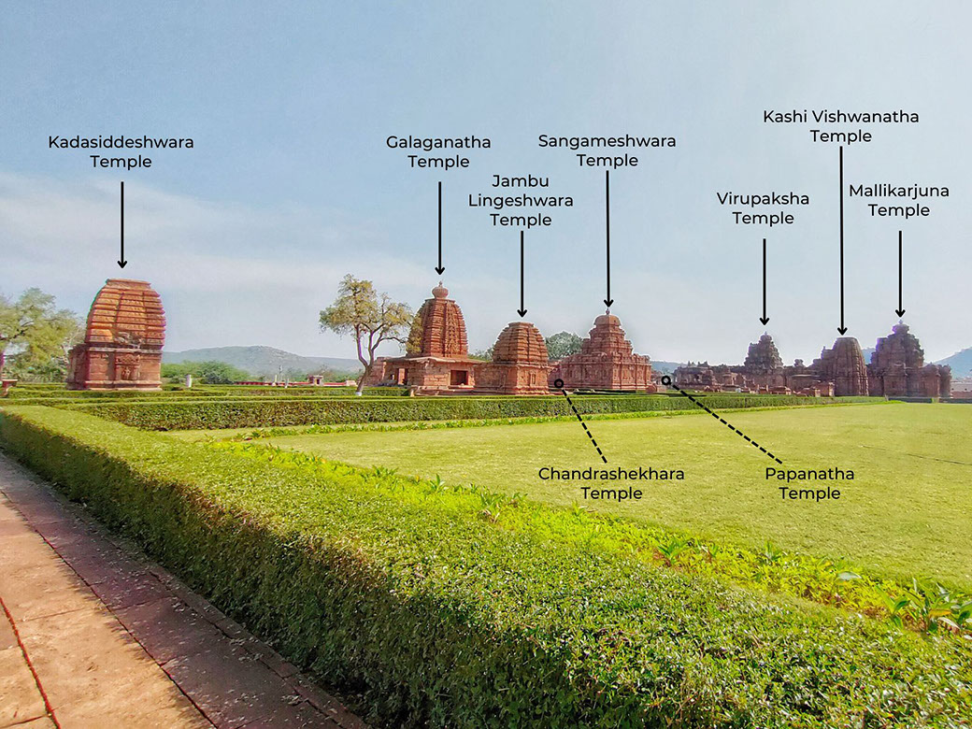
    THIS PHOTO HAS BEEN TAKEN FROM THE WEBSITE TRAVEL THROUGH STORIES

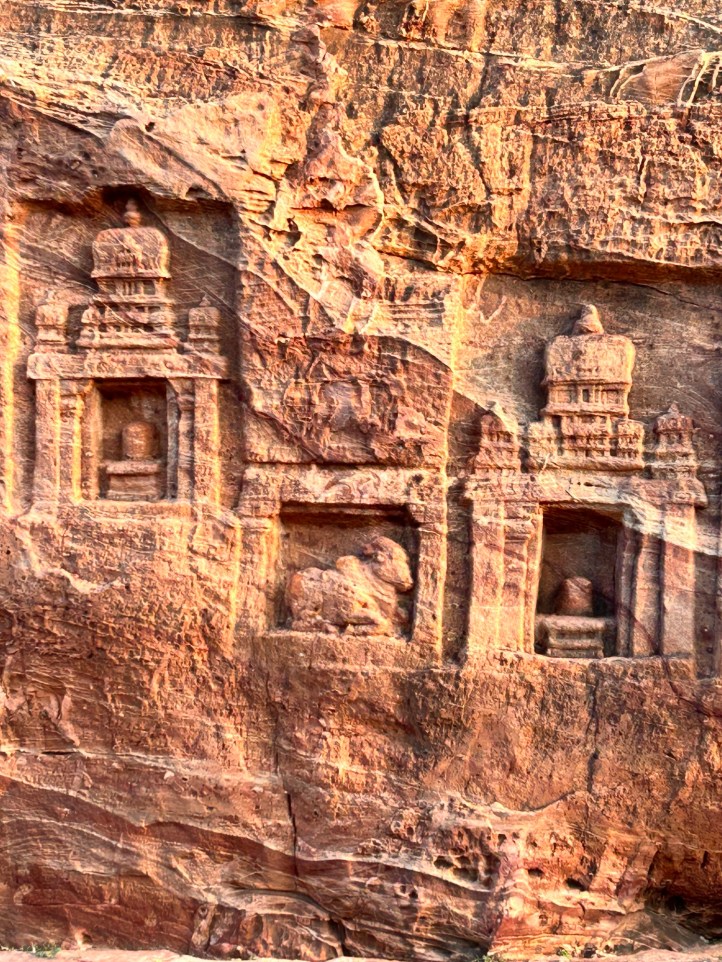
    The first four temples in the complex are built in the North Indian style while the rest are in the South Indian style. These temples are dedicated to Lord Shiva and in the early temples, you won’t find Nandi standing in front .
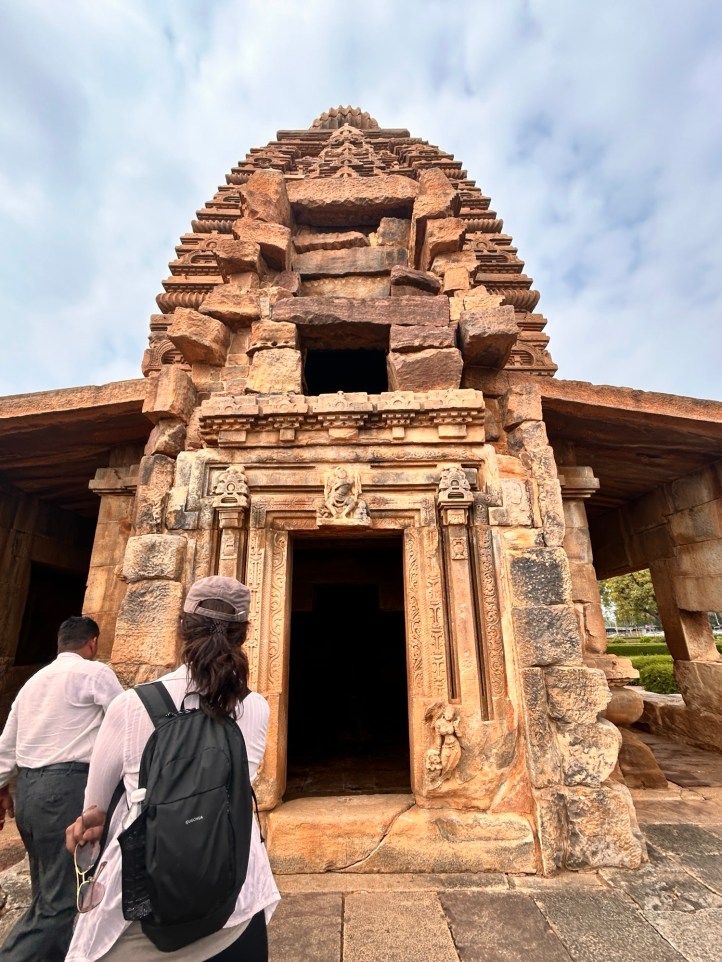
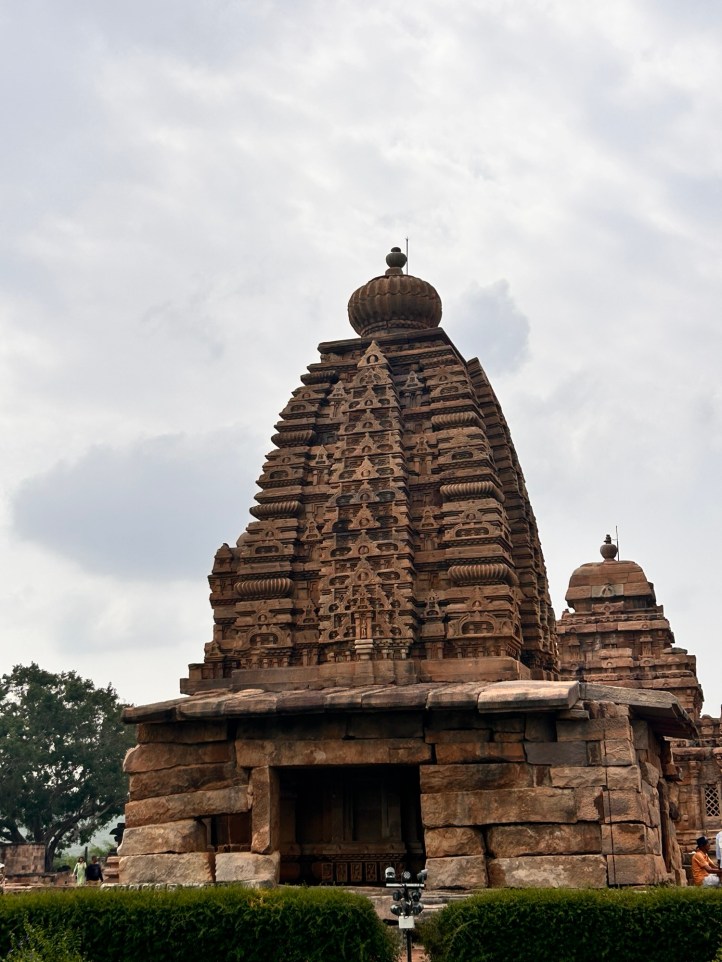
    The Galagnatha Temple with its outer circumambulatory corridor.
    The Galaganatha Temple
    The circumambulatory path of the Galagnath
    Shiva with head of Andhaka the demon who lusted after Parvati ( GalagnathaTemple )
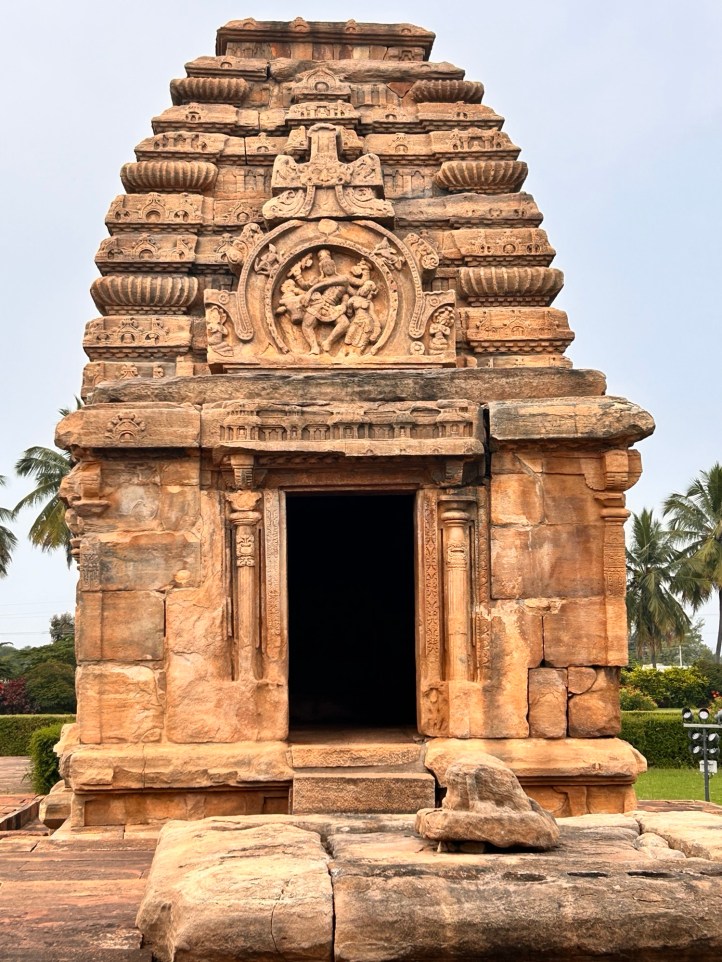
    The dancing Shiva with Parvati and Nandi on the arch of the Jambulinga temple

    Our guide Raju gave us some explanation about the Linga but all that I remember is that the lower portion that is slightly recessed represents wealth that has to be guarded.

    the canopies on the Sangameshwar temple look as though they are held up by birds

    Virupaksha Temple

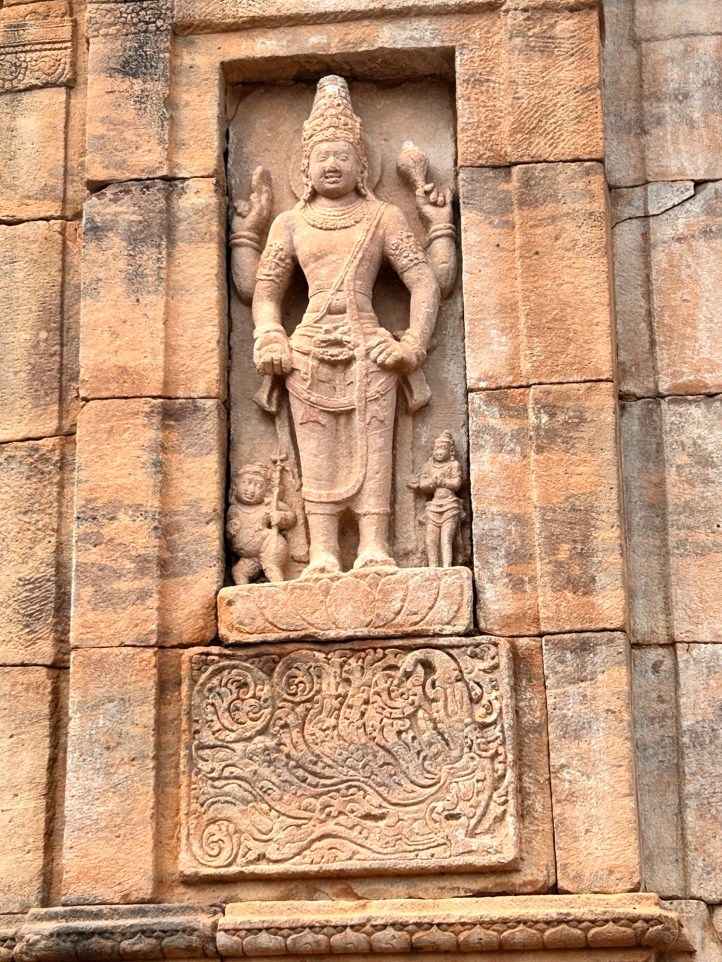
    Vishnu as Harihara

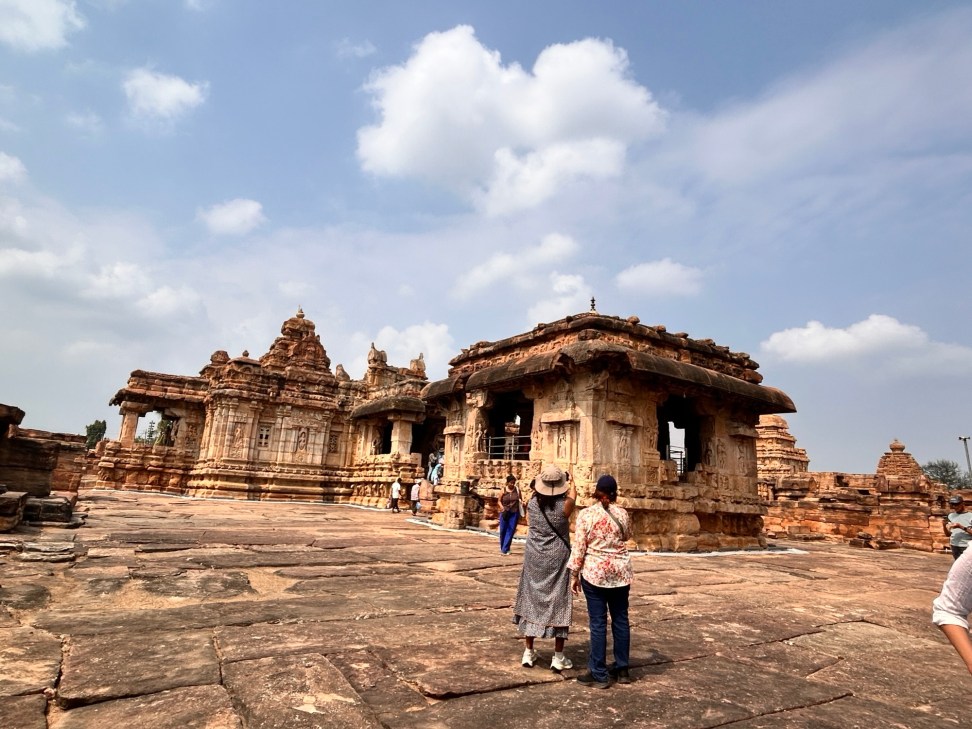
    This is an active temple and is a victory temple, one of two identical temples built by the twin sisters Lokamahadevi and Trilokamahadevi who were married to Vikramaditya ll. They were built to commemorate his victory over thePallavas.
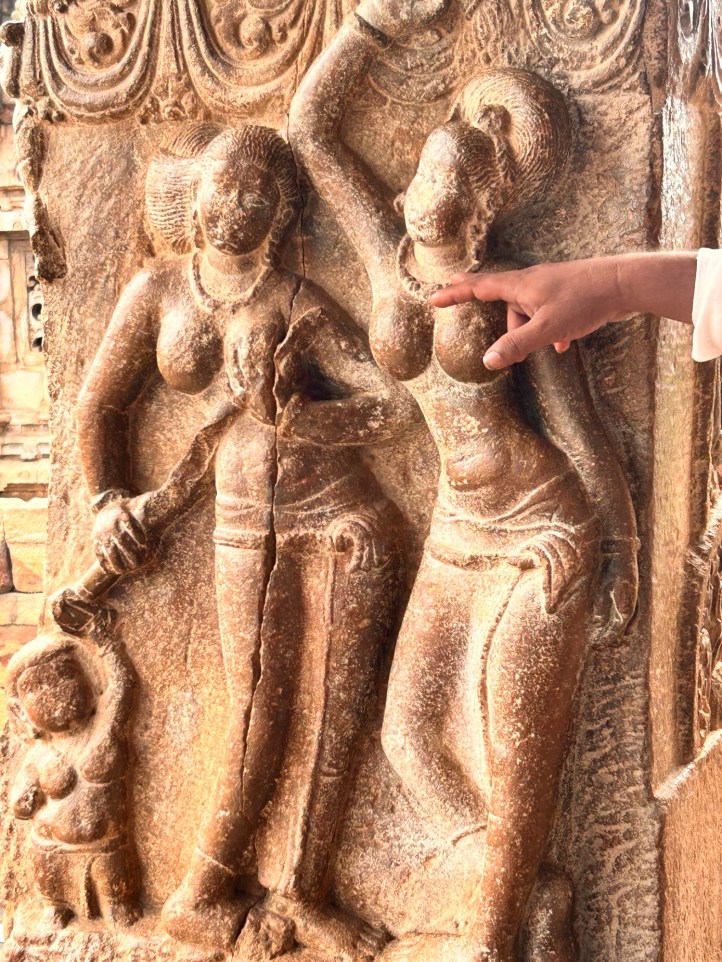
    The twin sisters who married King Vikramaditya ll
    The massive Nandi in the Nandi Mandap

    The twin sisters Lokamahadevi and Trilokamahadevi were married to King Vikramaditya ll. To commemorate his victory over the Pallava king, the two sisters built two identical temples in this complex: Mallikarjun ( by Queen Trilokamahadevi) and Virupaksha (by Queen Lokamahadevi).

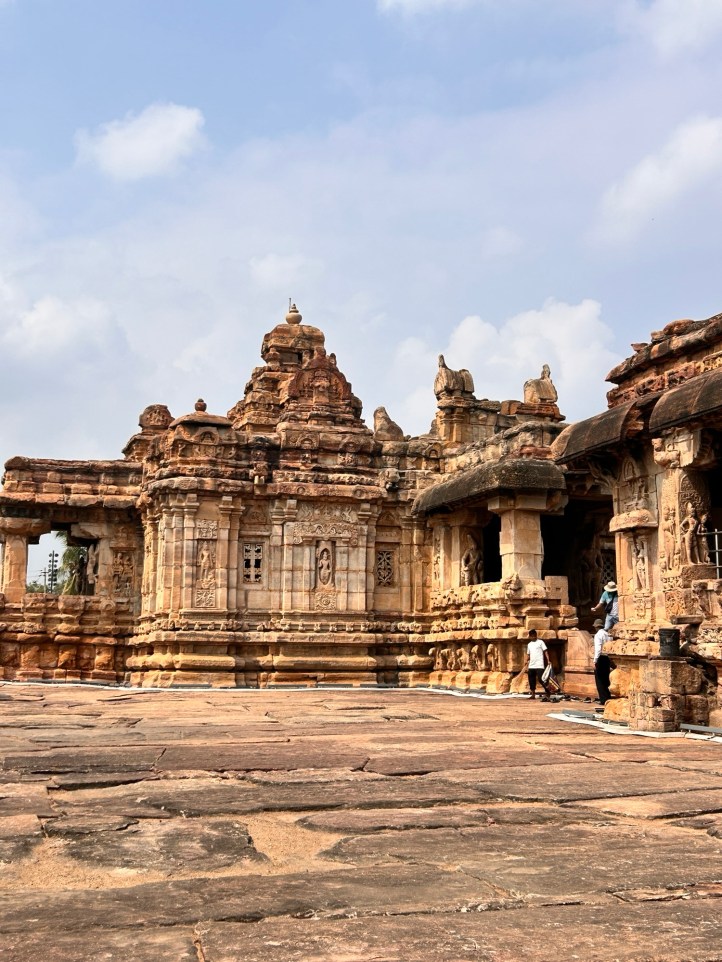
    Today, the Virupaksha Temple remains the only active temple in the complex. Above you can see the temple in its entirety with all the details of temple architecture.

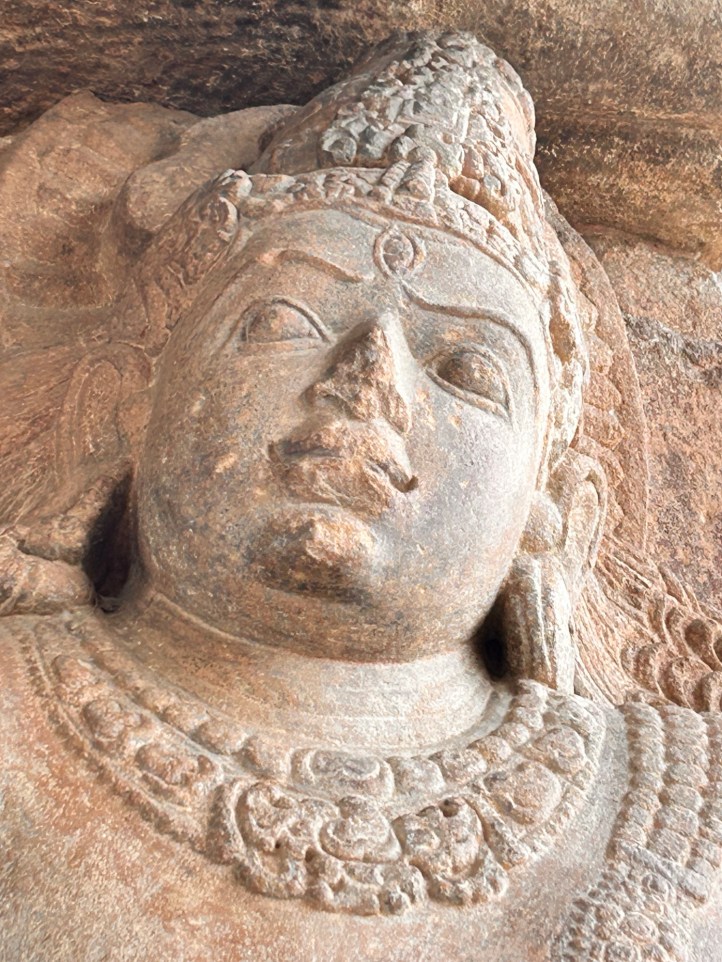
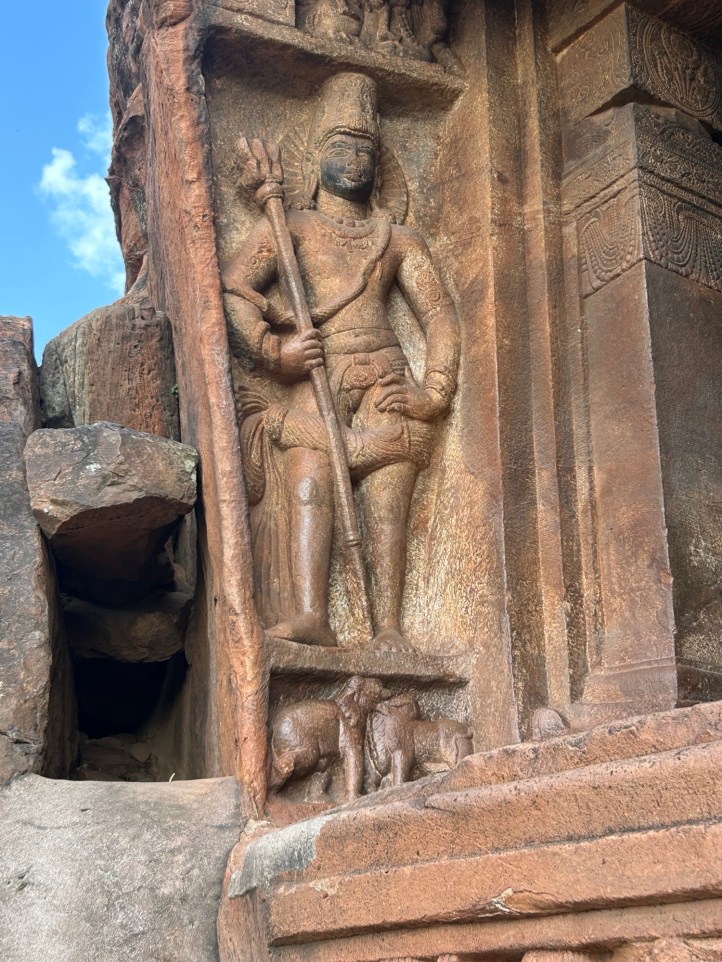
    The two dwarpal or doorkeepers to Shivas’s temple
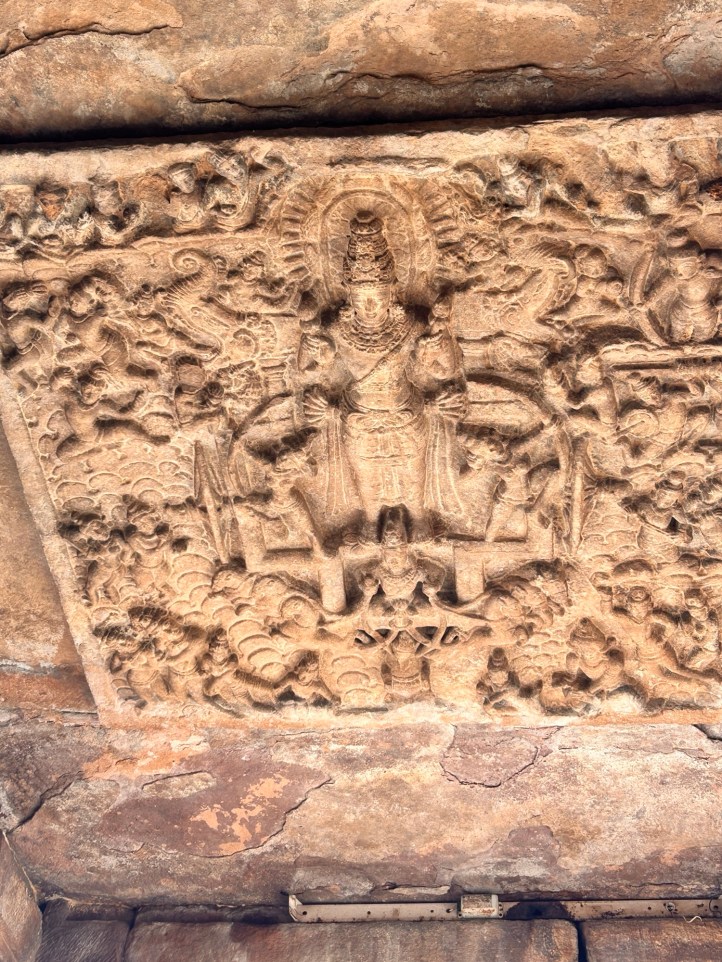
    Surya on top of the ceiling at the entrance to Virupaksha
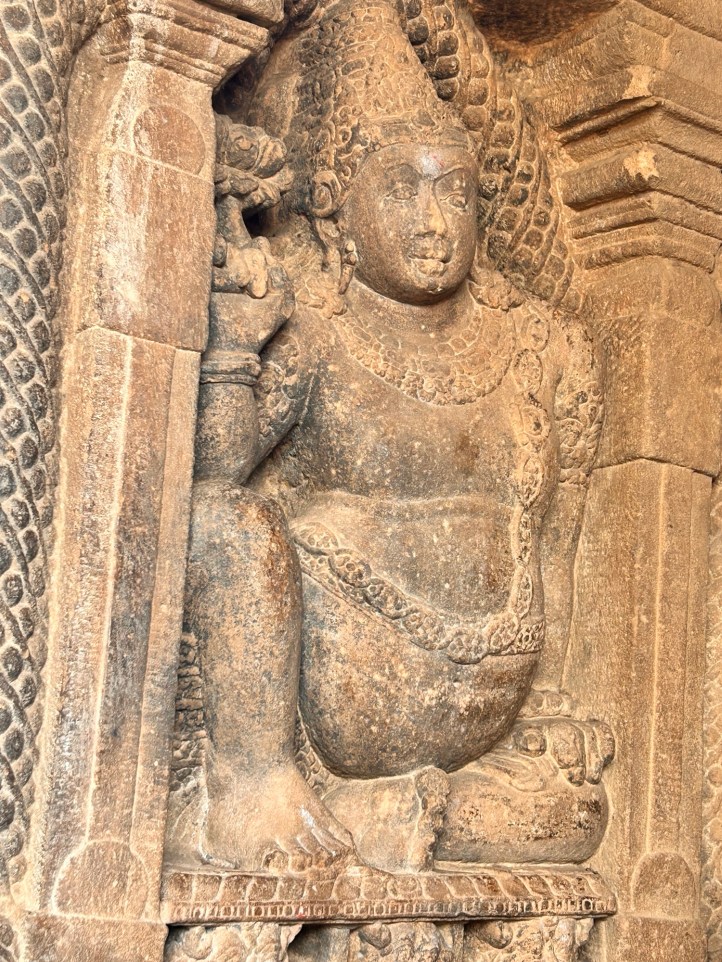
    Shankhanidhi the dwarpal of Kuber

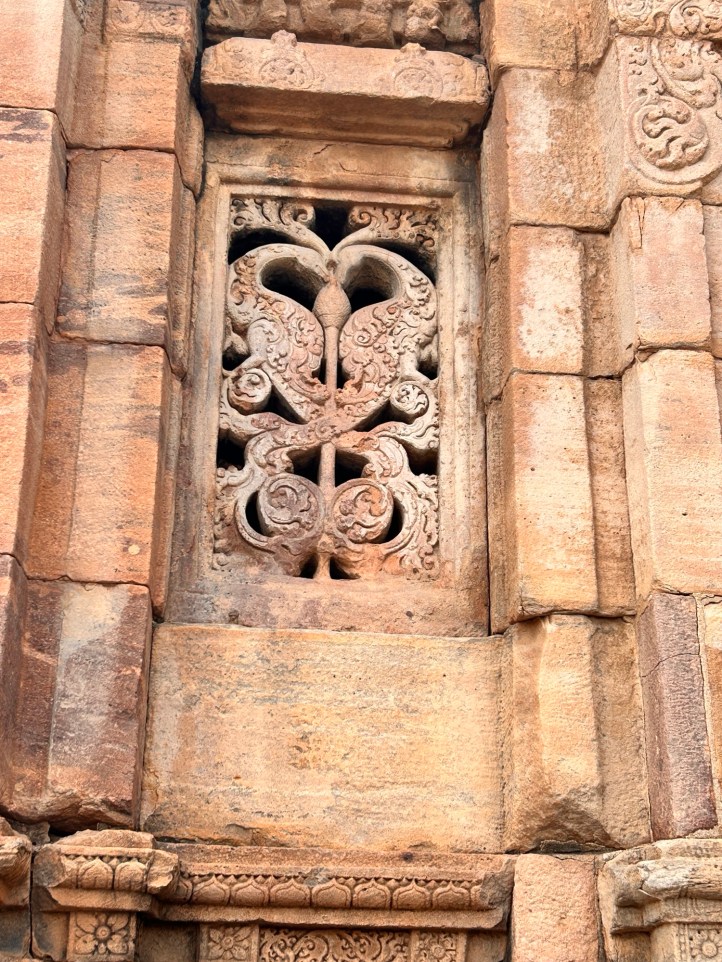
    On the outer walls of the Virupaksha temple you can see beautiful sculptures at the entrance itself.

    Detail of Gajalakshmi
    Yoga poses on top
    An unusual pose of a seated Harihara outside the Virupaksha temple
    Shiva with a Sendhal
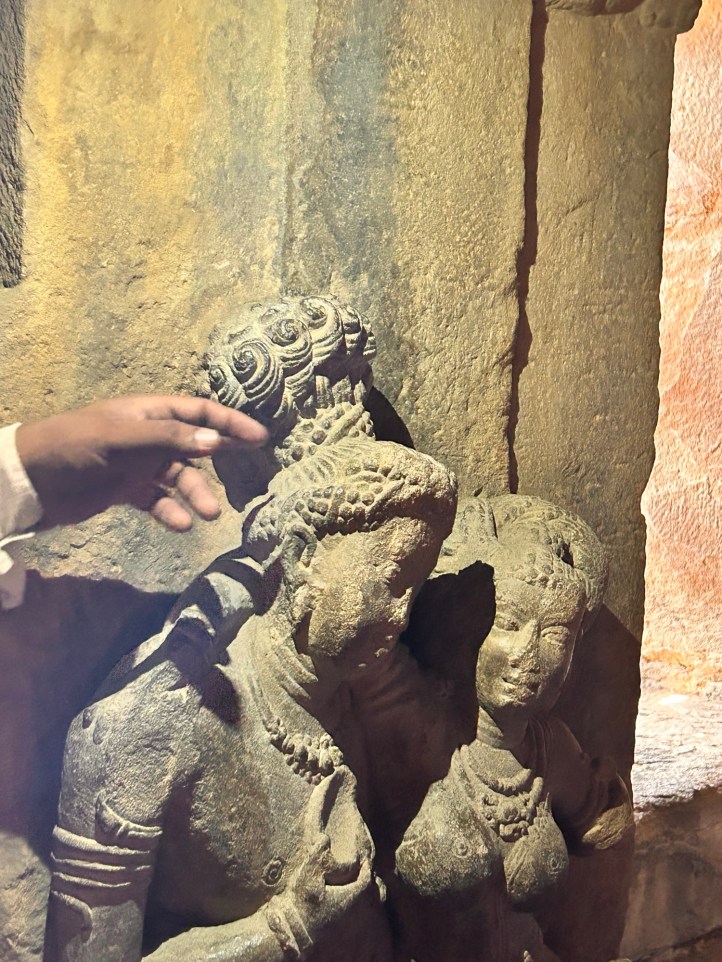
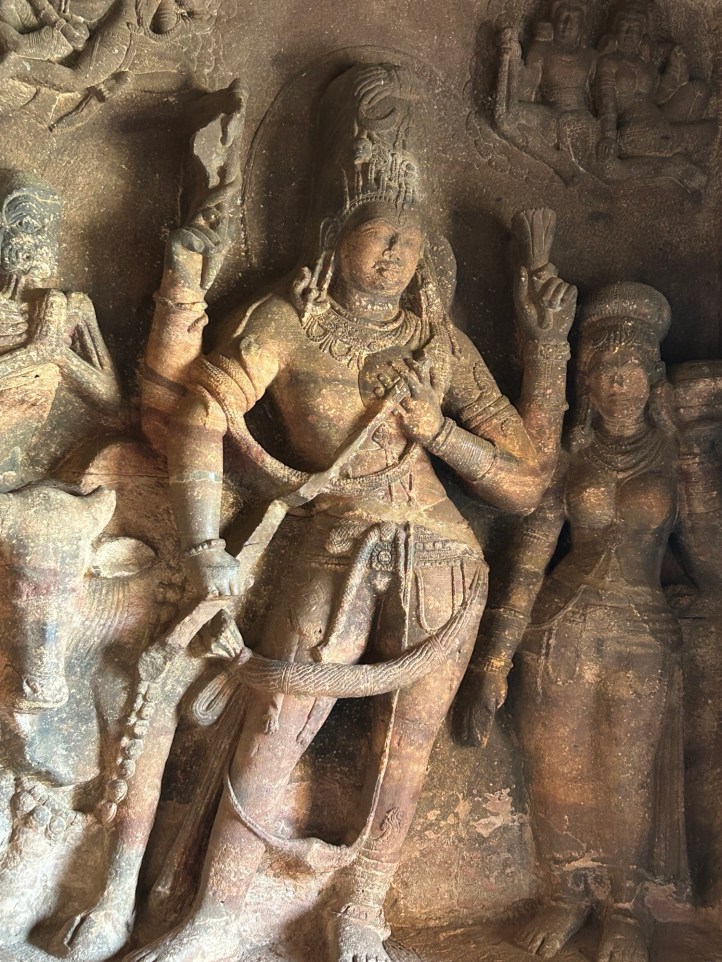
    Shiva & Parvati at Virupaksha

    Inside the Temple

    Inside the temple it is dark and quiet. The two sub sanctums on either side of the sanctum sanctorum are the idols of Ganesha ( long removed) and Parvati as Mahishasurmadini. This is inaccessible to visitors.

    The statue of Parvati as Mahishasurmadini in Sub sanctum of Virupaksha temple

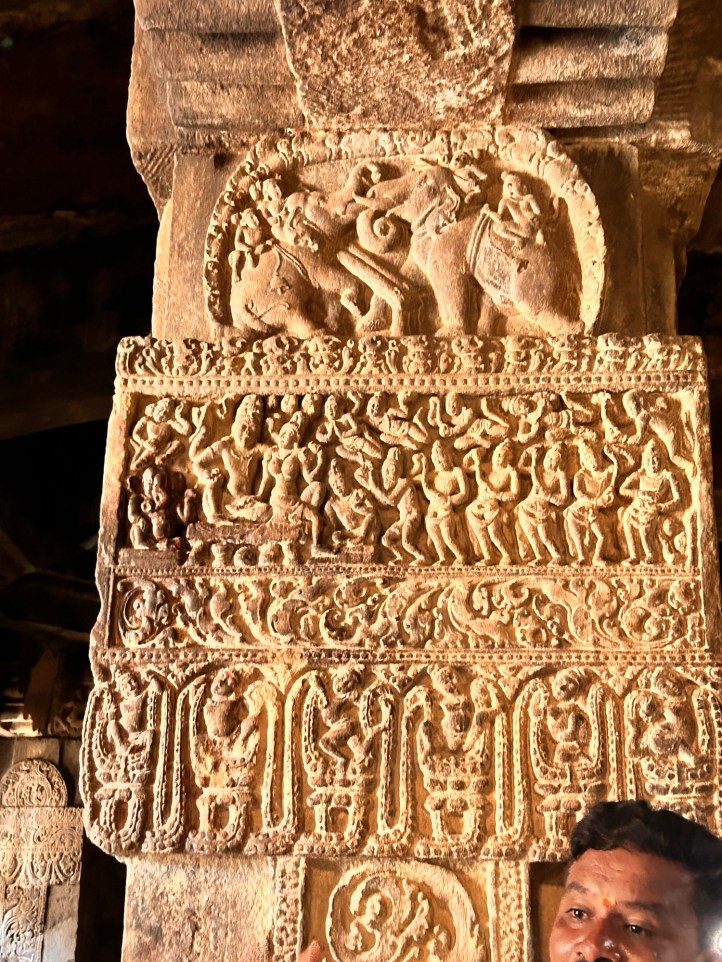
    stories the pillars tell

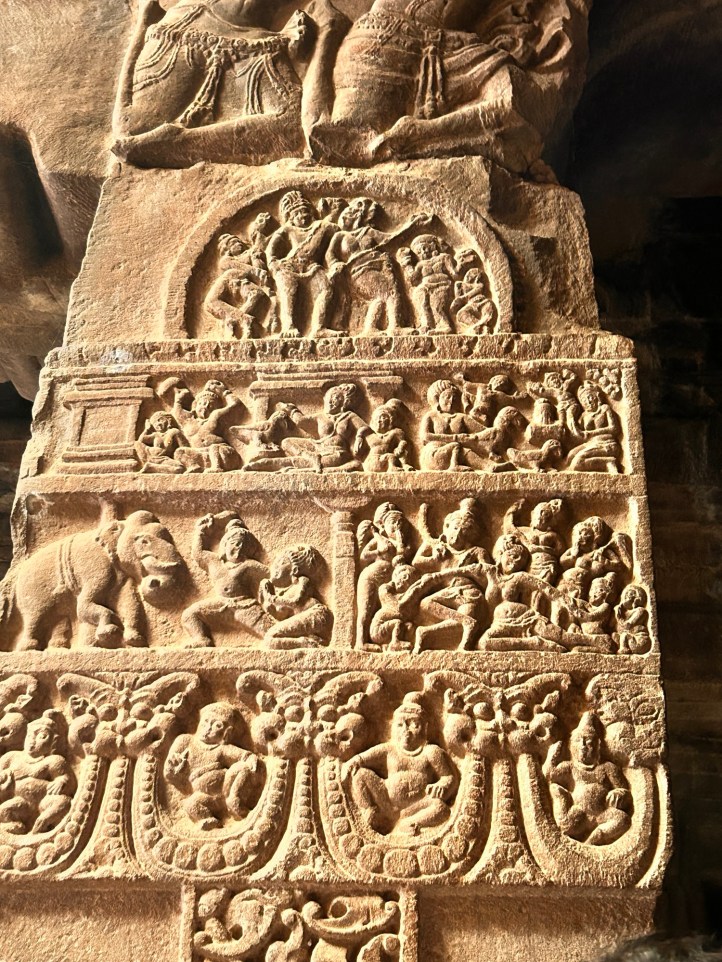
    The exquisitely carved pillars inside the temple have stories of the Mahabharat, Ramayan and Panchtantra.

    Lifestyle & Beauty

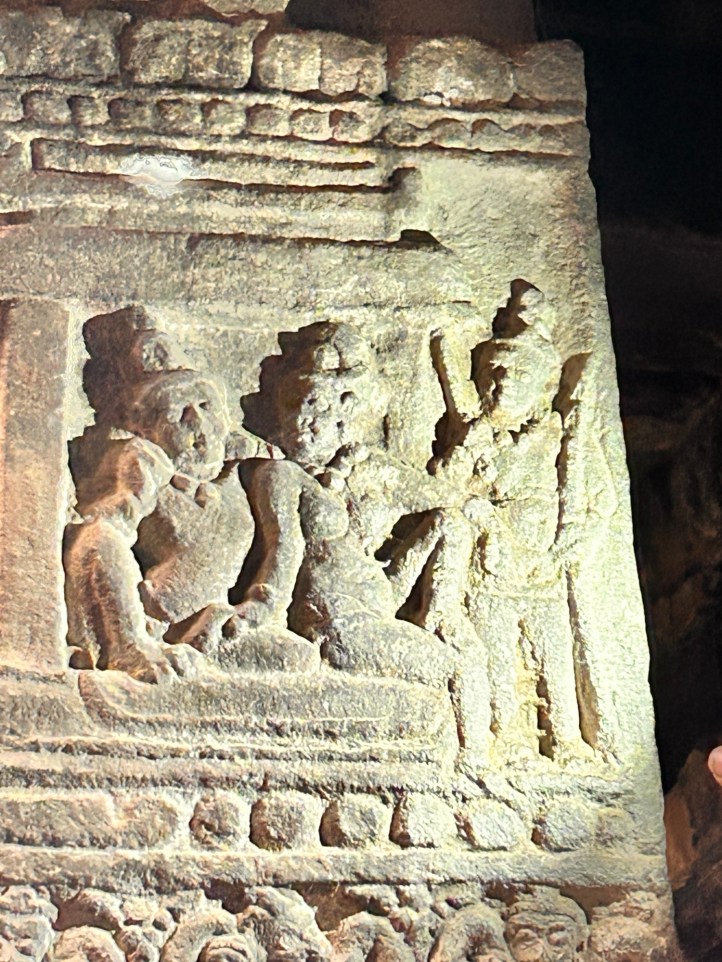
    Relaxing in a Chalukya spa

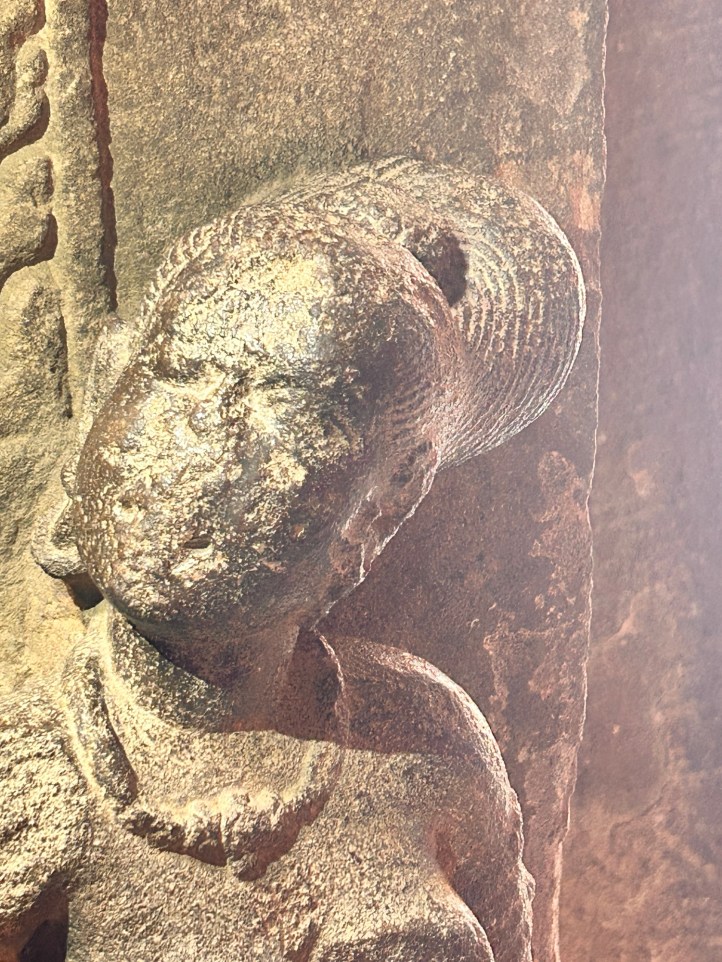
    hairstyles

    Mallikarjun Temple

    Though this was built identical to the Virupaksha temple , it has fallen to disrepair.

    The green granite Nandi in front of Mallikarjun temple broken into two

    Some stories on the pillars at Mallikarjun

    the Keertimukh
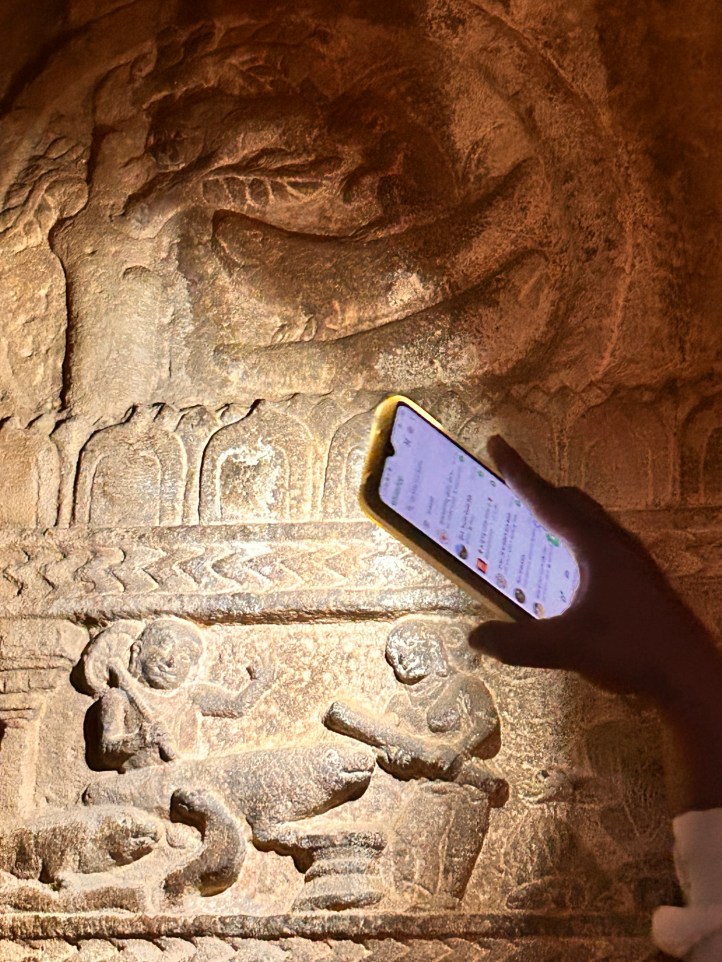
    The motif in the middle shows the Pancahtantra illustrates the story of the monkey and the log

    The story of the birth of Krishna

    Stories of Shrikrishna
    The Panchatantra story of the woman who asked the crocodile to babysit her child

    https://www.worldhistory.org/article/899/the-temples-of-pattadakal/

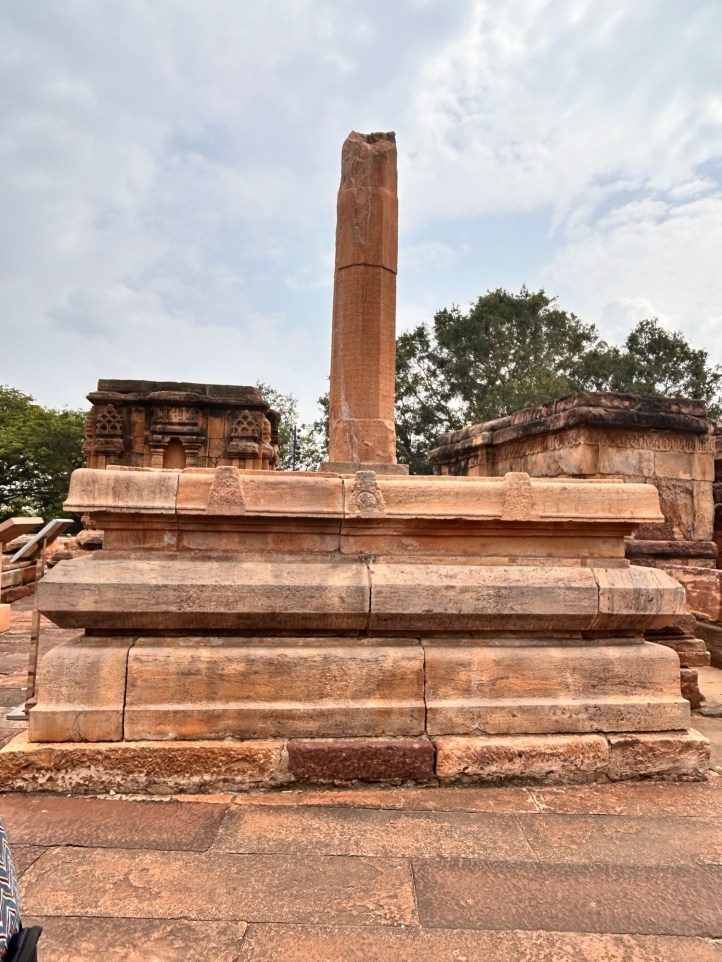
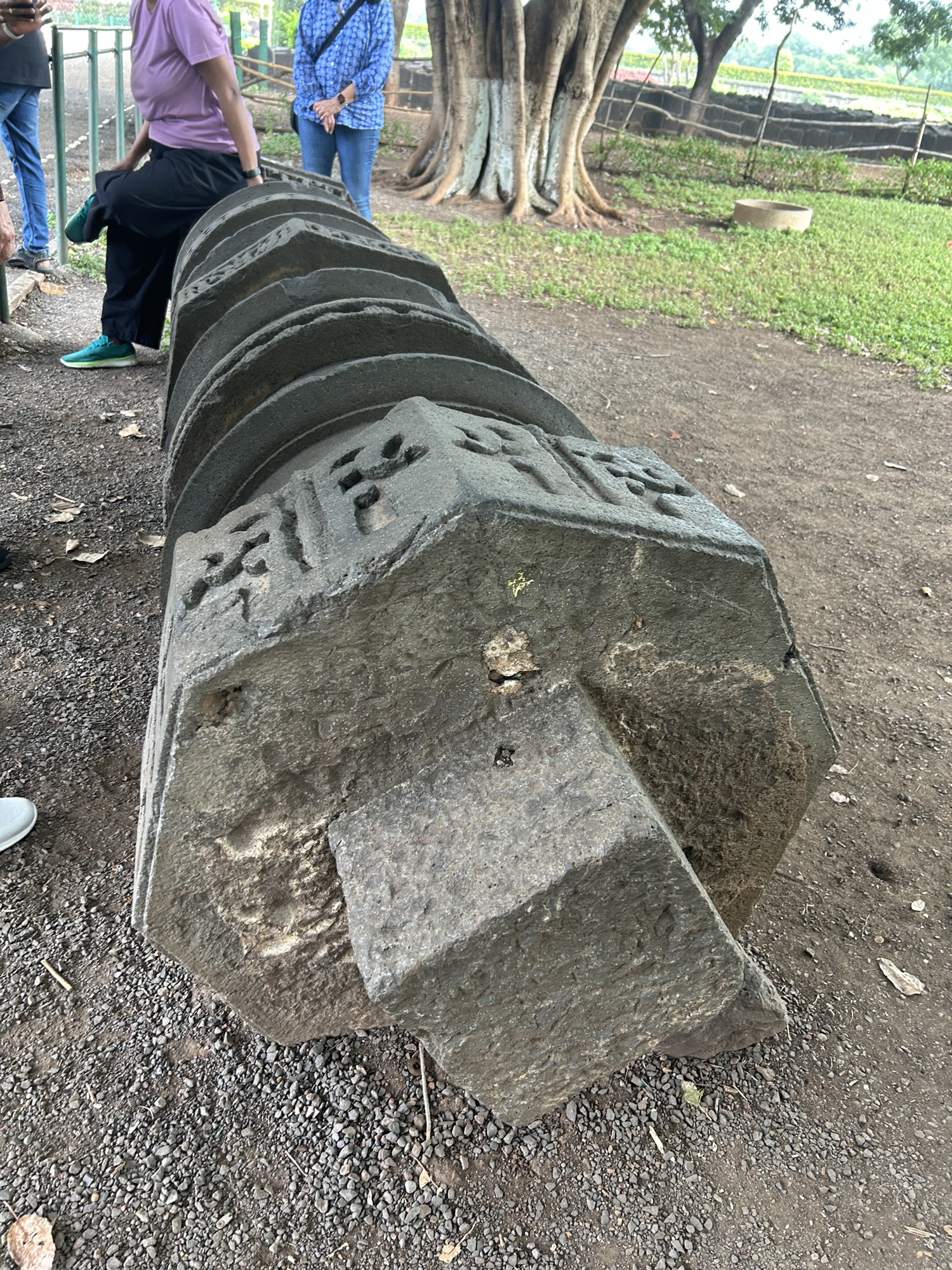
    The Victory Pillar

    A partially hidden victory pillar that still needs to be excavated reveals the triumphant king marching on his elephant, surrounded by attendants. The second photo reveals a king lying in a relaxed pose while the last shows a flower representing peace and victory
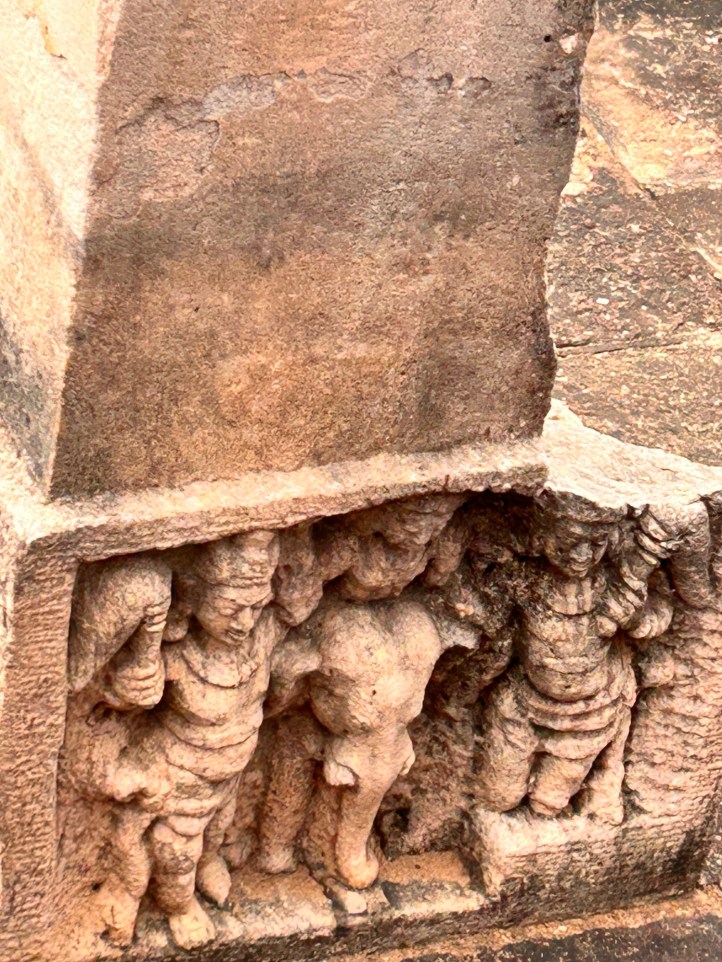
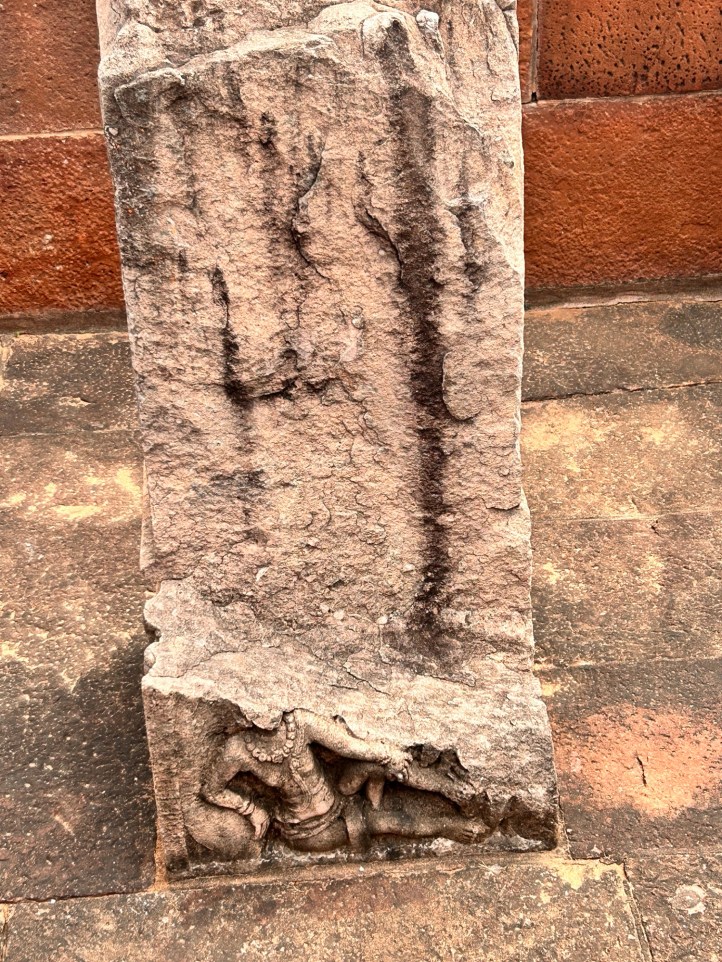
    The first Photo shows a victorious king mounted on an elephant and surrounded by his attendants. The second shows him relaxing while the last symbolises victory and peace

    The second victory pillar is near the Virupaksha Temple
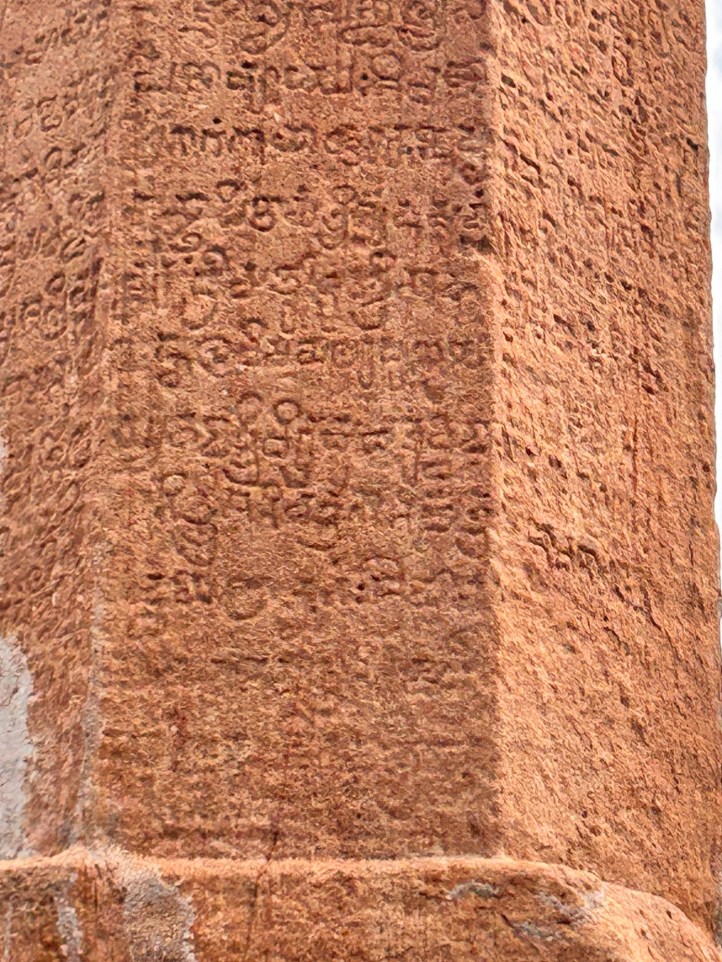
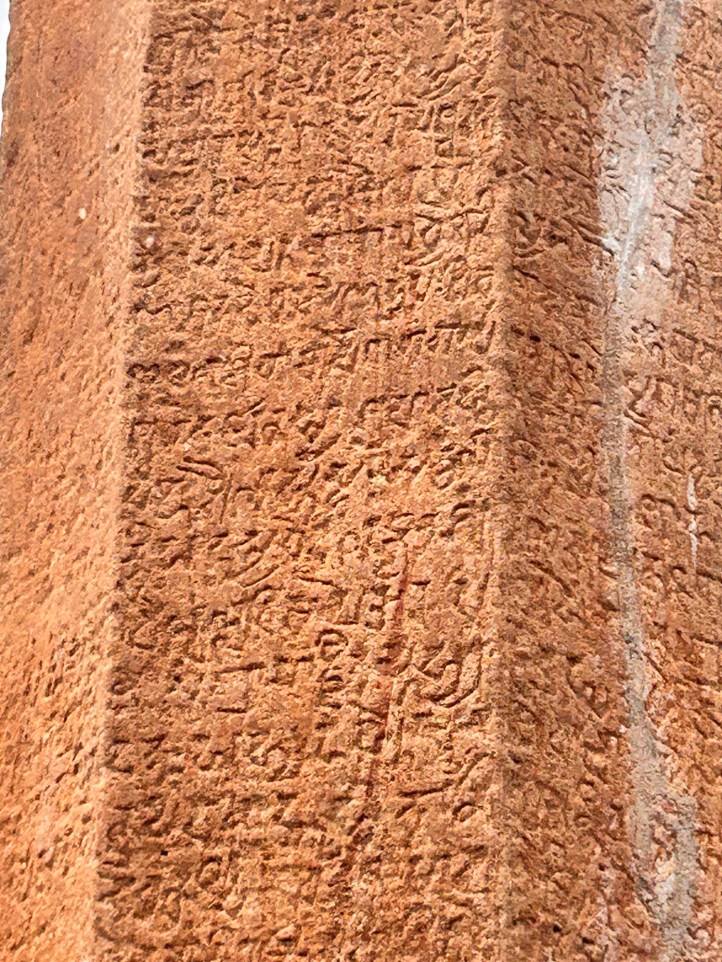
    Built to commemorate the victory of the Chalukyas over the Pallavas, this monolithic pillar has inscriptions in ancient Kannada and Devnagiri

    Pattadakal really has the most beautiful temple architecture and every student of architecture should visit it.

    From Pattadkal we drove down to Aihole, the last of our temple visits before we began our return journey to Bijapur and then to Pune .

    Ciao

  • Badami : Stories in Stone

    Badami : Stories in Stone

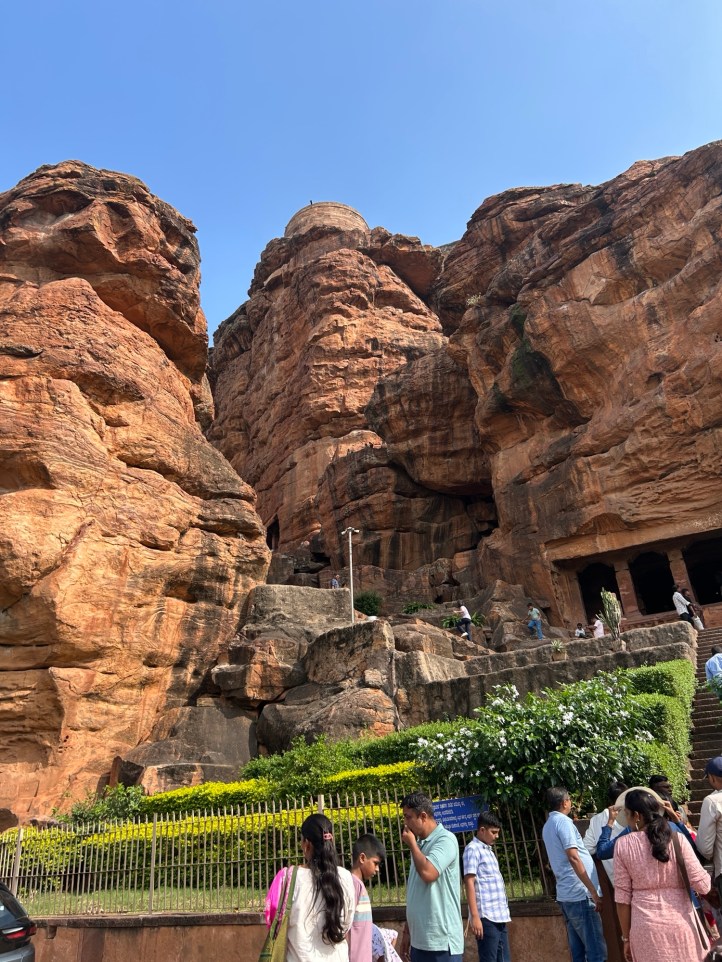
    After the visit to the Gol Gumbaz we returned to the hotel for a well-deserved breakfast before setting off southwards towards Badami or Vatapi as it was called when it was the Chalukya capital. We didn’t get to see the town but the caves on the outskirts definitely showcased the glory and power of the Chalukyas.

    The weather was good, slightly overcast and the 2 1/2 hours passed by quickly.

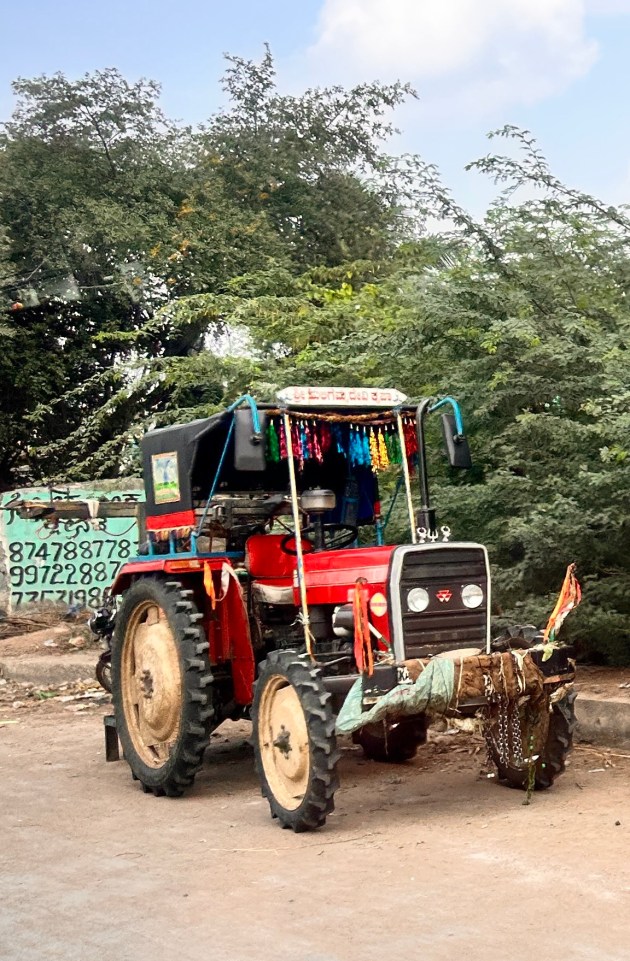
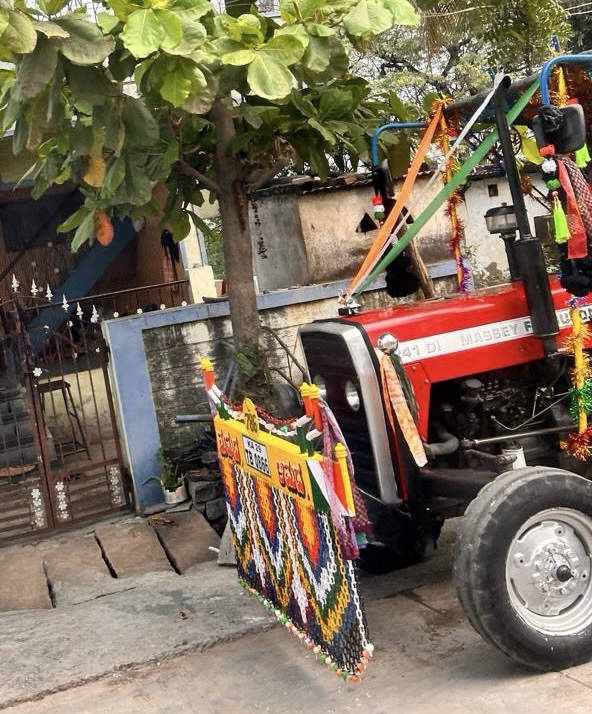
    On the way we saw some gaily decorated tractors festooned with feathers, ribbons, streamers and cheerleader pompoms.

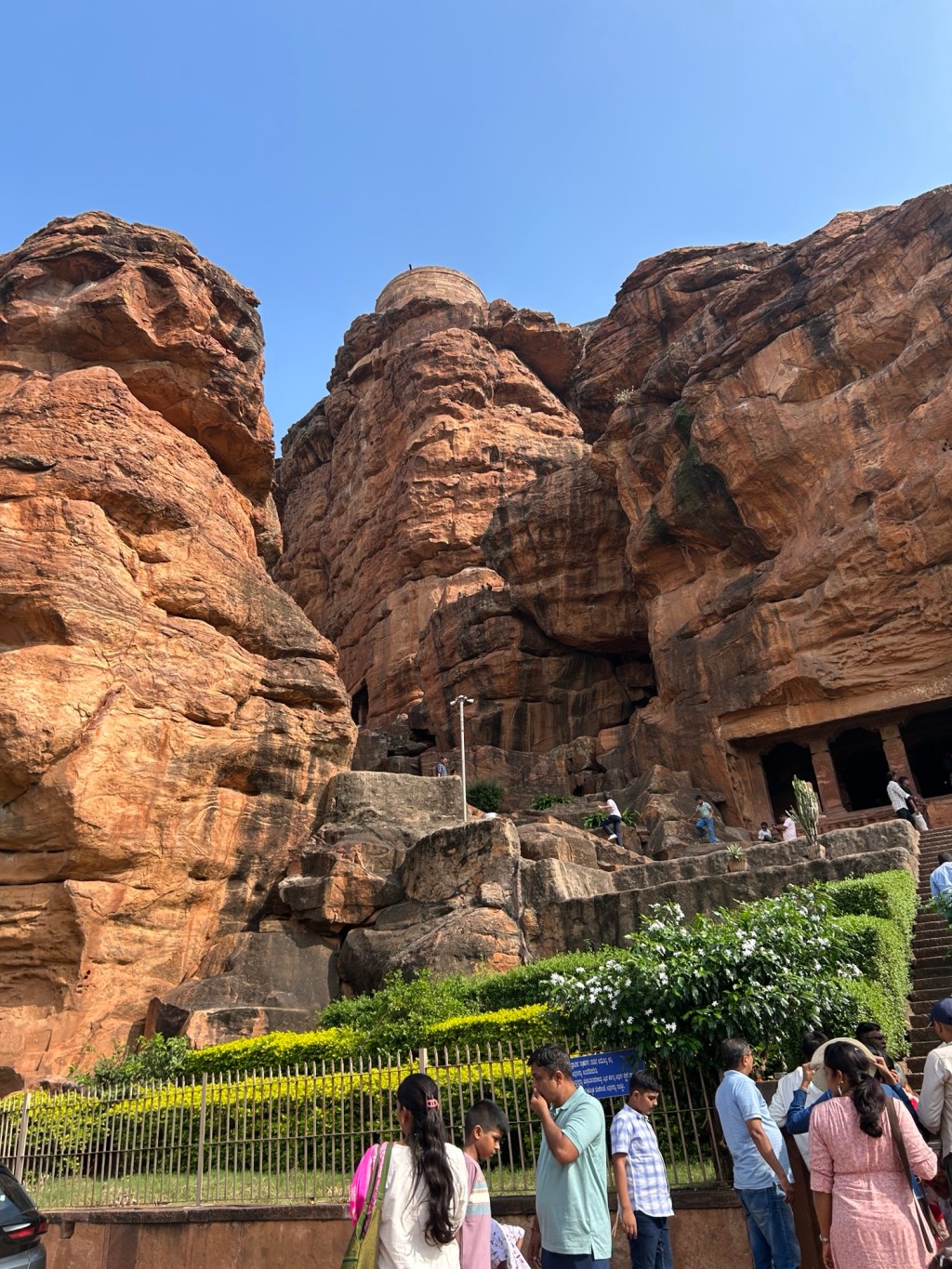
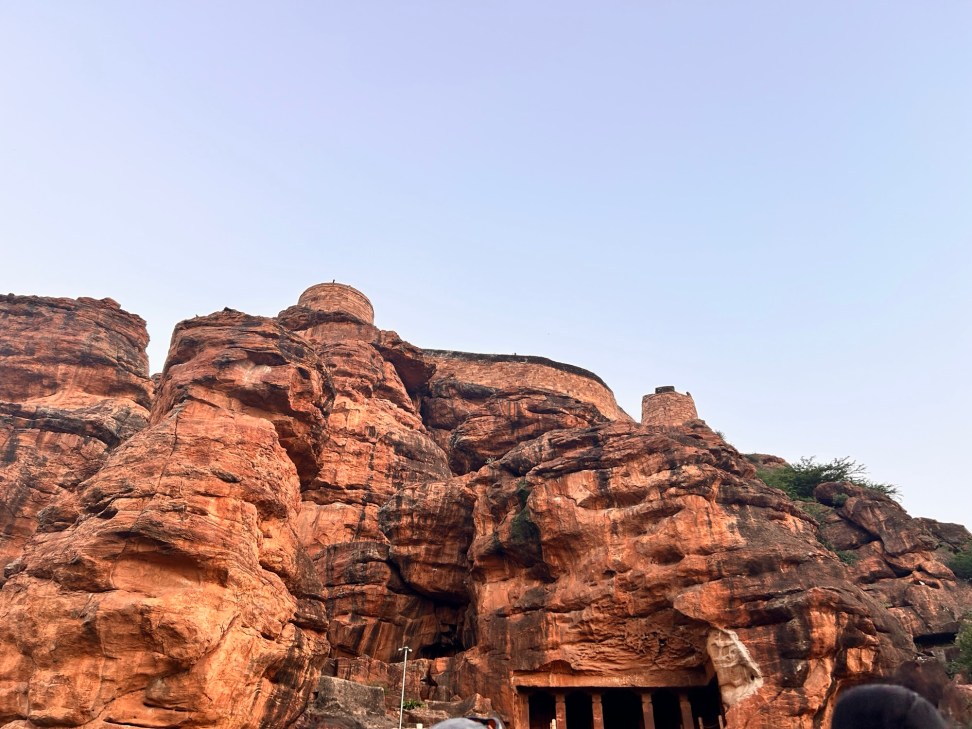
    As we approached Badami, we began to see the rock formations of sandstone from which the caves are carved.

    The four caves that we had come to see are part of the UNESCO designated area and are often on the tourist trail of visitors to Hampi. These 6th-century CE cave temples were built during the Chalukya reign and are more than just architectural masterpieces. They also retell some of the most fascinating stories of our Gods and Goddesses.

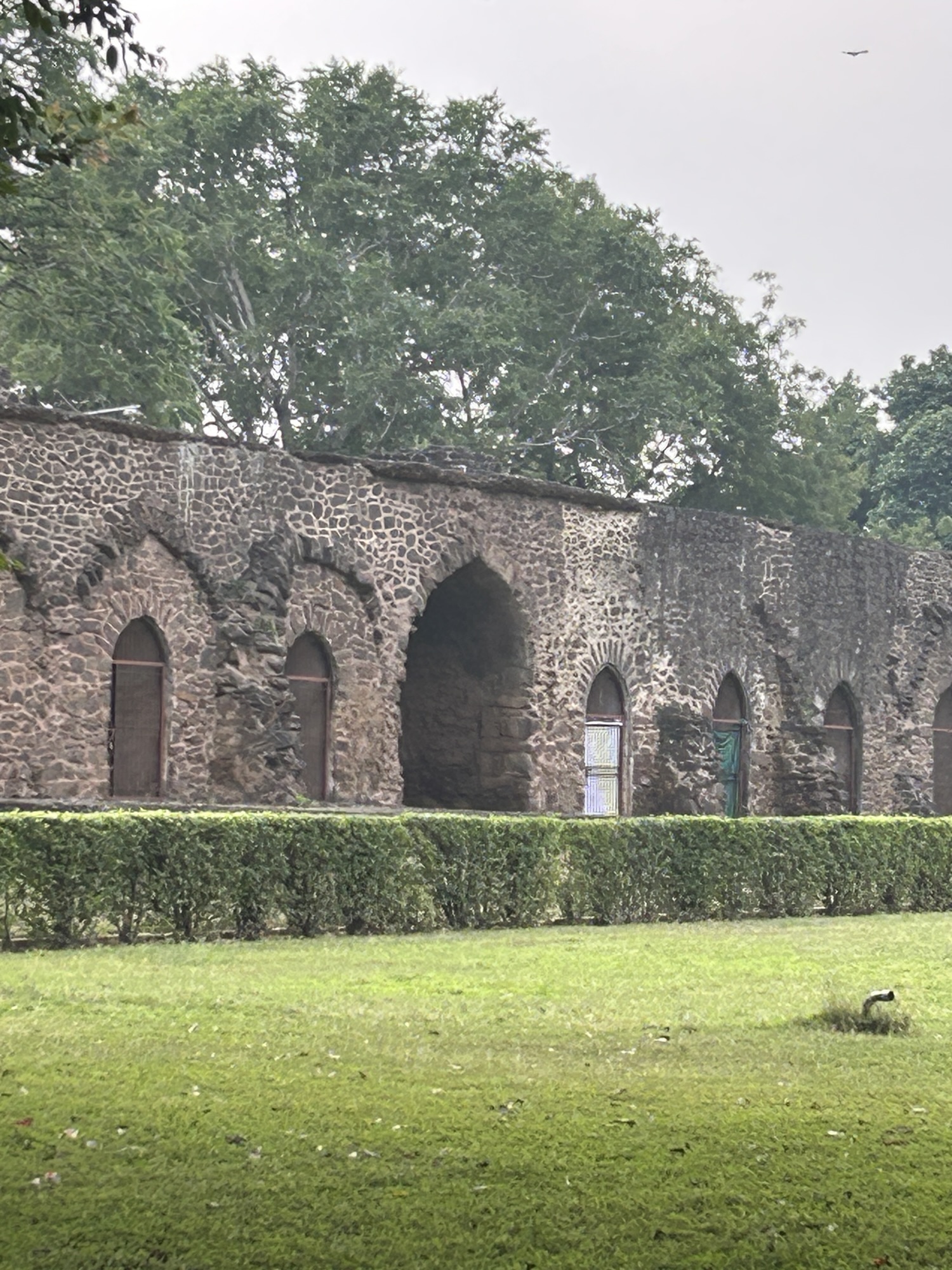
    One can see the ramparts of the fort built by Tipu Sultan on top
    I was quite daunted by the imposing hill with the gun tower of Tipu’s fort on top

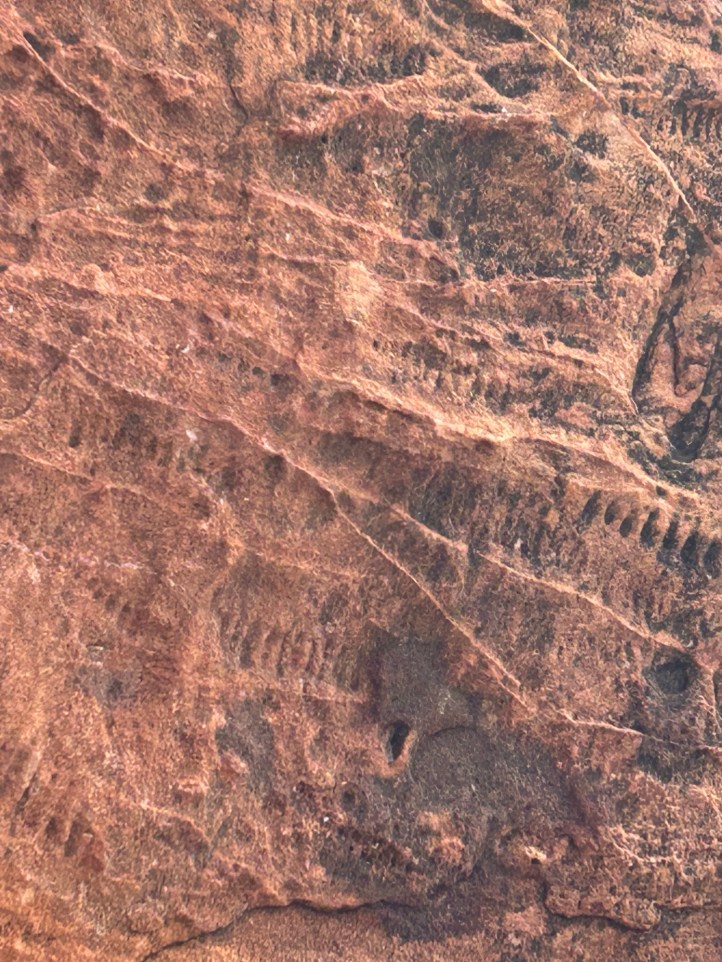
    On top of the caves are inscribed the names of the sculptors while on the side is an attendance register of the workers who reported to work.

    Cave 1 : The Cave Of Shiva

    The different caves are dedicated to different gods. The first is dedicated to Shiva, and shows him in his various forms.

    The Dancing Shiva

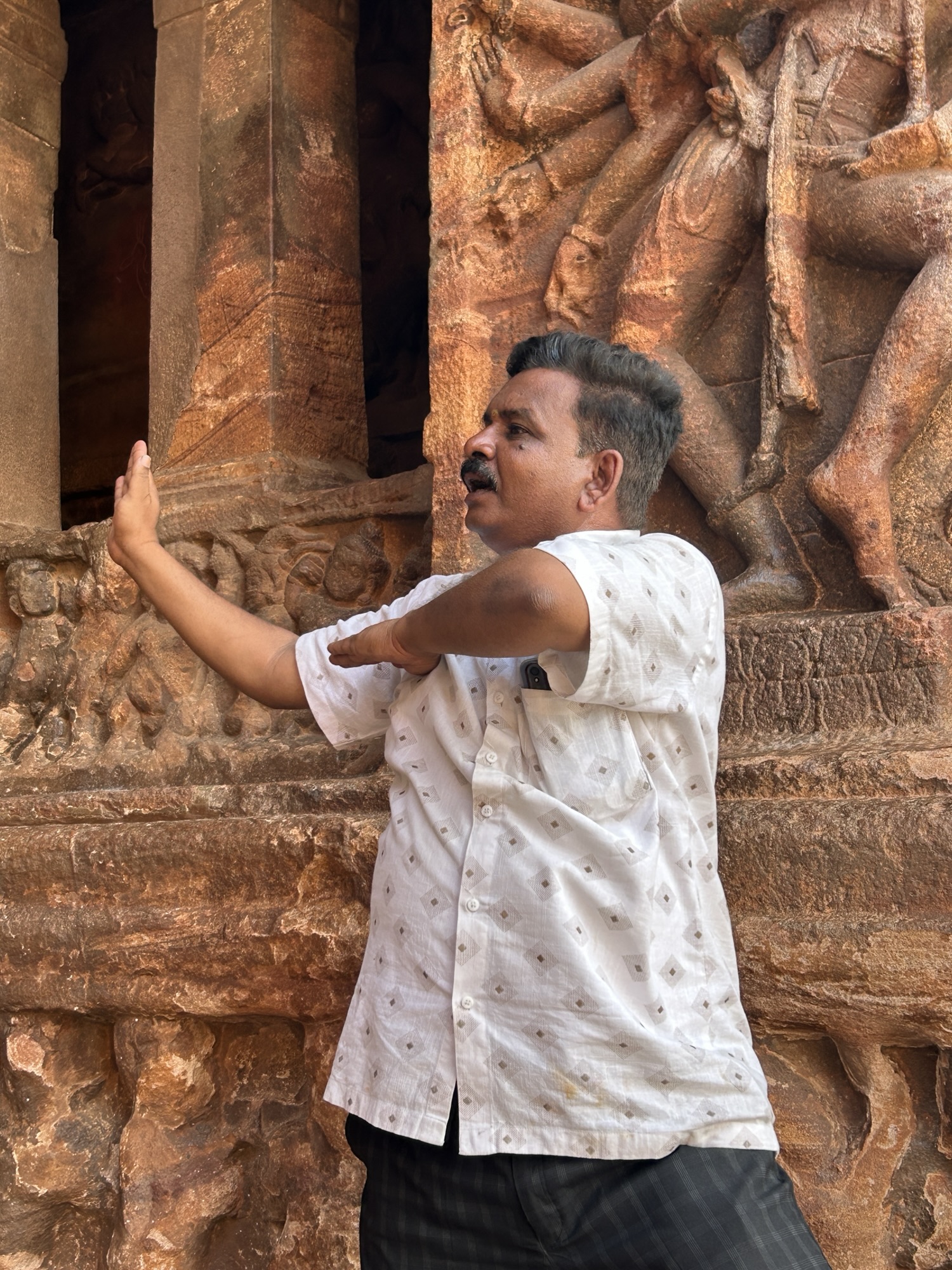
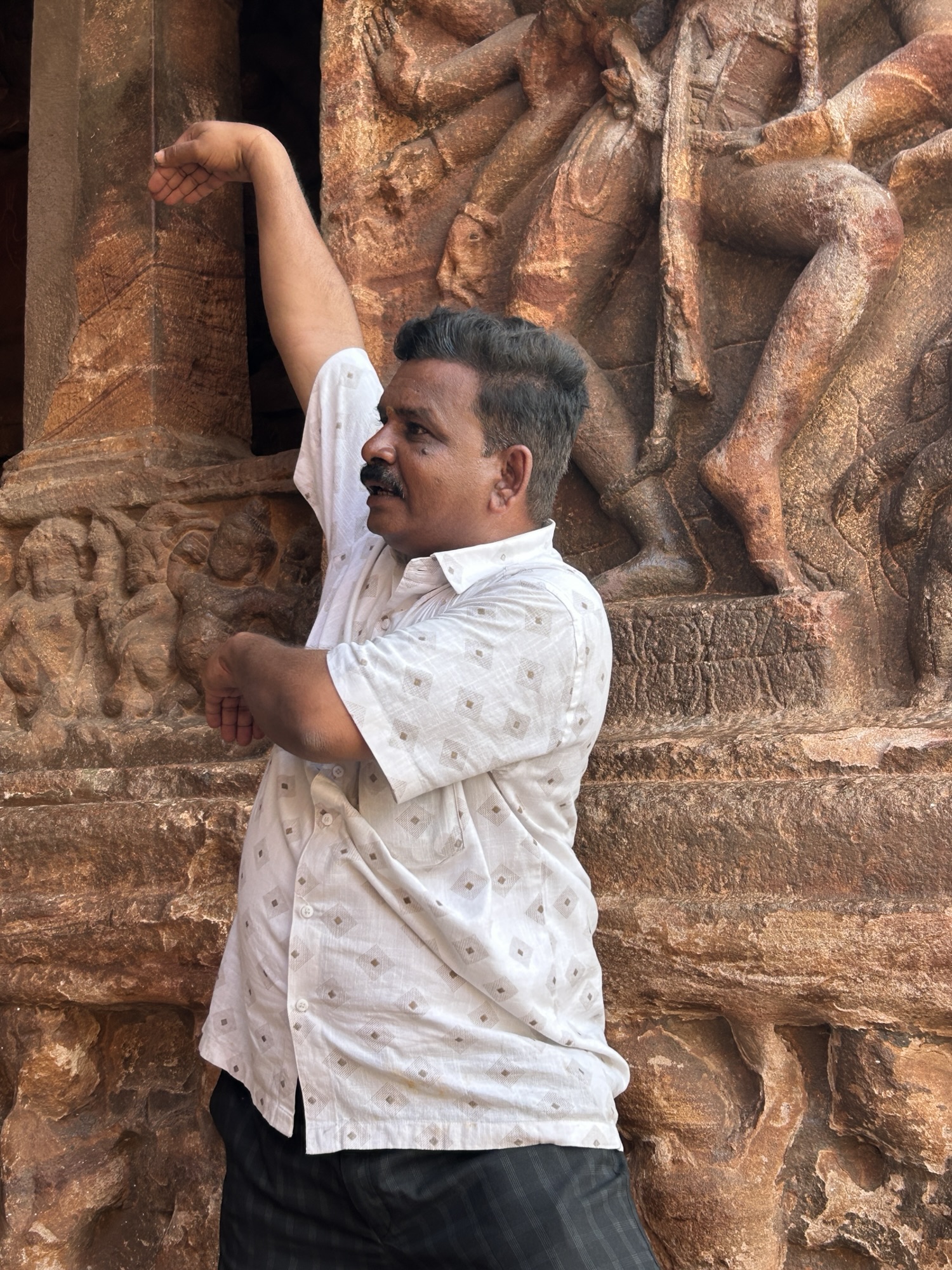
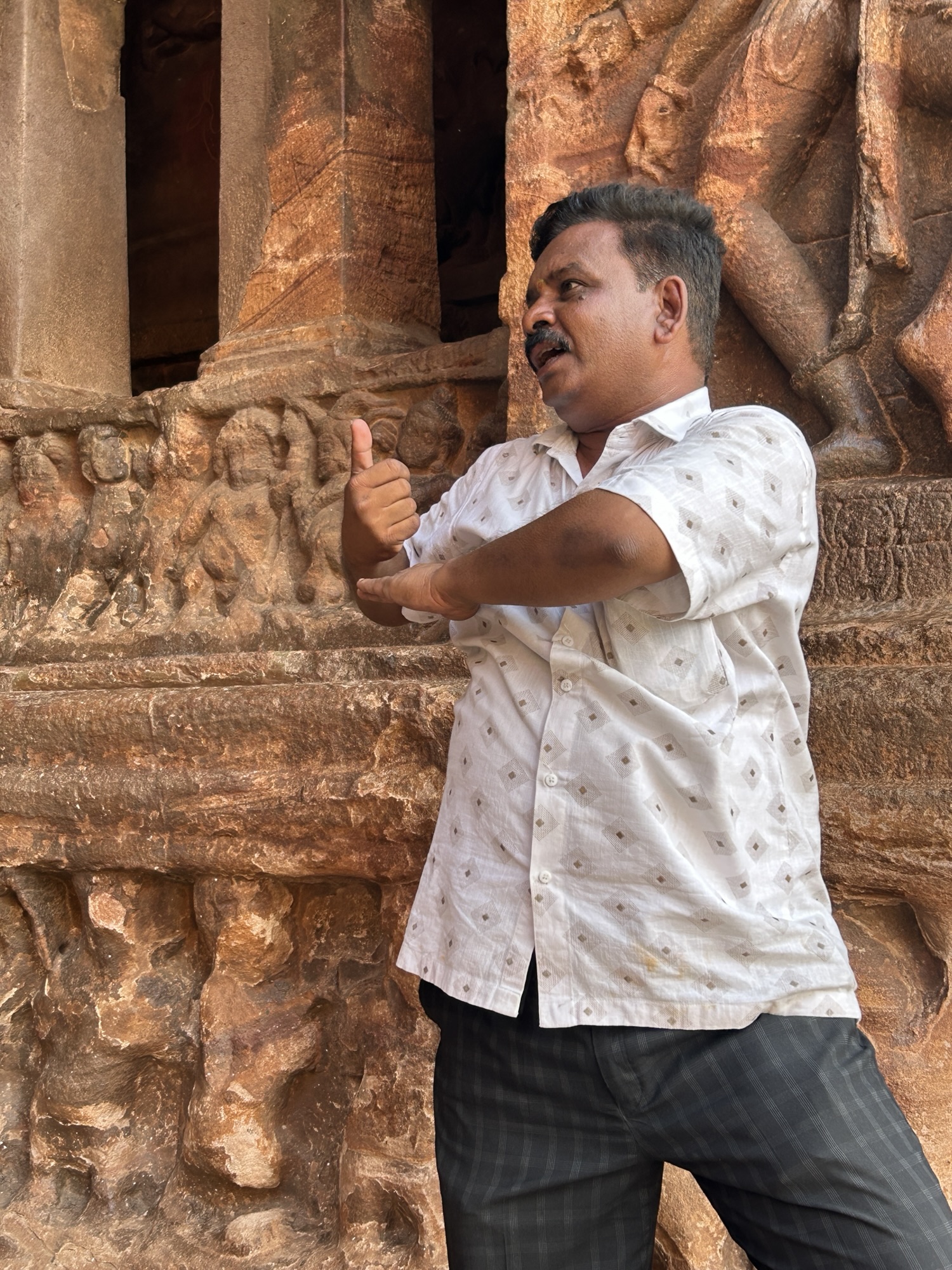
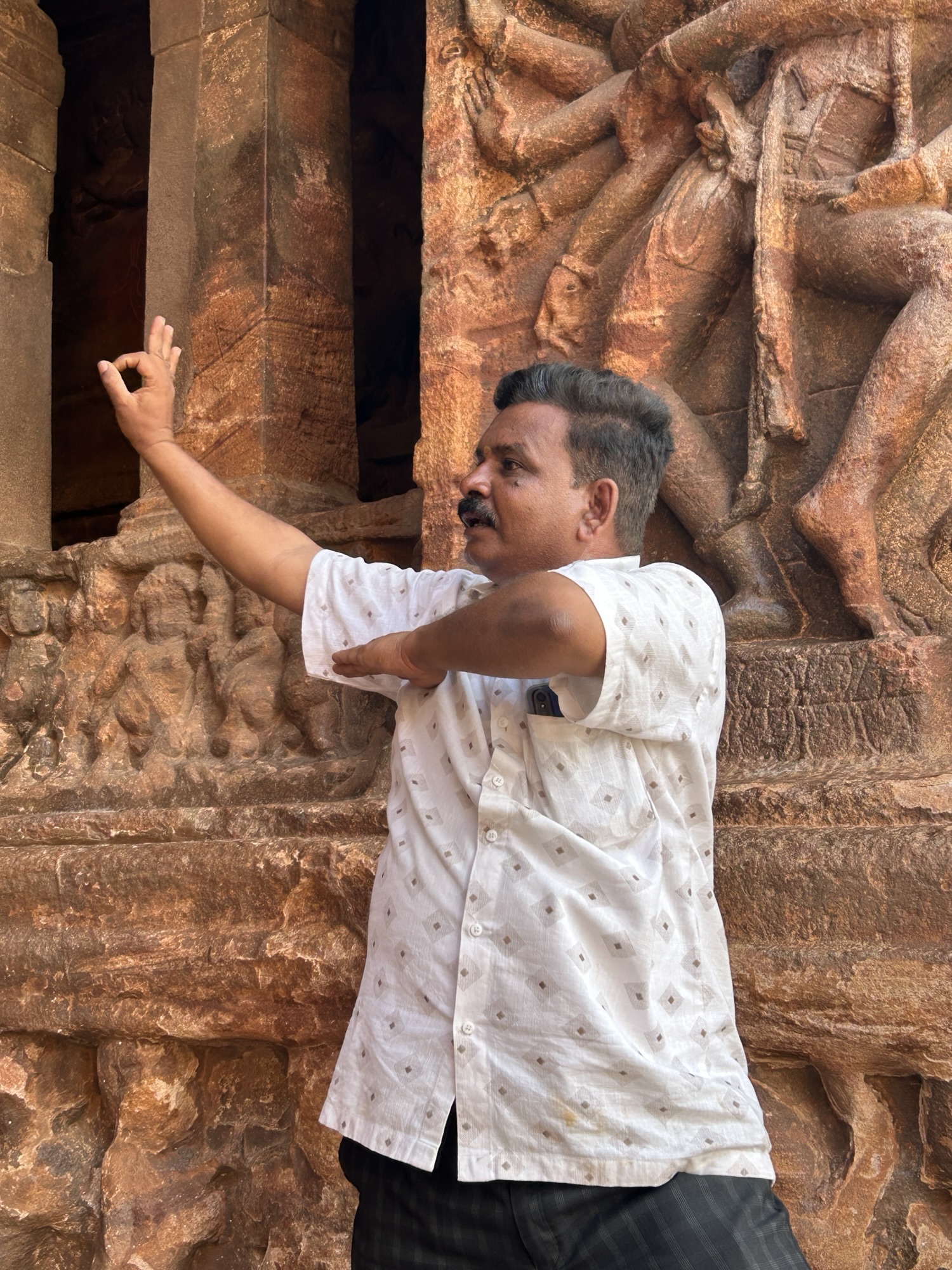
    At the entrance itself, is the magnificent sculpture ofthe Dancing Shiva in his avatar as Nataraja. With his 18 arms, this sculpture is a compendium of Bharat Natyam poses as our guide Raju very gamely showed us.

    Shiva dancing on a lotus with the drummer at his side and Ganesh near him

    Gender Fquality and the story of Bringu

    Sage Bhringi was an ardent devotee of Lord Shiva and refused to bow to his wife Parvati. But Shiva didn’t like this so he put Parvati on his lap making it impossible for Brhingi to go round with going round Parvati too! But Bhringi transformed changed himself into a bee so that he could circumambulate only Shiva. This made Parvati really angry, so she took away his flesh and left him a weak, helpless skeleton. Seeing his plight, Shiva gave him an extra leg to stand on. This is how Bhringi got his third leg.

    But Shiva wanted Bhringi to realise that the Universe consists of both male and female energy and he hadt o circumambulate Parvati, so he appeared as Ardha Nari nareshwar, a form that unifies the male and female energy of the universe.

    harihareshwar : when Shiva and Vishnu come together

    This statue shows both Shiva and Vishnu as one signifying that both Shiva and Vishnu are one and the same.

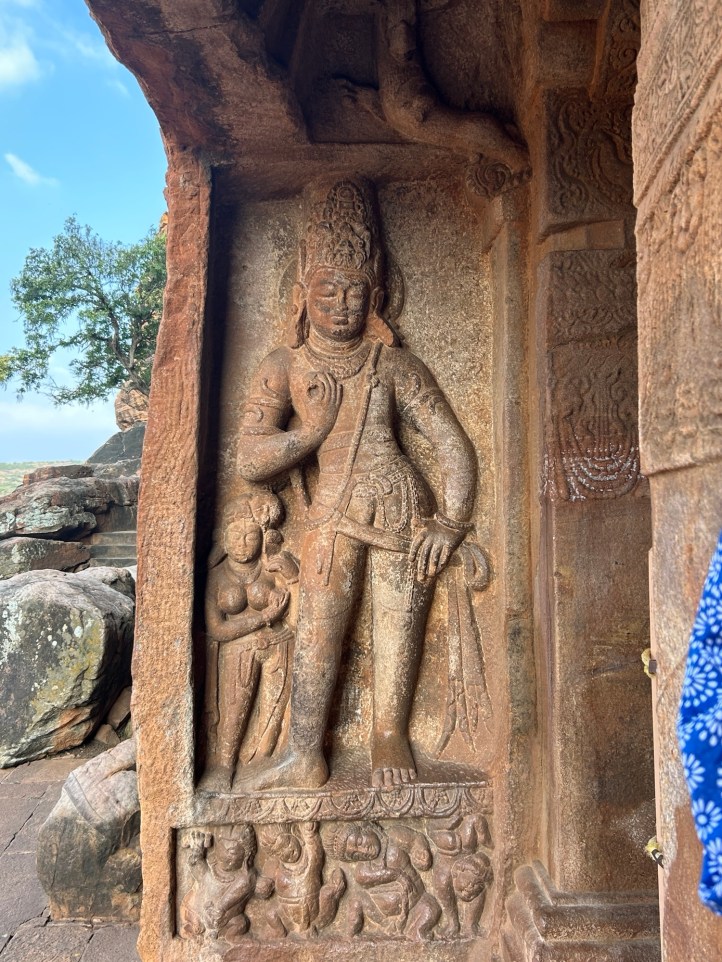
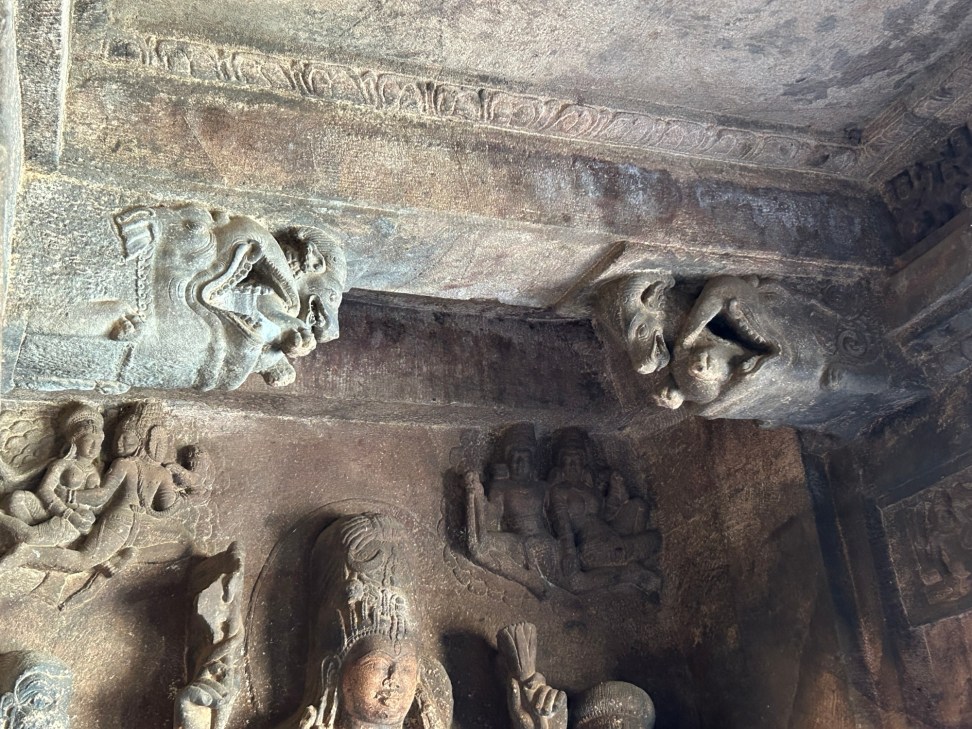
    The doorkeeper on the left of the cave is standing on Vrishaba -Kunjara a motif where both the elephant and the bull share one head.

    On the ceiling

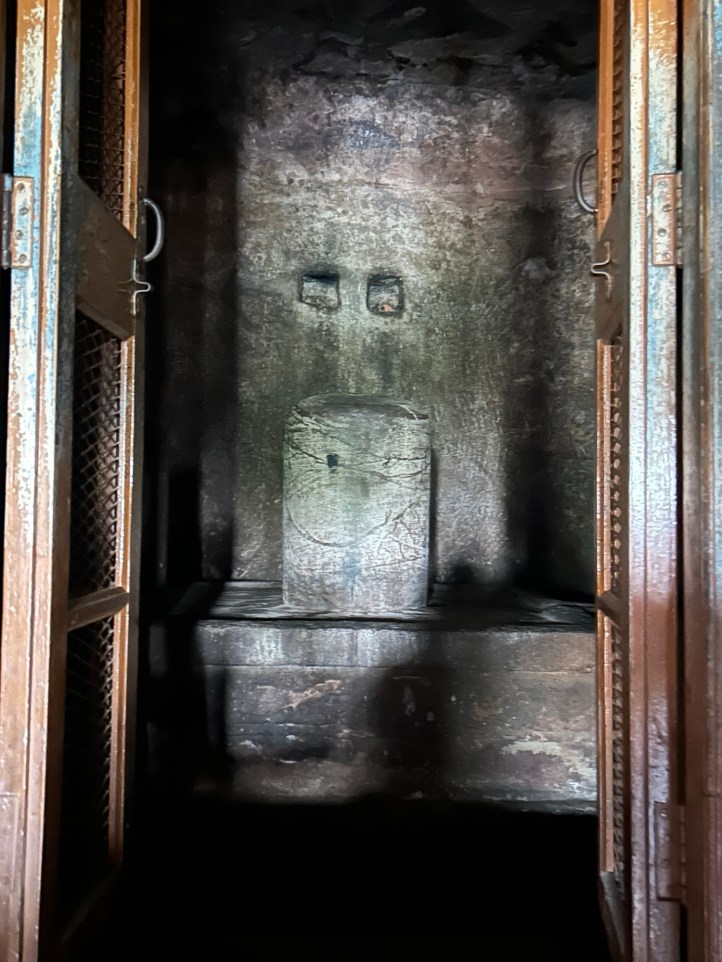
    In the sanctum sanctorum or garbhagriha one can see the shivling.

    The Shivling

    After the mukhamantapa or the verandah with columns is the main sanctum sanctorum of the temple carved out of the hill.

    Cave II

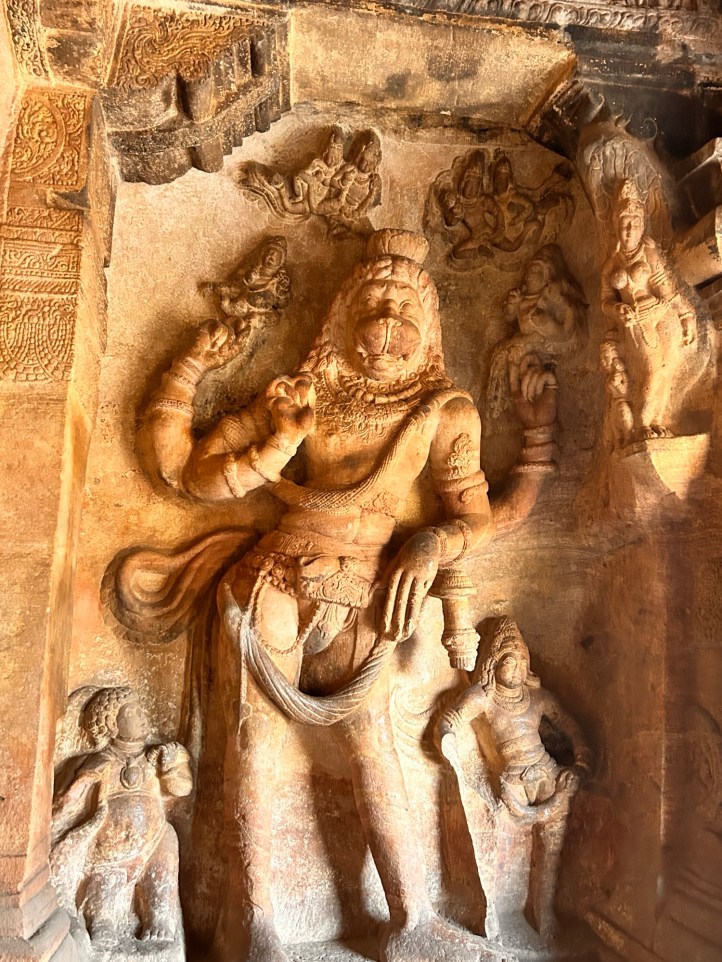
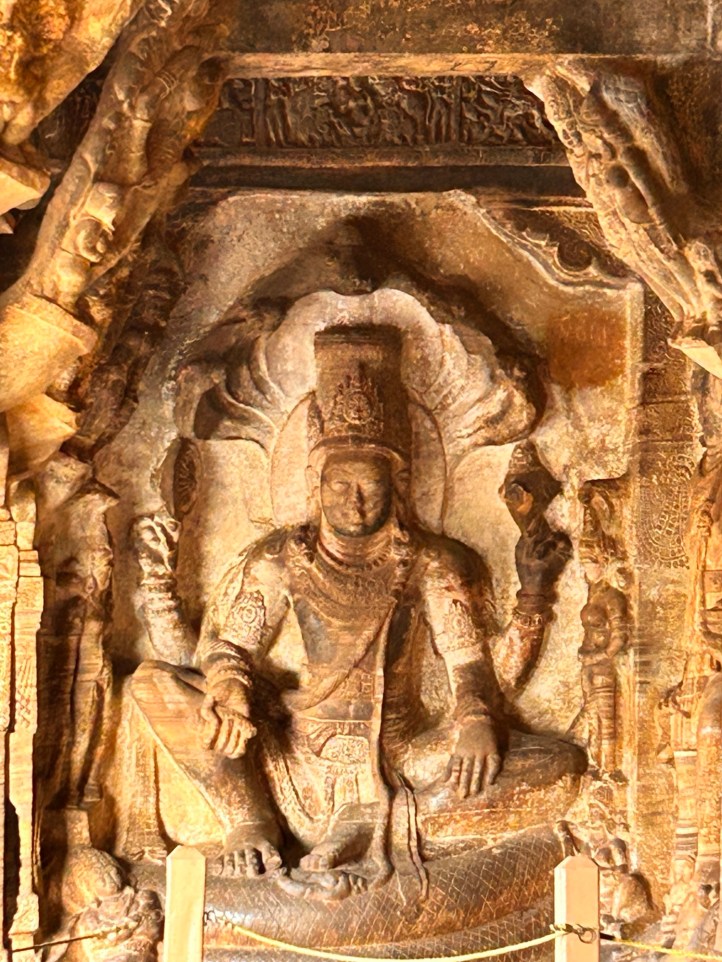
    Dedicated to Lord Vishnu, the cave has amazing carvings of different avatars of Vishnu,

    A door keeper of the Vishnu cave 2

    Some beautiful sculptures on the ceiling.

    The Avatars of Vishnu

    Cave 3 :Vestiges of vegetable dye painting

    Around the caves

    Now sealed, the staircase to the top of the fort

    I personally was exhausted by the time we finished Cave 3 and gave Cave 4 a miss.

    We still had to visit the Bhootnath Temple at Agastya Lake and the Banashankari Temple so we went down to catch a rickshaw.

    We passed through narrow gulleys of the town, relatively clean save for the open drainage and several pigs we found running around and scavenging in garbage heaps.

    The light was fading and we were quite exhausted.

    So we made a cursory trip to the temple, saw a laboratory of sorts a little away on a hillside where the apprentice sculptures practiced their skills in carving and sculpting.

    Our last stop was the Banashankari temple which most of us gave the skip, preferring instead to indulge in a cup of sweet masala chai.

    Briefly put, Parvati’s father was performing a yagna to which she showed up uninvited. Her father rudely asked her why she had come. This so enraged Parvati, that she jumped into the yagna and blew up into 52 pieces one of which landed at the spot where the temple now stands.

    Even though this temple is of historic and religious significance, we just about made a brief visit. The temple has a special festival in January-February, where 5-mile-long queues made our 30-minute wait seem like a dream. Unfortunately, our arrival coincided with the bath time for the goddess and we had to wait till she was ready to receive her devotees. Once inside, we got a quick glimpse of her but left satisfied that we could actually see her.

    Ciao,

  • THE LITTLE KNOWN SECRETS OF THE GOL GUMBAZ

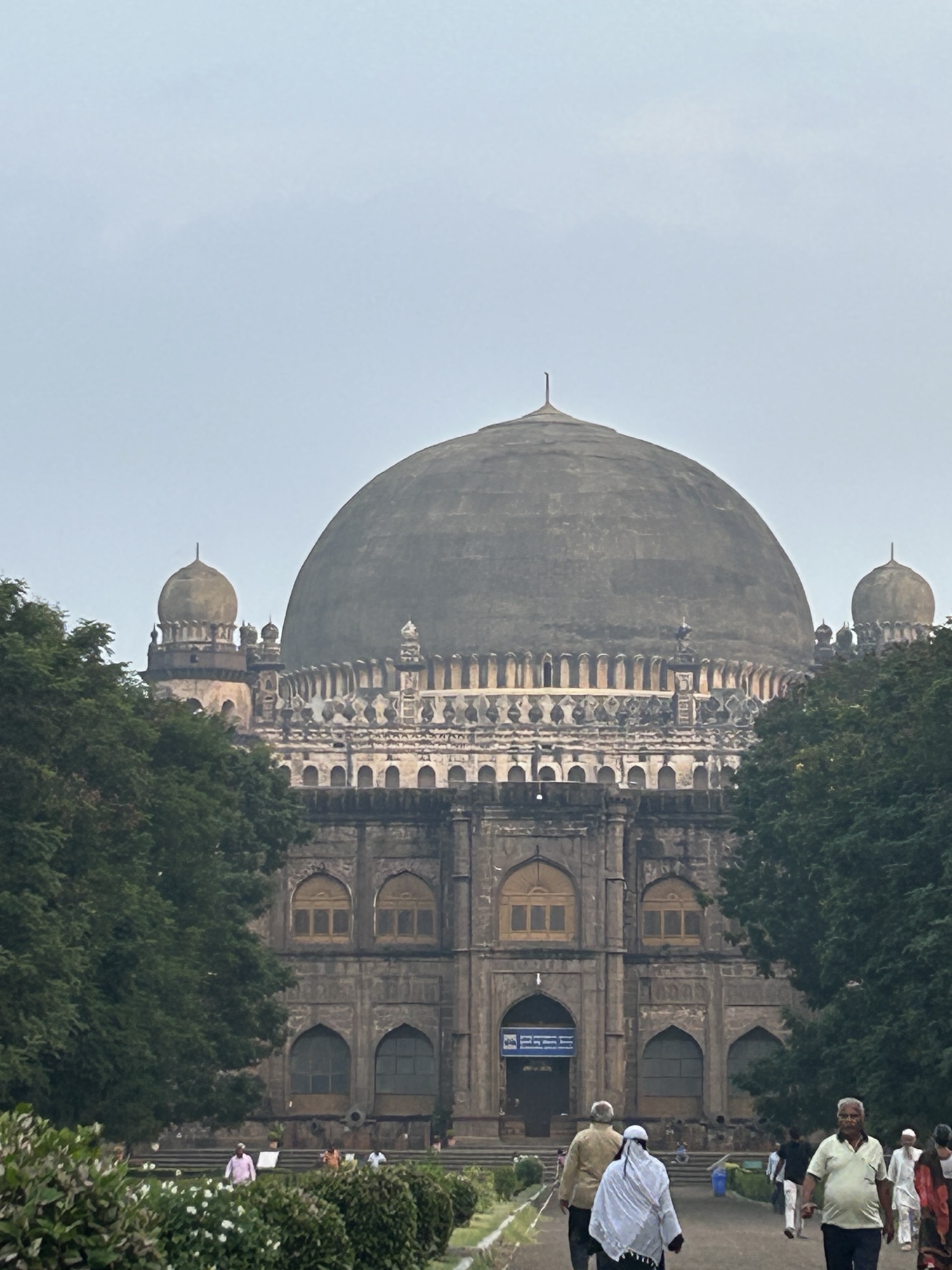
    The early next morning, we set off for the GOL Gumbaz the monument synonymous with Bijapur. Our guide for the day (a special friend of my sister-in-law) recommended that the early morning was the best time to see the monument.

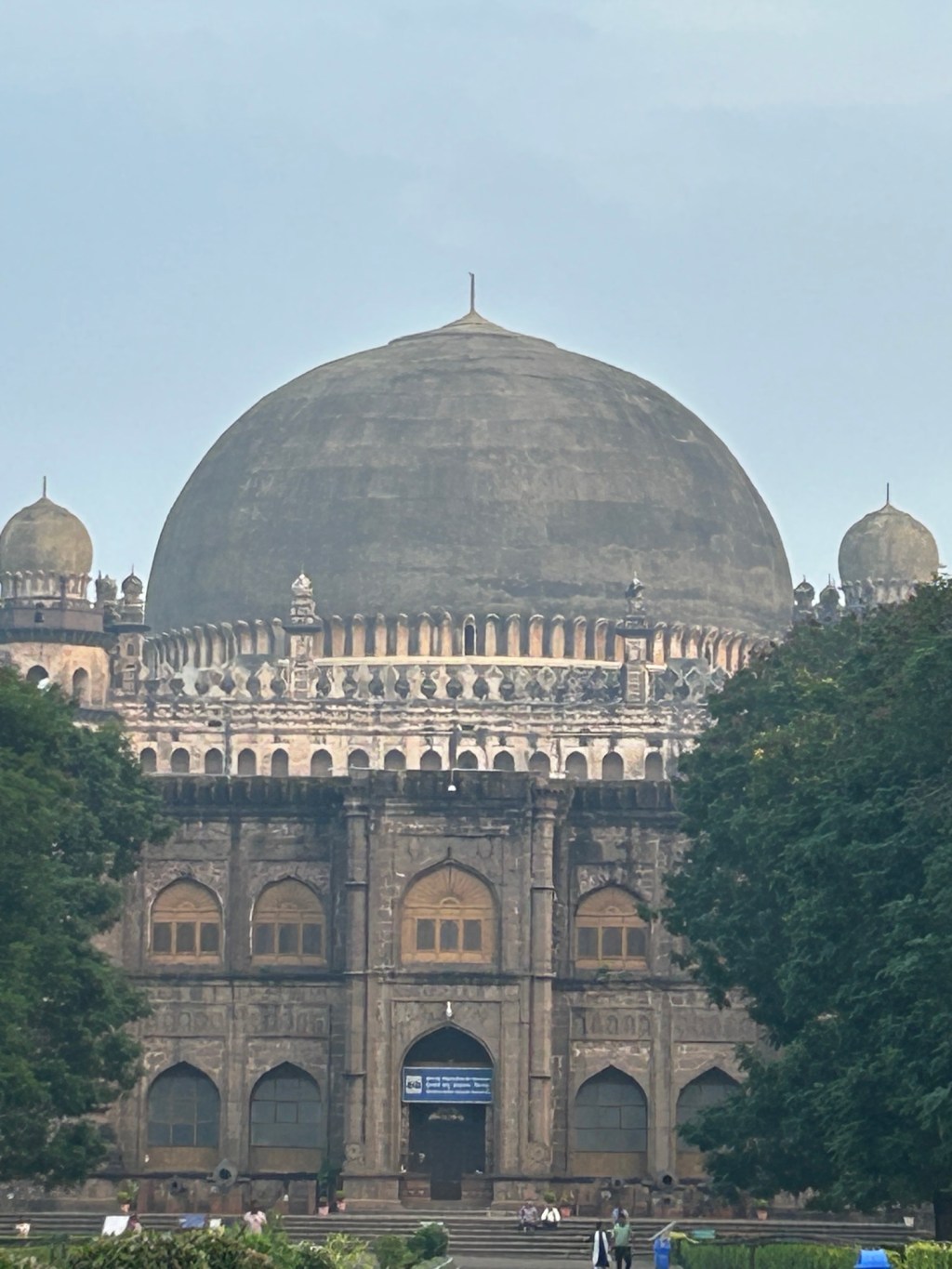
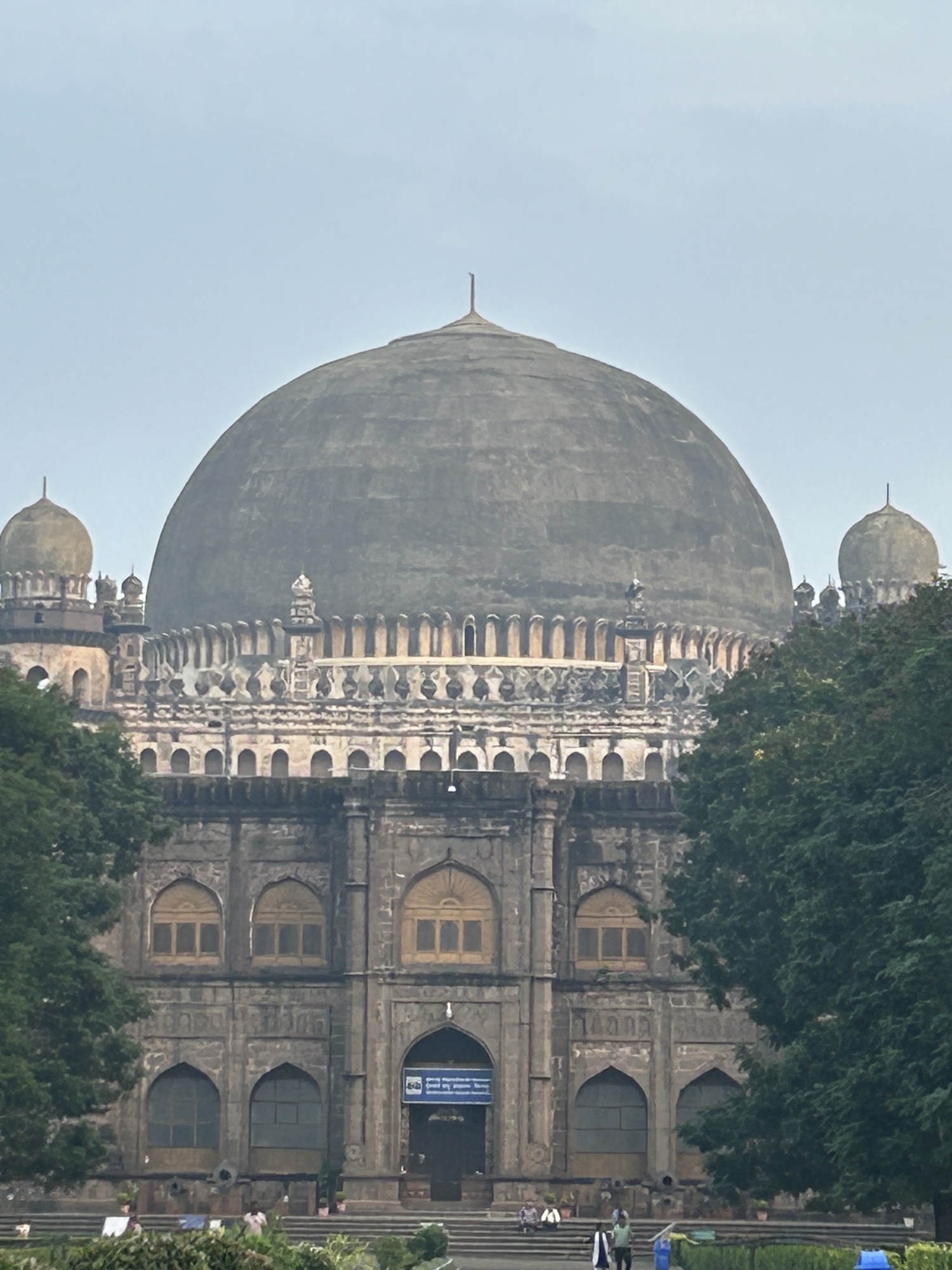
    The monument looked large as it emerged through the early morning mist, its huge dome becoming smaller and smaller as we approached it. When we finally reached the end of the pathway, the minarets and the dome had vanished!

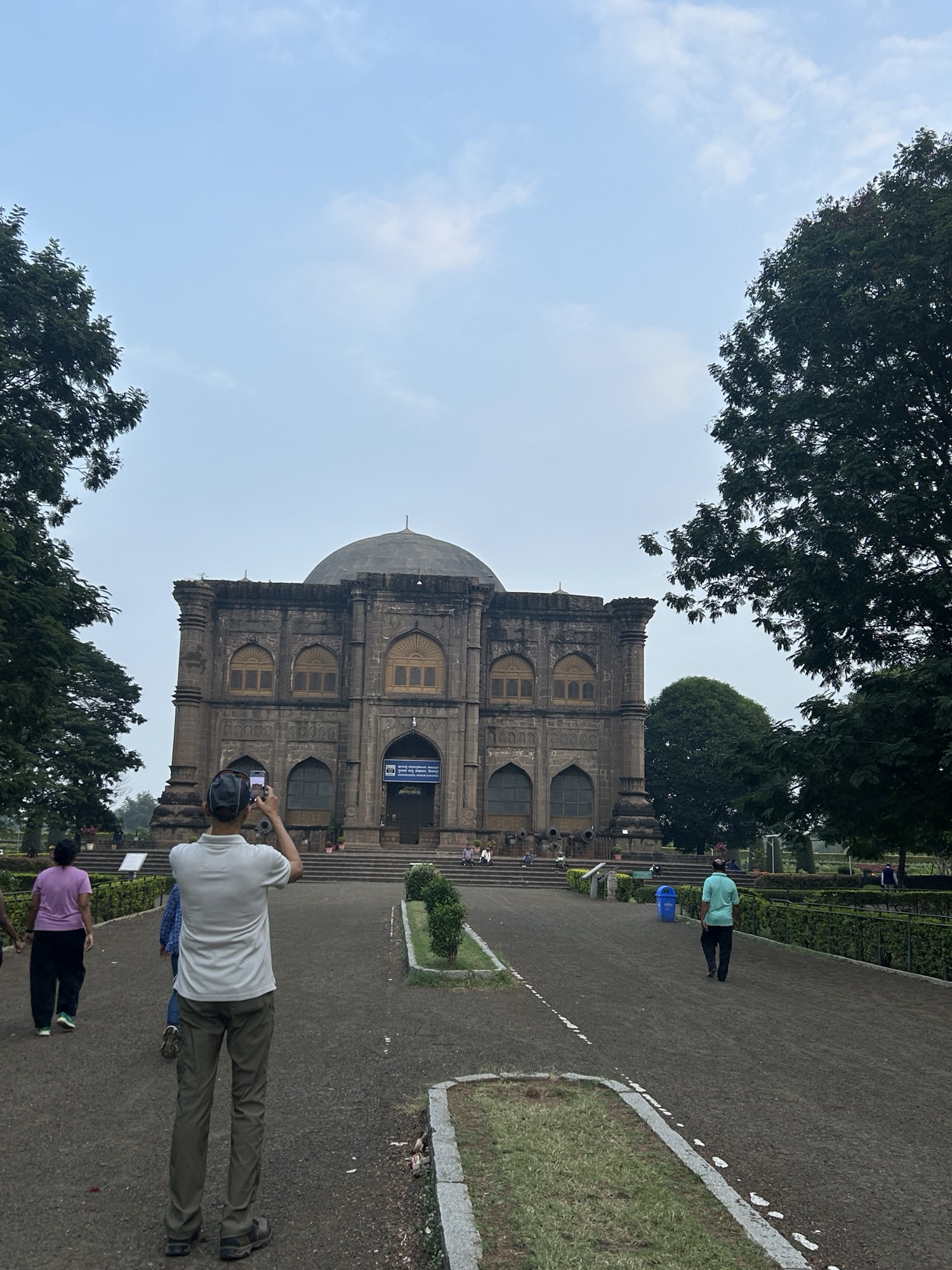
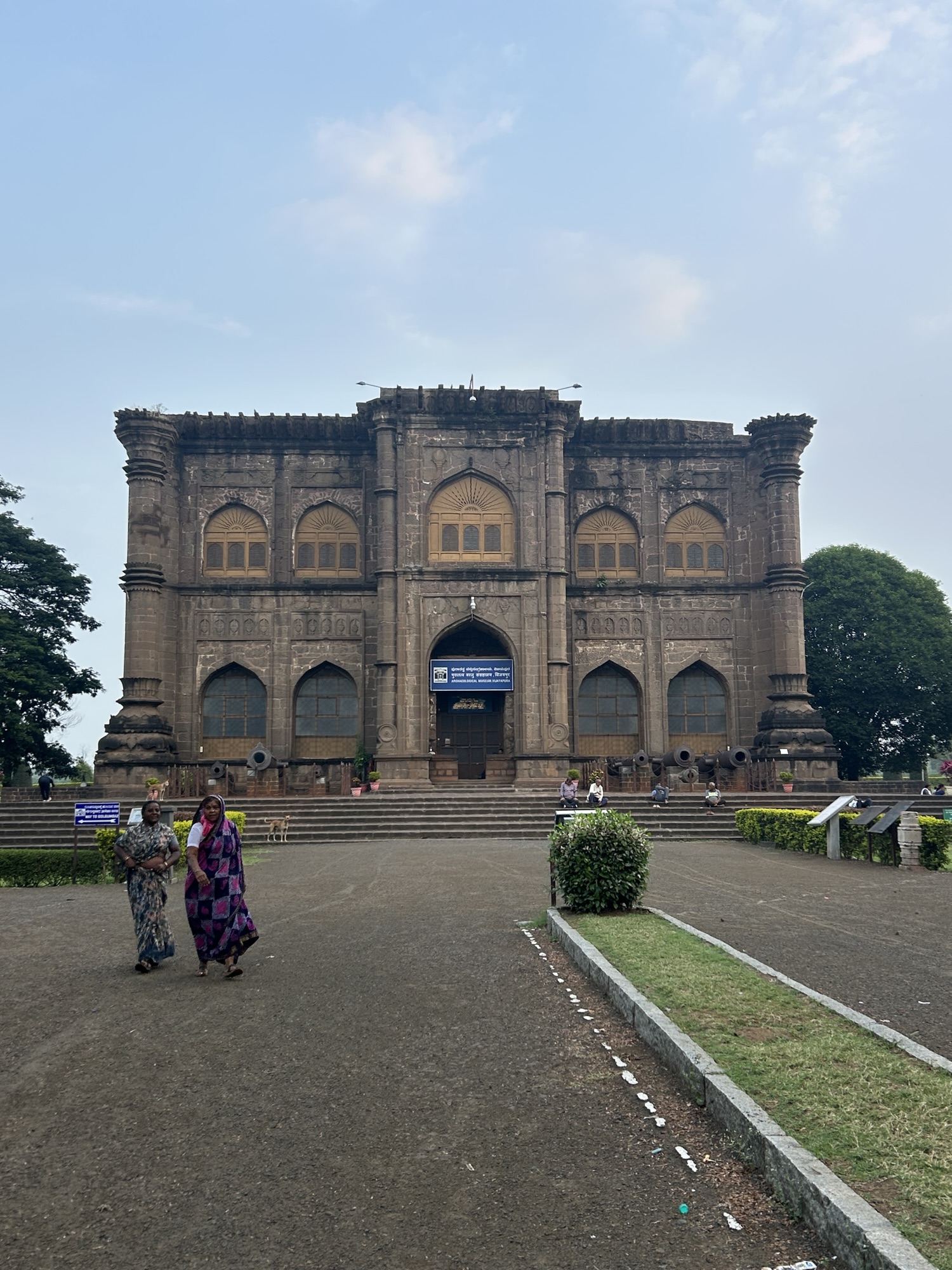
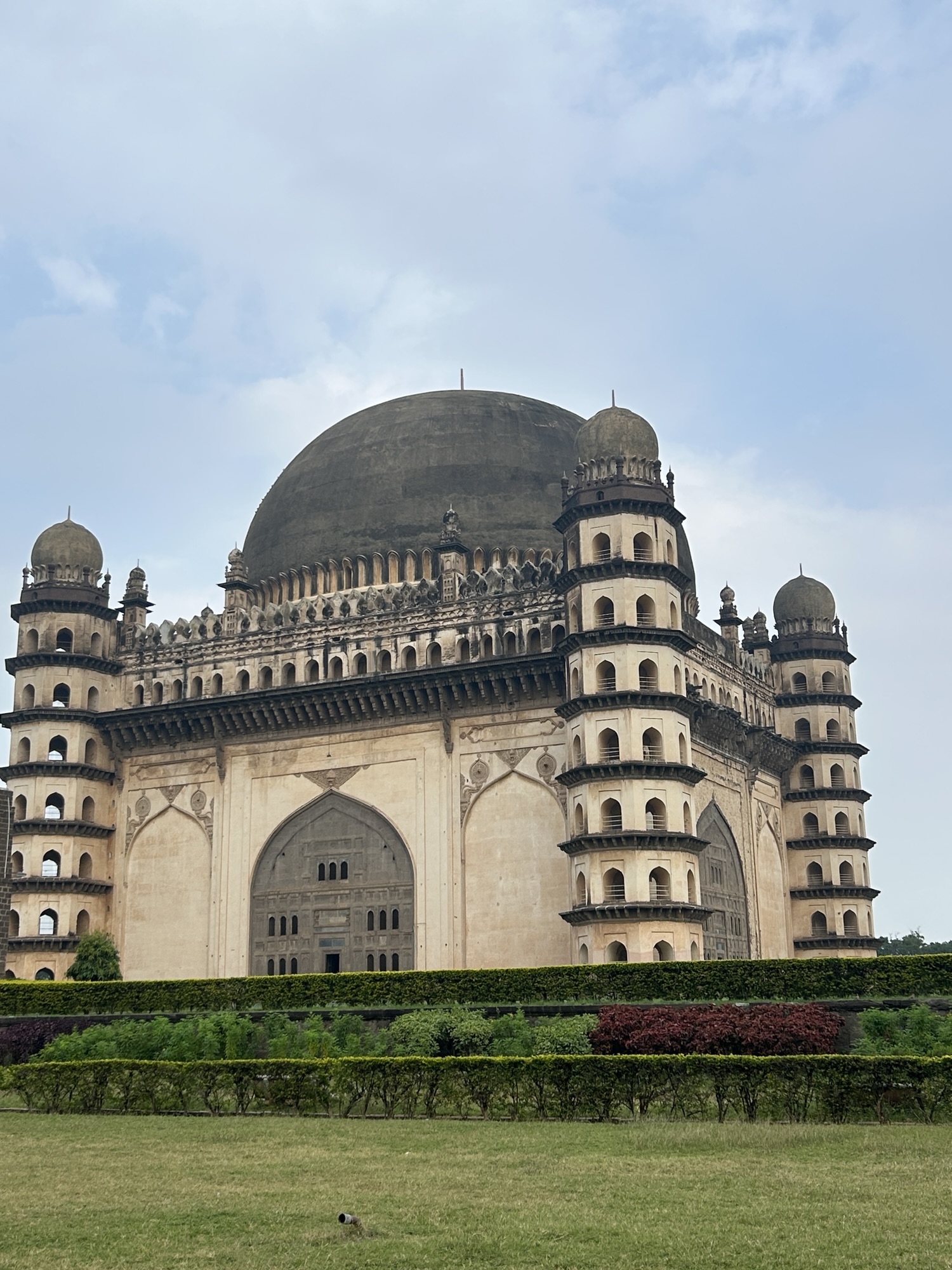
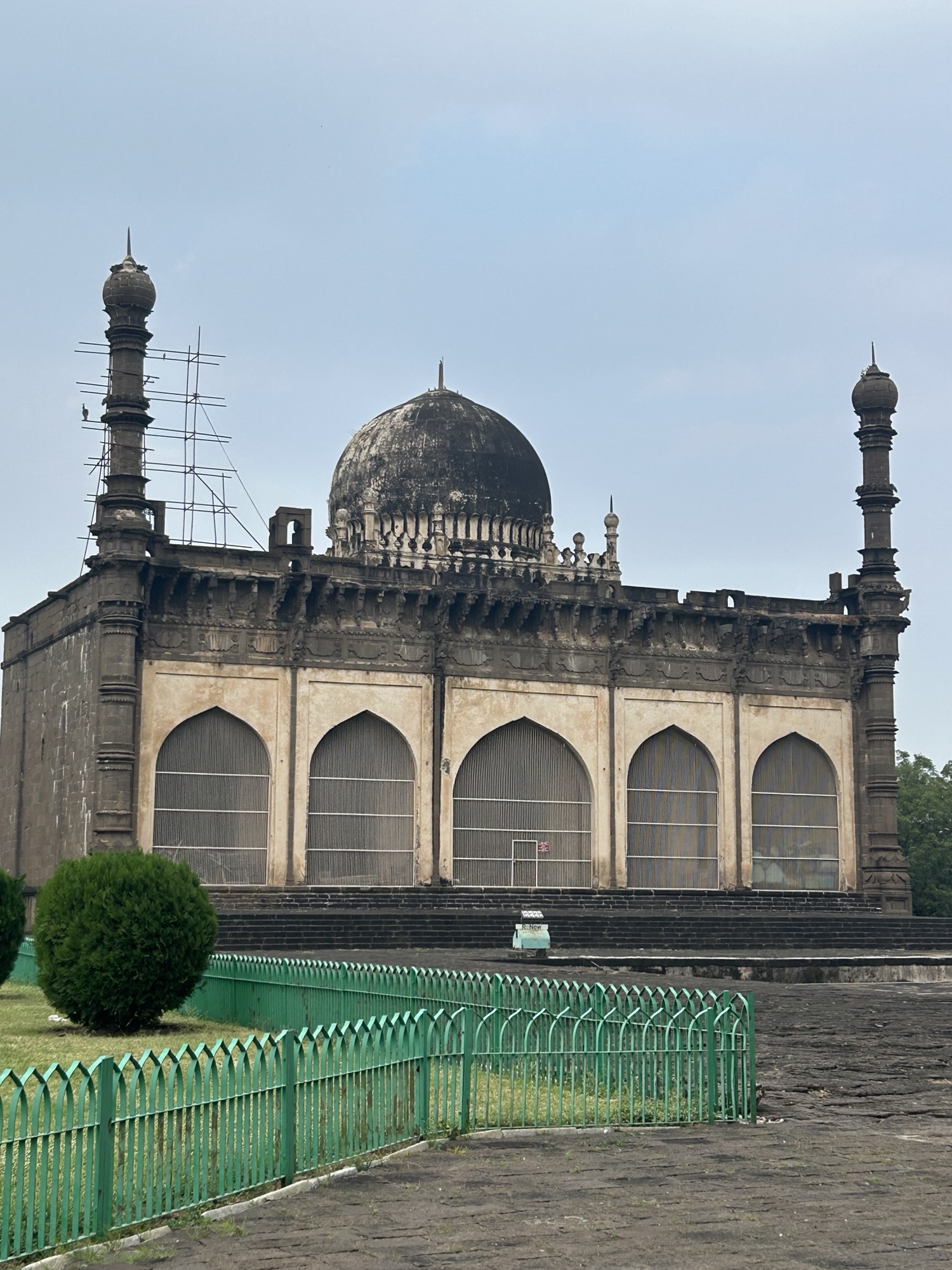
    This is the first secret of the Gol Gumbaz : it is not a single building as it appears from afar, but a series of three structures perfectly aligned to create the illusion of a single structure!

    The mausoleum was built by Mohammed Adil Shah, the 7th Sultan of Bijapur. The first structure is the Nagara Khana, where the king used to visit to oversee the construction of the tomb. Today, this building houses the Archaeological Museum. Apart from the many artefacts and sculptures that come from the area, one can see the special porcelain plate that changed colour if the food placed on it was poisoned. This was the Sultan’s way of ensuring that the food he was going to eat was safe to consume.

    The gateway to the mausoleum consists of a long structure with the central archway perfectly aligned with the succeeding ones to create an illusion of one archway becoming bigger till you come into the precincts of the mausoleum.

    To the right of the mausoleum is the mosque.

    One of the building’s chief features is the whispering gallery near the dome, where a whisper can be heard at the opposite end with ease. A sound as soft as the ticking of a clock, a rustle of paper too can be heard at the other end.

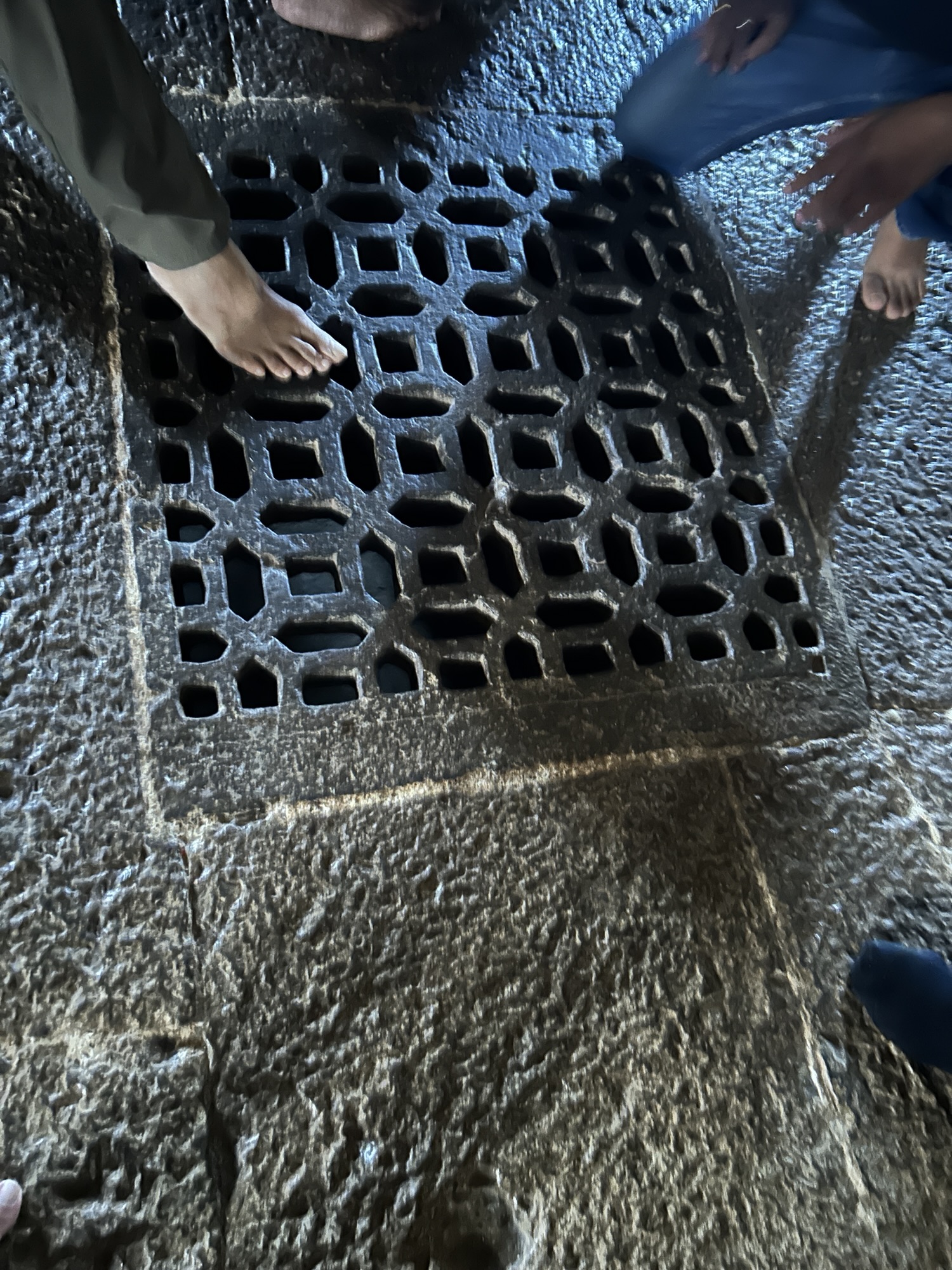
    Constructed from black basalt, the stones are interlocked, and the structure is kept cool with 3-inch-thick gratings that draw in cool air. In the four corners are octagonal minarets accessed by a narrow staircase leading to the dome at the top.

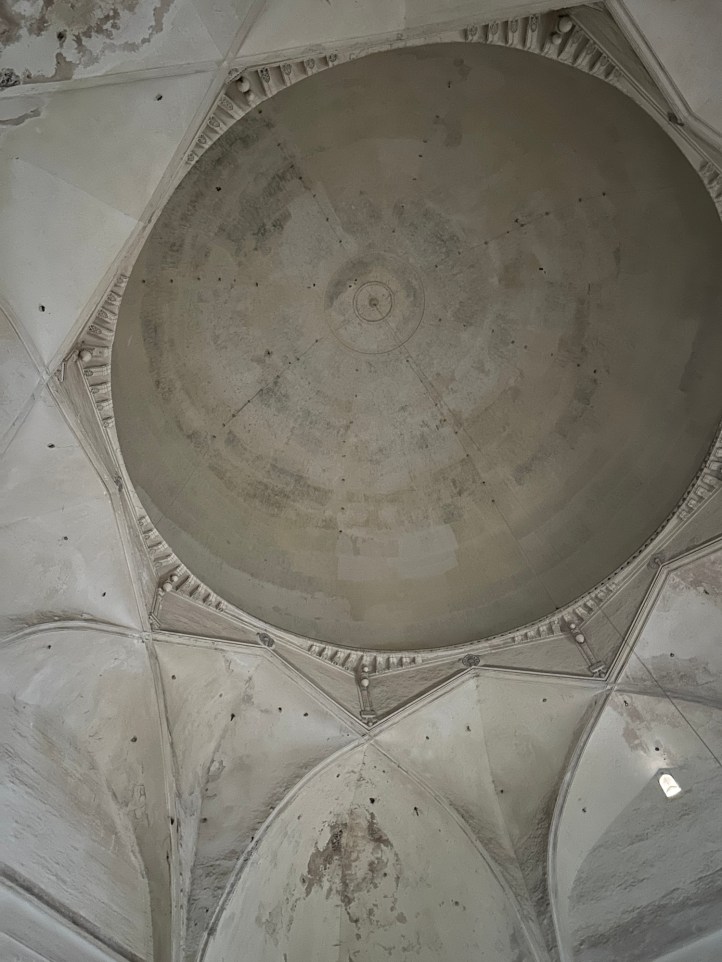
    The dome is a total wonder. It is held aloft by eight intersecting arches and is the single largest free-standing dome in India, and the second largest in the world. Its span is only surpassed by the dome of St. Peter’s Basilica in Rome.

    The gallery on top is wide enough for a bullock cart to drive on

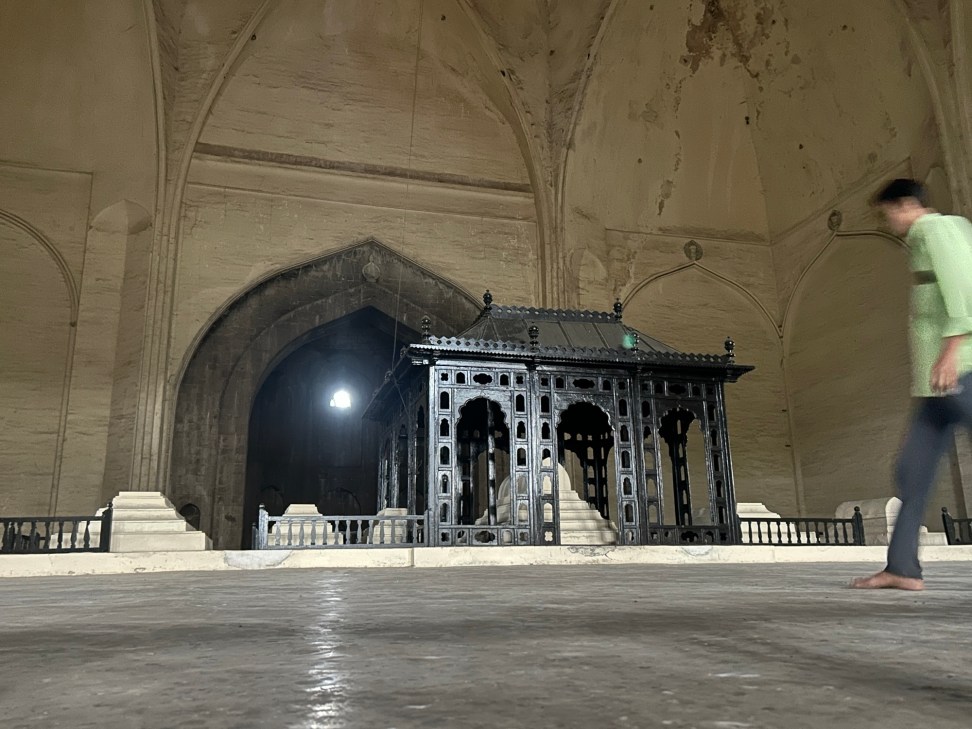
    Below the dome lie the graves of Mohammed Adil Shah and his family. But unlike the other tombs, the mistress of Mohammed Adil Shah gets pride of place and rests to his right, unlike his queen.

    This is the second secret of the Gol Gumbaz : The grave to the right of the Sultan does not belong to his chief wife but to his favourite mistress Rambhavati.

    Legend has it that the Sultan wanted to test his wives’ love and asked each of them to jump off the balcony to prove it. Each one of them refused save Rambhavati, his mistress that he had abducted from Sri Lanka. But Rambahavati was smart and said she would do so on condition that the Sultan present her with a special 40-foot-long piece of cloth. This she draped around her so when she jumped, it acted like a parachute and she landed safely!

    img_9552
    The canopied grave of Mohammed Adil Shah and Rambhavati by his side

    The steps to the gallery are steep and the stairwell is narrow. Since the steps aren’t even, I only climbed up to the first floor and came down. But the rest of the gang enjoyed the view from the top and thoroughly appreciated the song that our guide whispered from the far end.

    I only wish I had visited this architectural marvel a few decades earlier. I would have then been able to climb to the top with ease.

    Look out for the next post when I share my experience of the cave temples of Badami.

    Ciao,

Design a site like this with WordPress.com
Get started