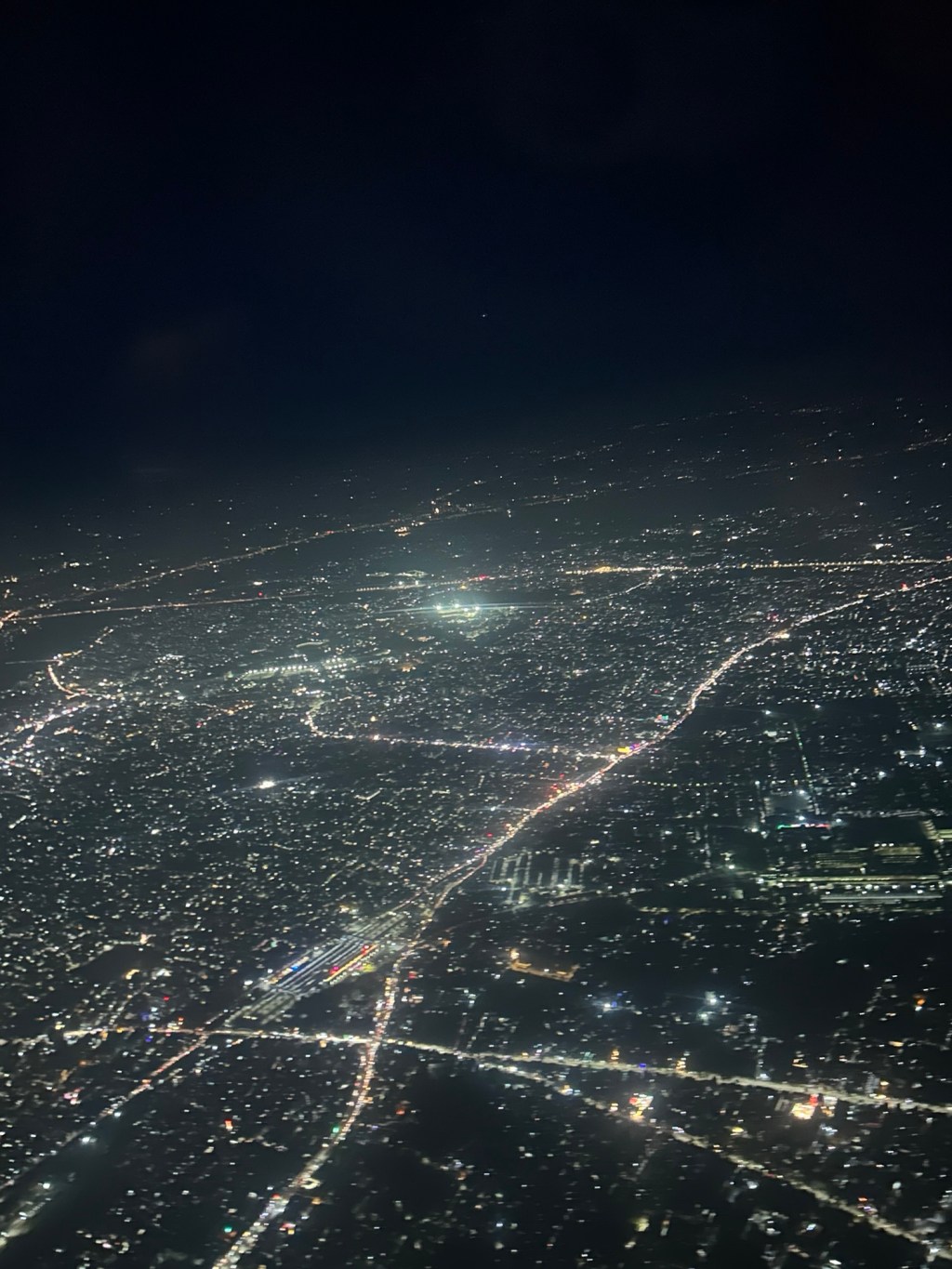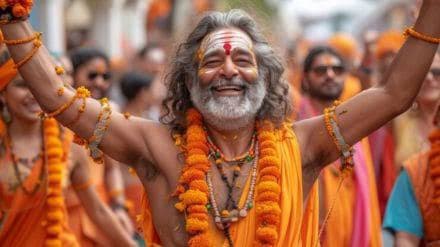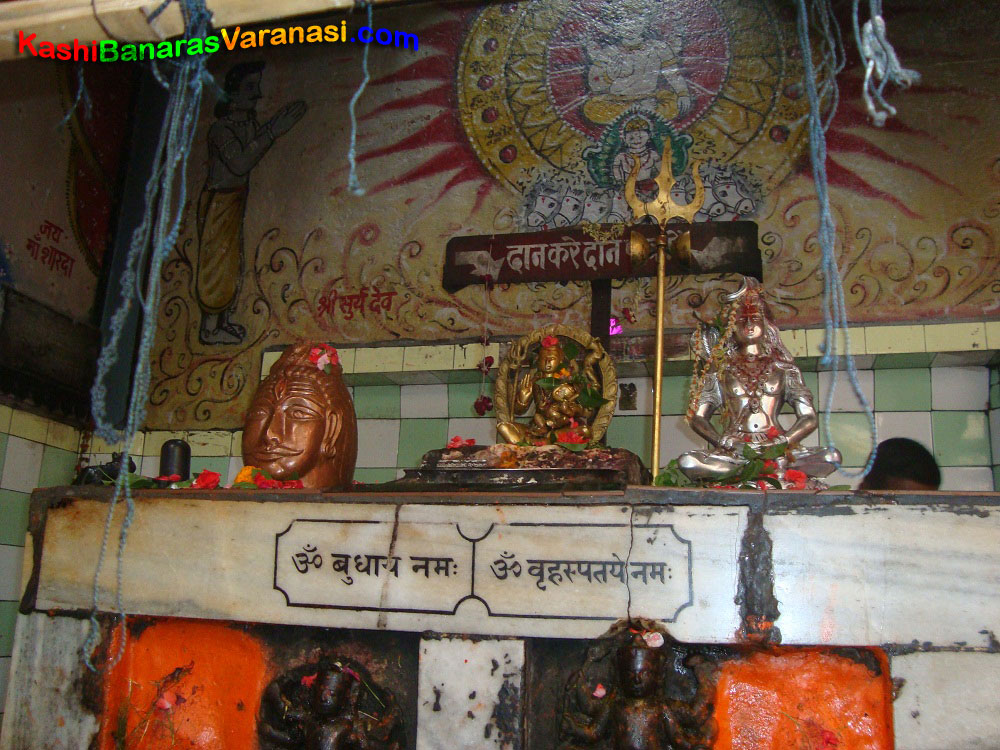
Though we had just a day to spend in Varanasi, we wanted to enjoy its ghats and its chaat.
Like millions of Hindus, the Ganga has been embedded in my psyche since the day I was born. My grandmother used to finish my bath as did her grandmother and her grandmother before her, by pouring a few drops of water around my head, while she chanted the names of the Holy Rivers of India.
So I was looking forward to the river cruise A had booked online with Alaknanda Cruiseline . Our plan was to visit the street stalls after the boat ride and taste the chaats. After our ghats and chaats we planned to visit the Kashi Vishwanath Temple.

The blessing
During breakfast A spotted a teacher from the group of Art of Living disciples who were staying at the hotel. She asked him for a blessing and after they finished, they took us out into the lobby and chanted shlokas that reverberated through our bodies.
I am convinced that this Blessing saw us through the next few days.
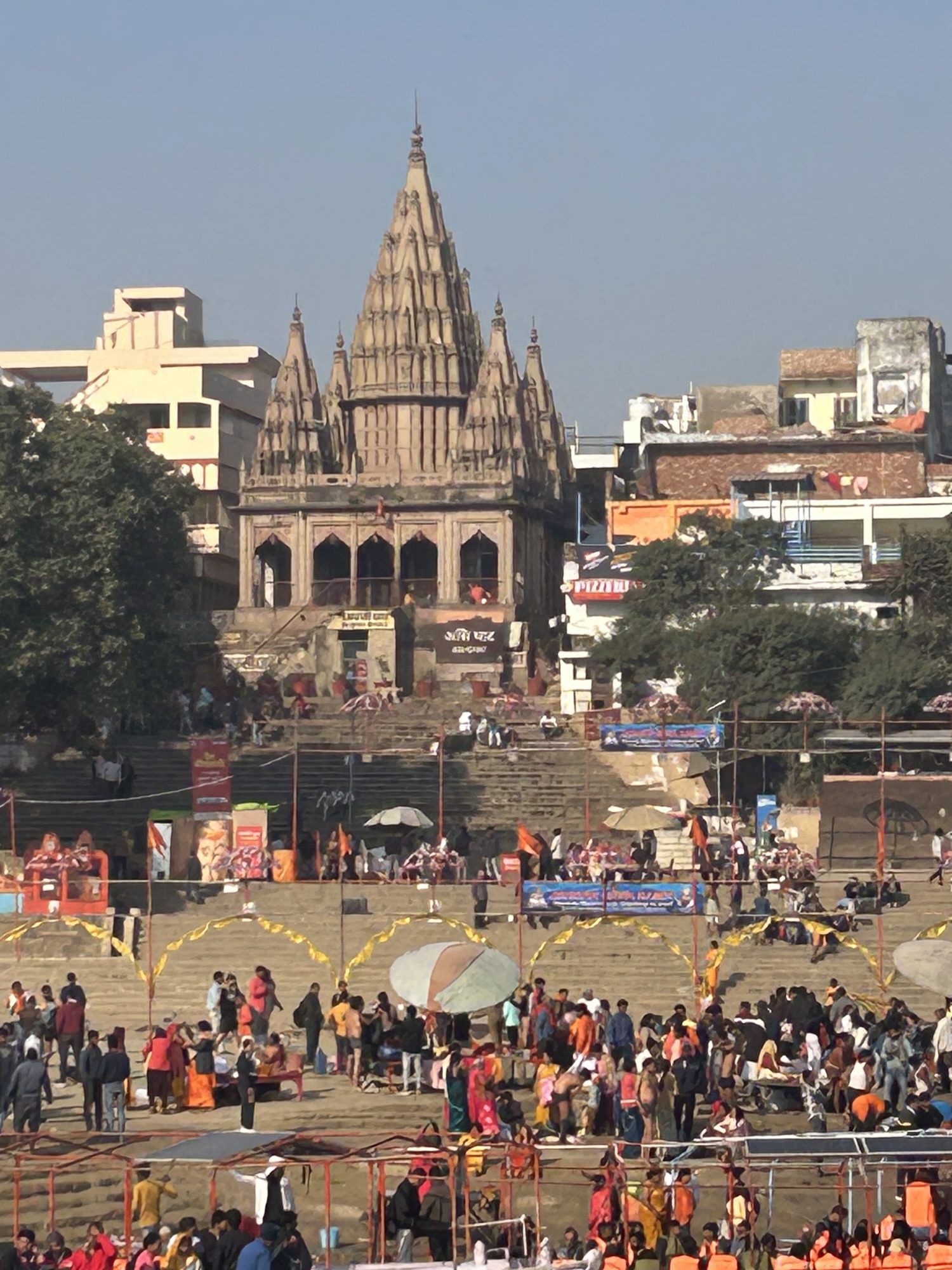
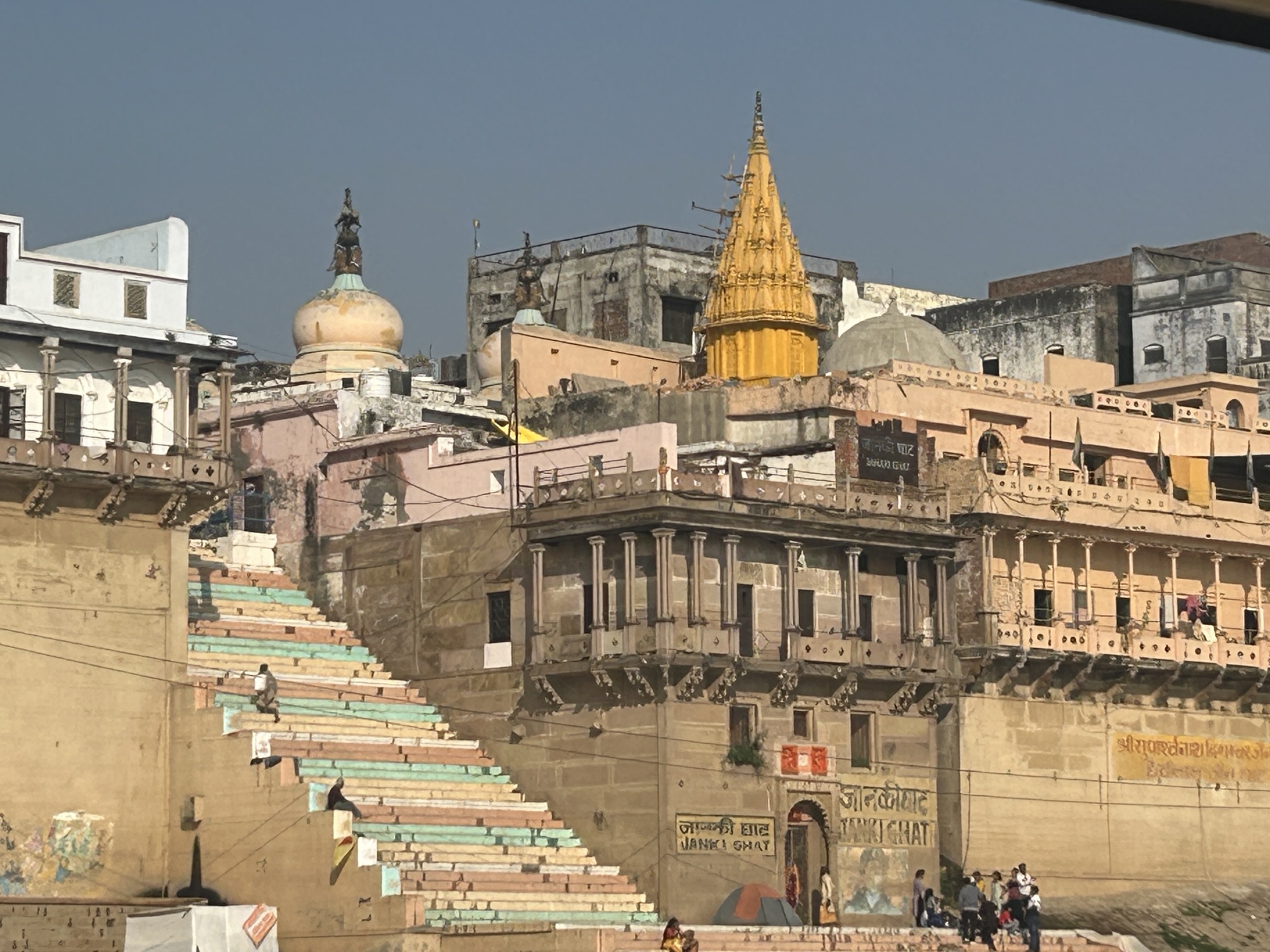

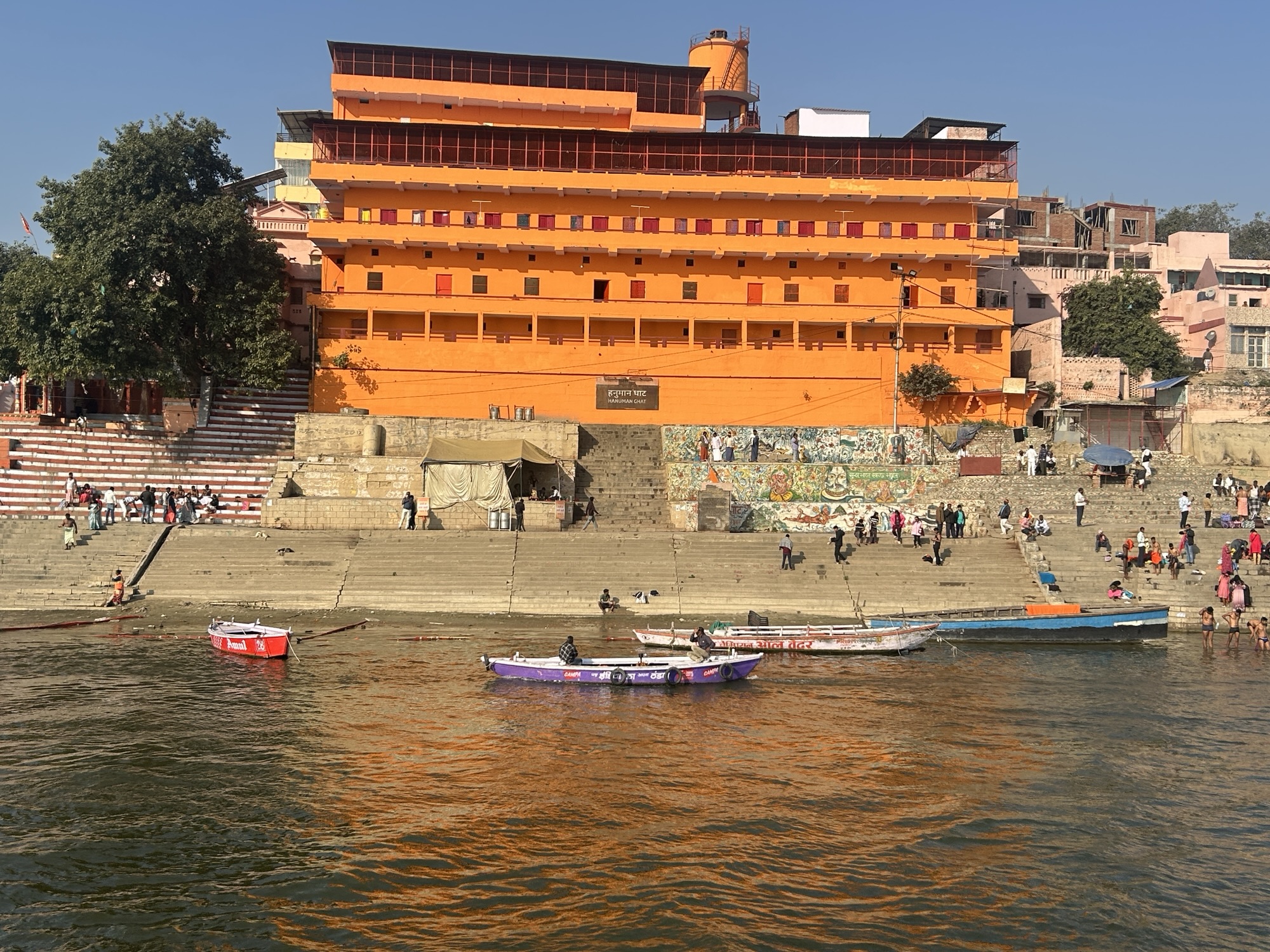
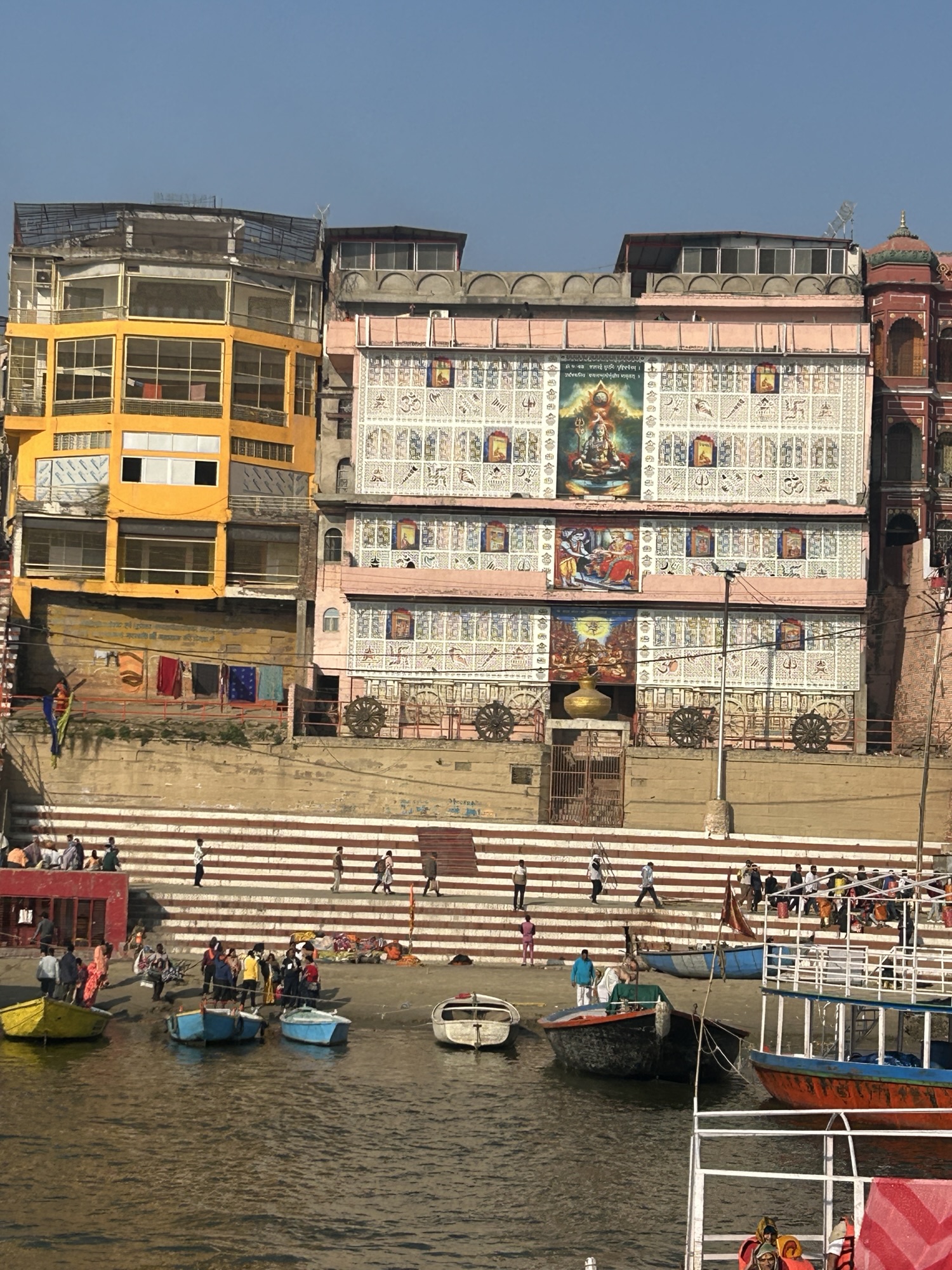
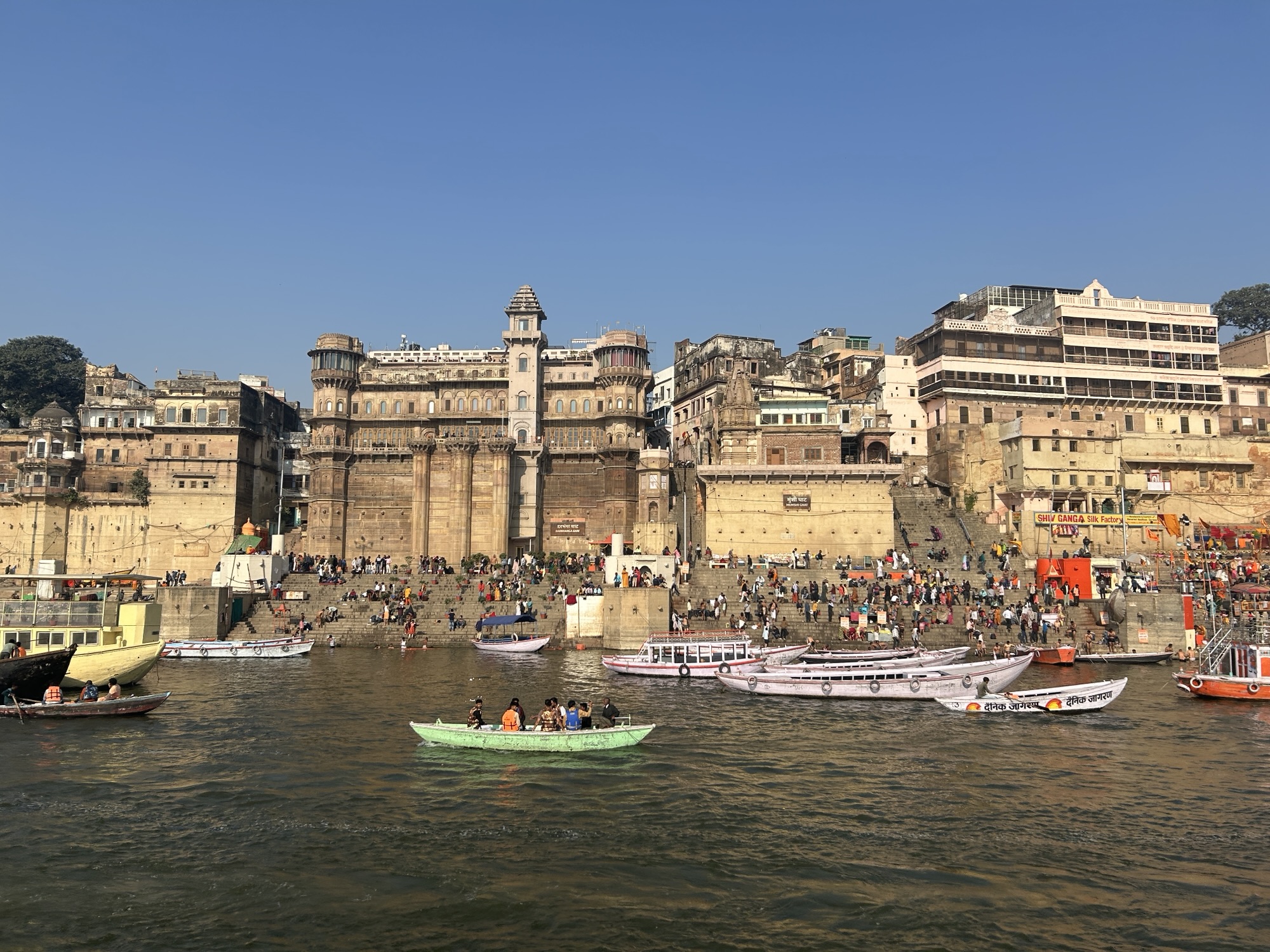

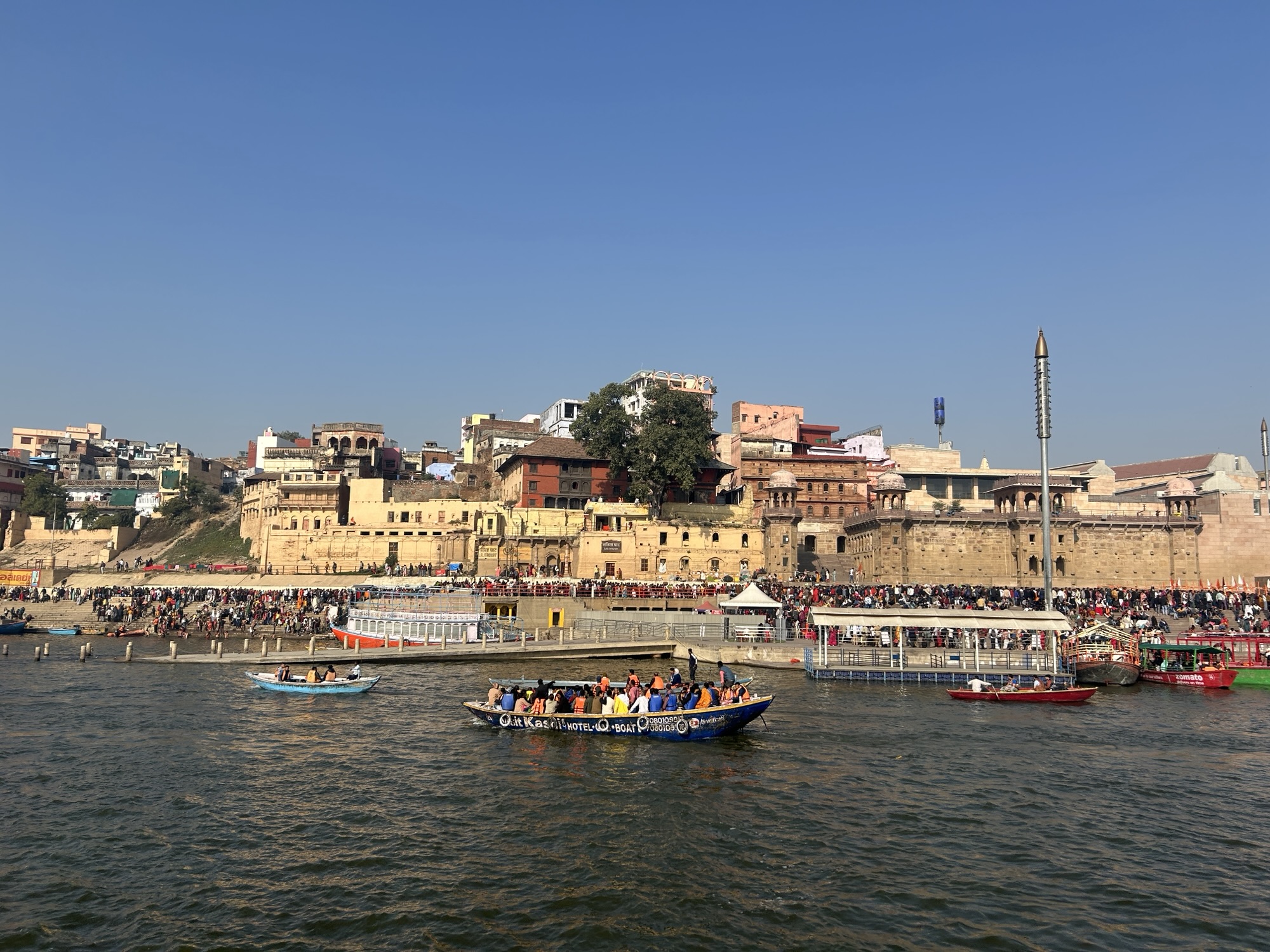
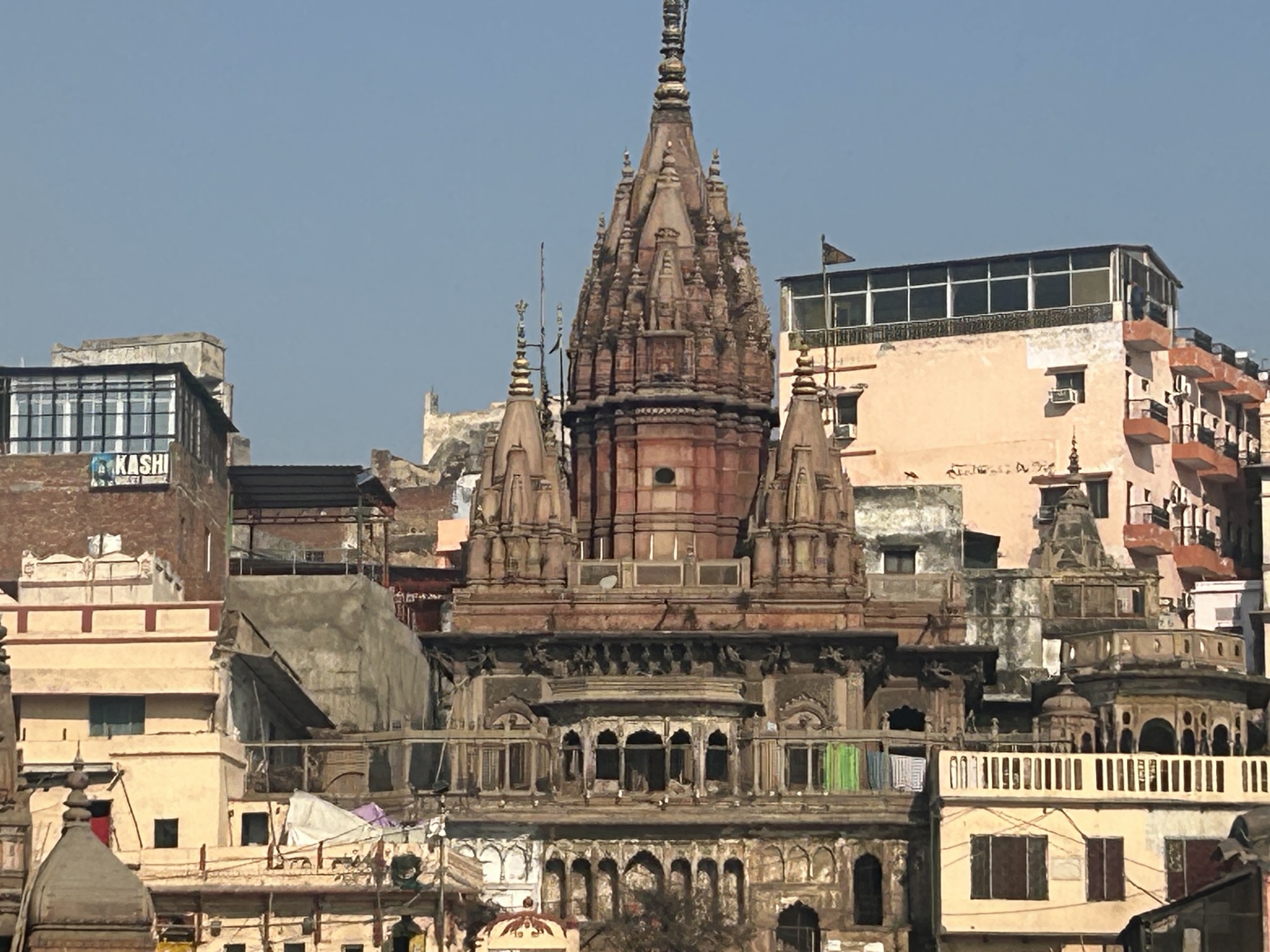
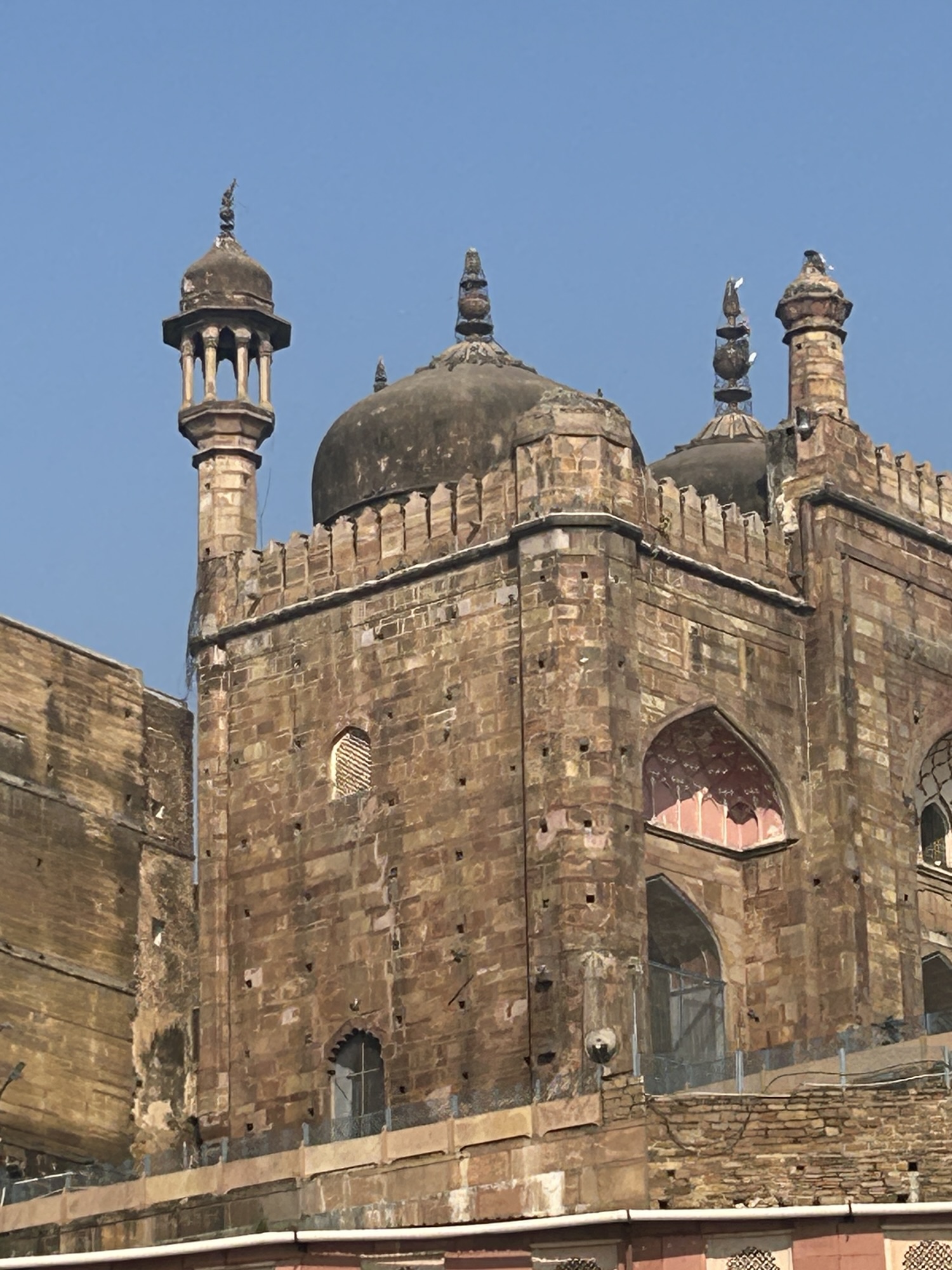

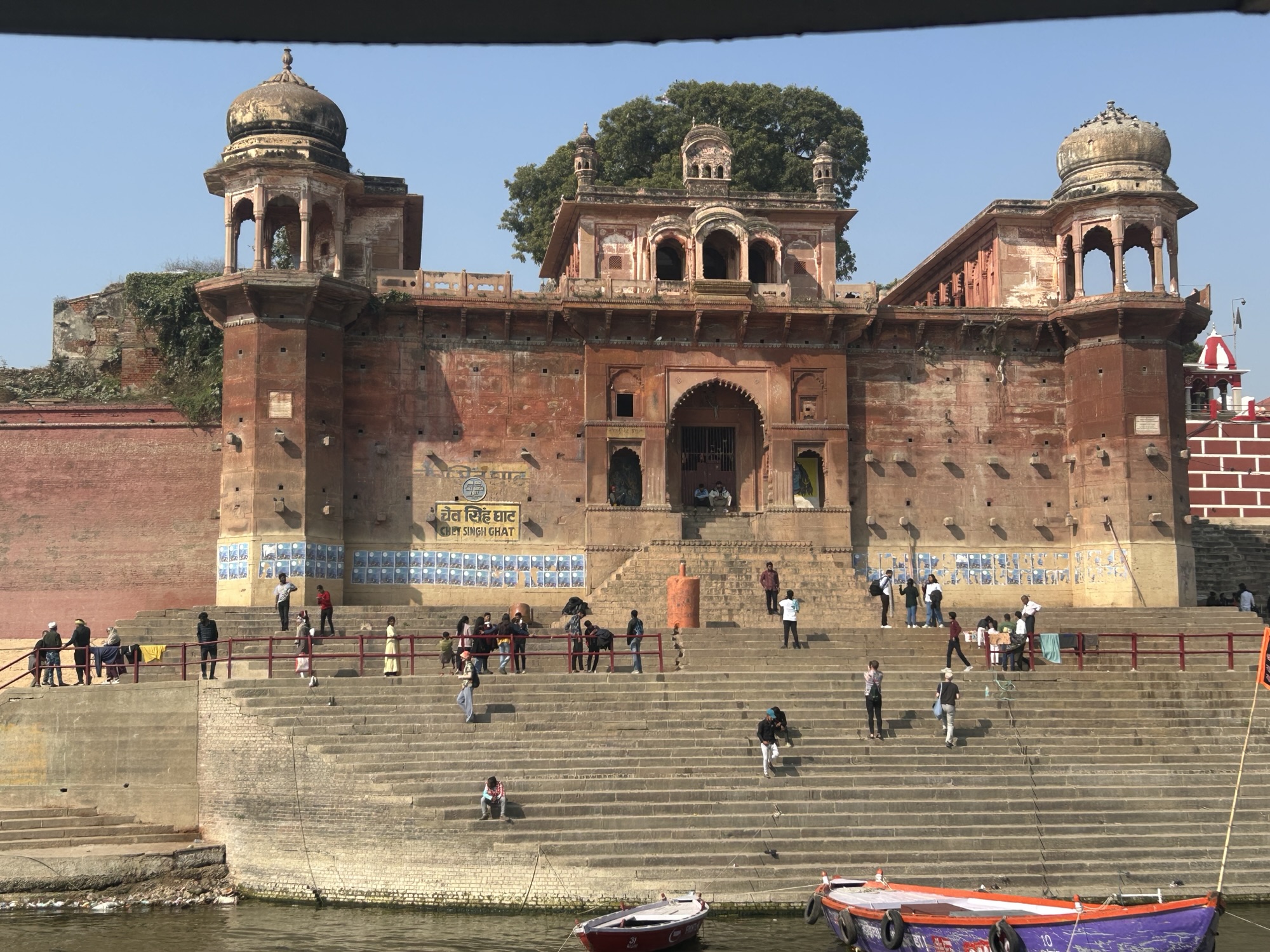
Our boat ride was well organised. It was wonderful sitting on the upper deck, watching people taking their dips at the different ghats. The commentary took us through the history of Varanasi as we passed each ghat.
Hiccup no 2
Because of the Maha Kumh and Republic Day, Varanasi was choc-a-bloc with people. From 4 in the morning people marched down the streets with luggage on their heads. Our plan of sampling street food and window shopping went for a toss. The hotel manager assured us that his hotel’s lassi was equally good and while we waited for Lassi of Varanasi, we overheard a group of travellers from Chandigarh complaining that despite their pre-planned VIP darshan, they had to wait 3 hours since all VIP visits were cancelled! They had almost given up when someone suggested a ruse of entering through a side entrance under the pretext of buying a sari from a shop in the temple complex.
Shaken by this news we went down to the travel desk to book a boat to watch the evening Aarti. If we couldn’t visit the temple we could at least get a proper view of the aarti at the Dashashwamedh Ghat.
Sensing our disappointment, the lady at the Travel desk said that we could take a chance and visit the temple since the crowds had thinned a bit in the afternoon. She spoke with a friend who though doubtful because of the long queue that was four people deep and one km long and growing, offered to accompany us.
Thus began a two and half hour wait in the hot afternoon sun. Hordes of people from all over India: young and old, men, women and children; people in saris, people in lungis people in blue jeans too; people with turbans from Gujerat , Rajasthan, baseball caps and head scarves jostled with each other trying to find a spot to stay still in the mass of swirling humanity. Right in front of us stood the imposing Gate No 4, shut steadfastly keeping out everybody.
In all this mess, municipal sweepers were busy sweeping the streets and garbage collectors filled up humungous sacks with disposable plastic bottles. All the while barely comprehensible announcements blared over the PA system asking XYZ and OQT to go to the Lost & Found booth where their families were waiting for them!
After the nth assurance that we would have to wait just another 10 minutes, we abandoned the wait as we had to catch the boat for our evening Aarti. We ytrooprf back to the friend’s shop, and he cheered us with a treat of some delicious Varanasi Tamatar chaat
Sunset bliss
We were too tired to walk back to the hotel, so we asked the boatman to fetch us from the shop.
We enjoyed watching the sun go down as we munched on the biscuits provided by the hotel. A young girl approached us with some flowers and floating lamps to offer to Ma Ganga.
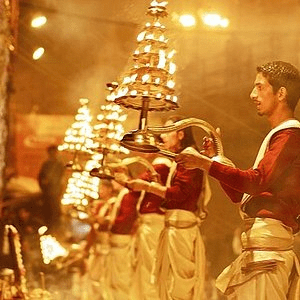
Just as the cries of ‘Jai Shree Ram ‘ and ‘Bharat Mata ki Jai’ rent the air, we got a call to hot foot it to the temple. There was a slim chance that we would be able to get a darshan.
With our hearts racing, we followed the the boatman as he took us through a maze of narrow alleyways to avoid the crowds on the main streets. We passed brightly lit shops where bangles and beads shone temptingly, we passed many tiny shrines and peeped into homes along the way. It was quite a unique tour of Varanasi by night.
The lost & found announcements were still blaring, the crowds still milling around but we managed to get in. Once inside the temple complex, a sense of calm descended upon us. Though we got just a glimpse of the main lingam, we were blessed to experience vibrations of the aarti in progress
Lord Shiva had answered our prayer and we were more than hopeful that all would go well.
Ciao,