• Up in the sky

    I am the world’s original scaredy cat and quite reluctant to do anything remotely daring or adventurous.

    Going in a hot air balloon was the last thing on my mind but since I was among the minority ( the only one actually) who was too chicken to go, I decided to go with the flow.

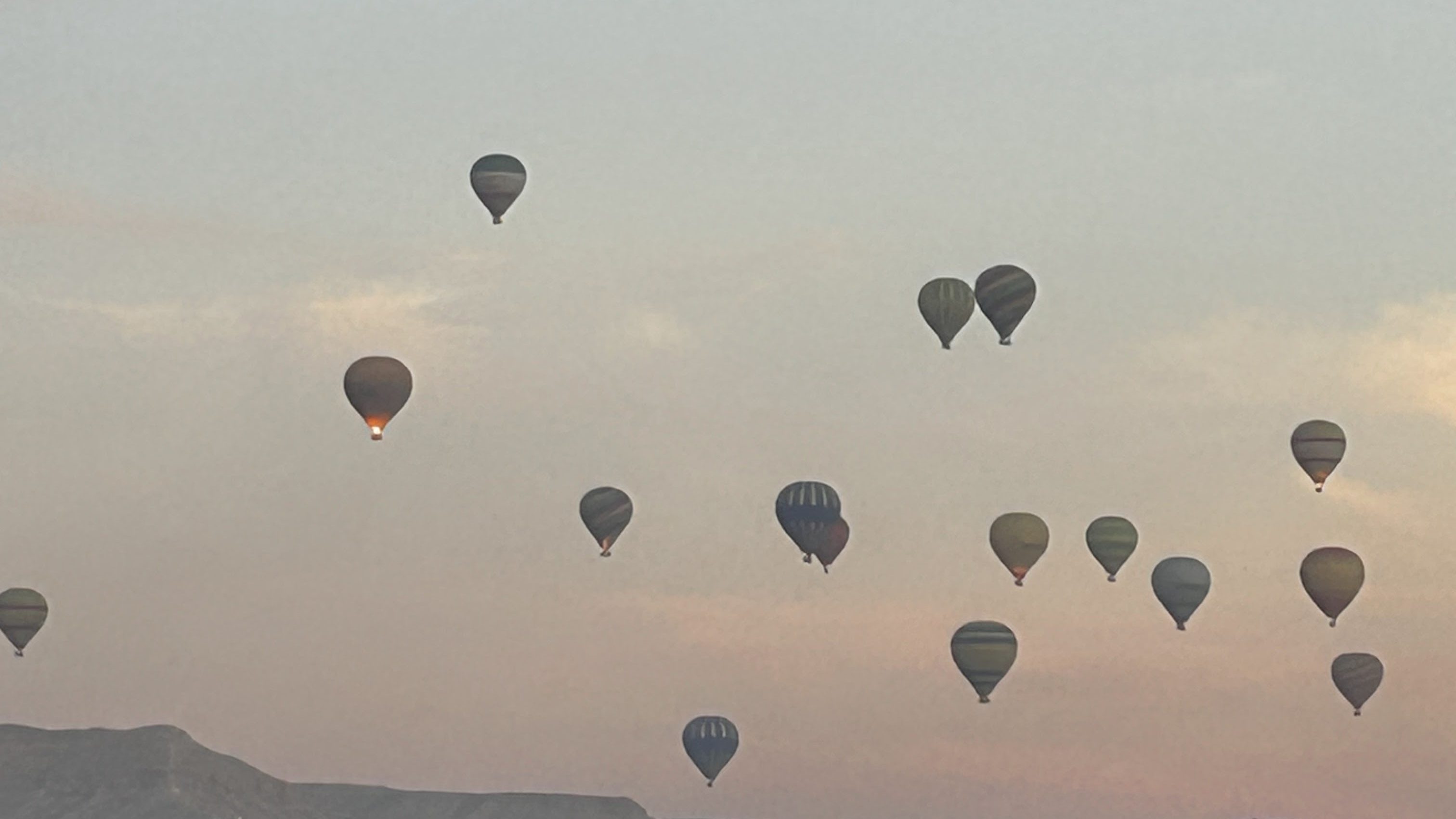
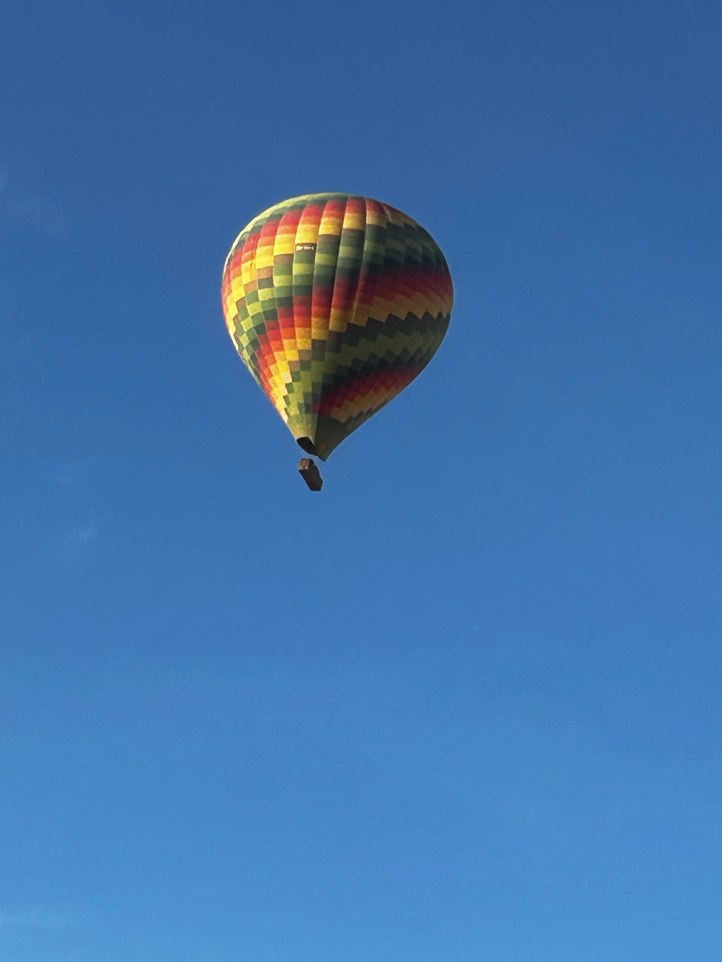
    And I’m glad I did because it turned out to be the highlight of our Egyptian holiday. Balloon rides begin near the Valley of the Kings and Queens and it takes about an hour to get there. So we opted for a later balloon flight because we didn’t want to wake up at 3.a.m to make the sunrise fight.

    In semi-darkness we went gingerly down the gangway and got into our van for a short ride to the boat that took us to the Eastern bank of the river Nile.

    Once there, I began having second thoughts since getting in to the balloon basket seemed quite complicated. Where was the gate? I thought to myself as I spotted two notches on the side of each section, which we had to use to clamber in. I did manage though and was quite pleased with my agility and ability to overcome the first hurdle.

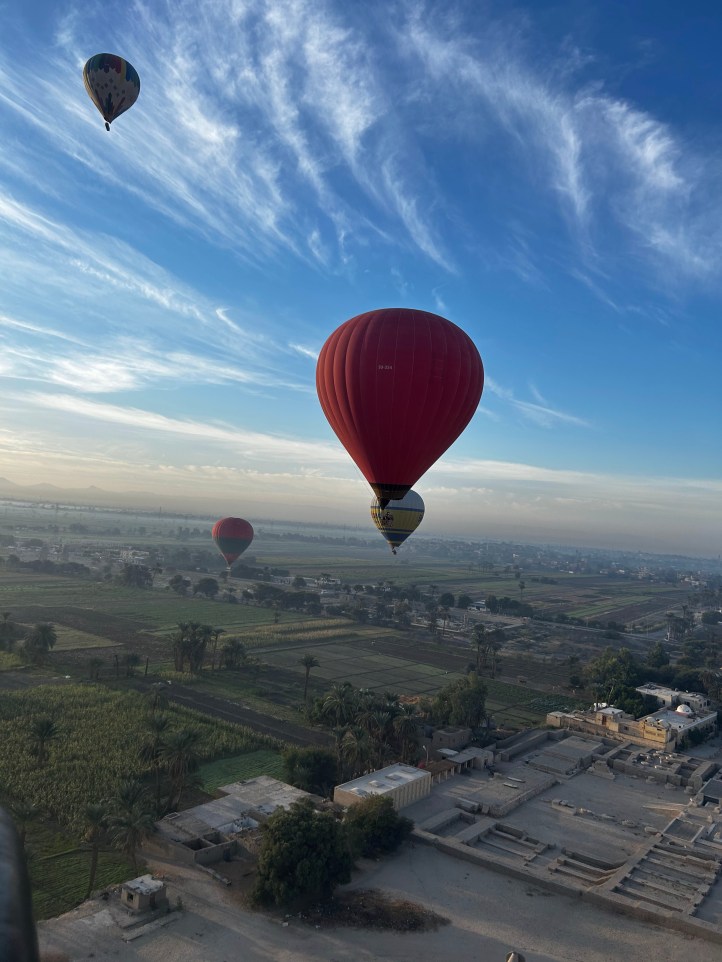
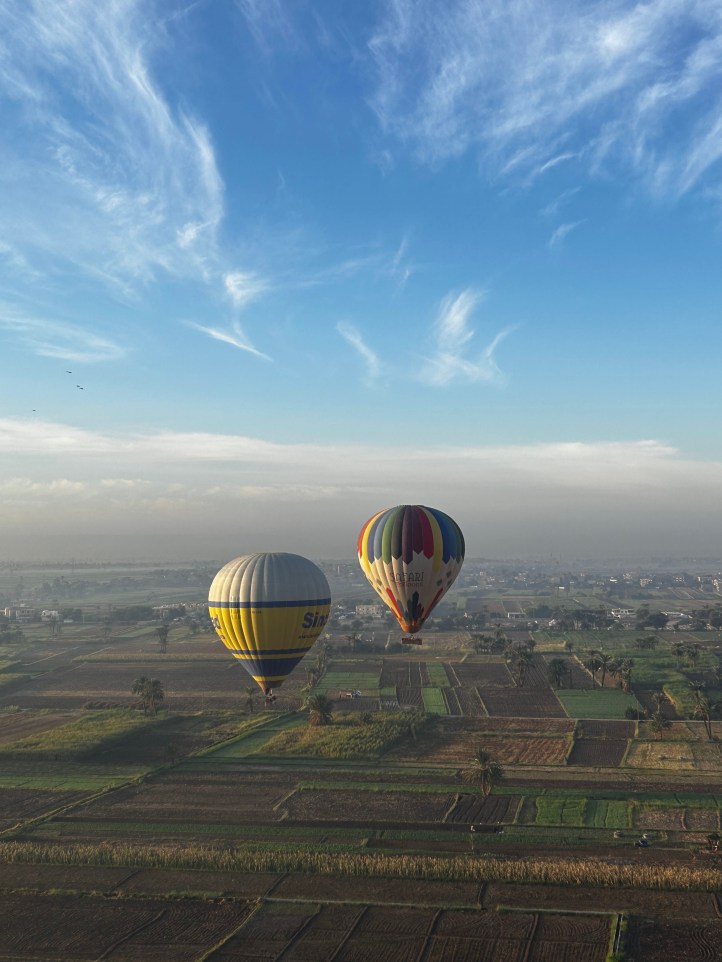
    Now I had to face the butterflies in my tummy that would accompany the ascent. But wait! What happened? By the time I finished listening to the Captain’s welcome address, we had already left mother earth below us.

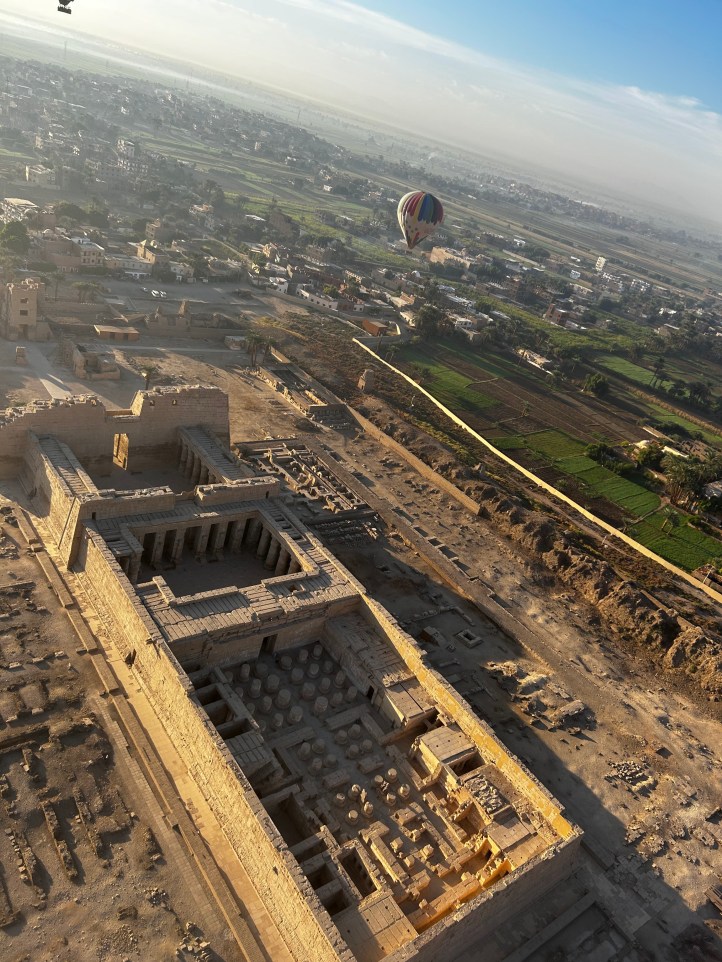
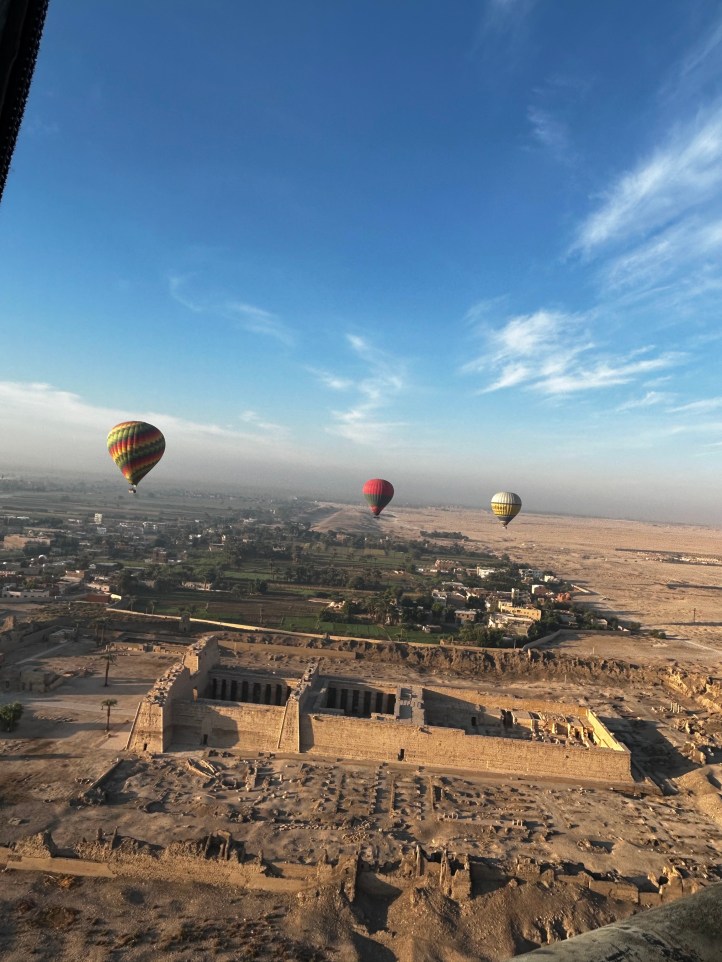
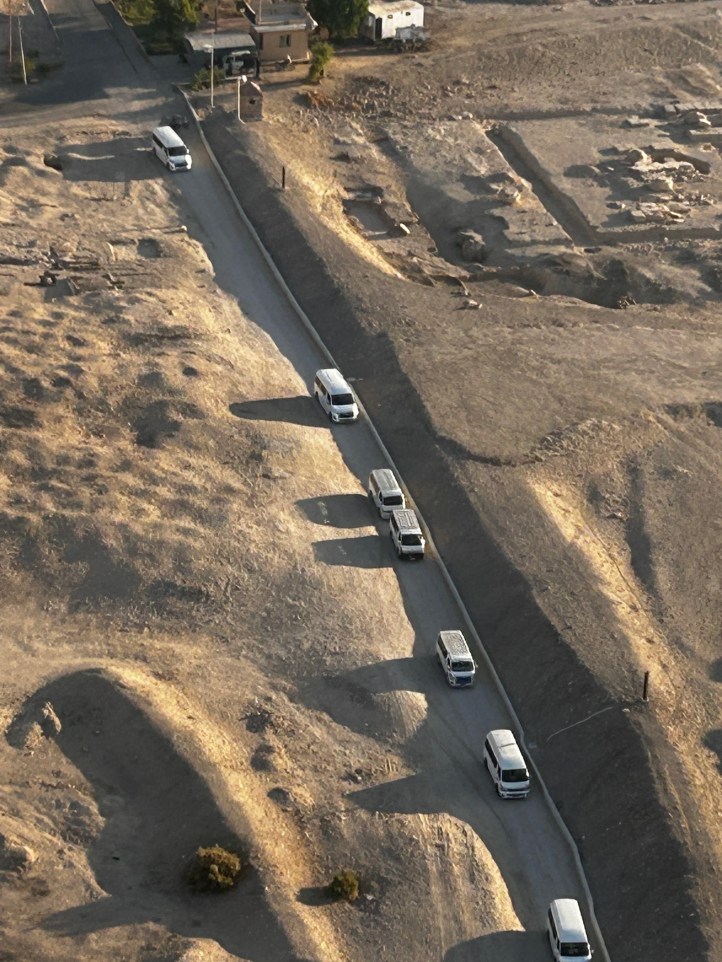
    What a spectacular view it was. And what a wondrous feeling it was to be up in the sky Below us there was a new excavation going on with workers getting an early start to get the numbered pieces in place. It turned out to be a new find of the Mortuary Temple of Amenhotep III.

    Surprisingly, my fear and apprehension just vanished and I actually enjoyed being up in the sky but we had to get down as rides were limited to just two in the day and only for 45 minutes each.

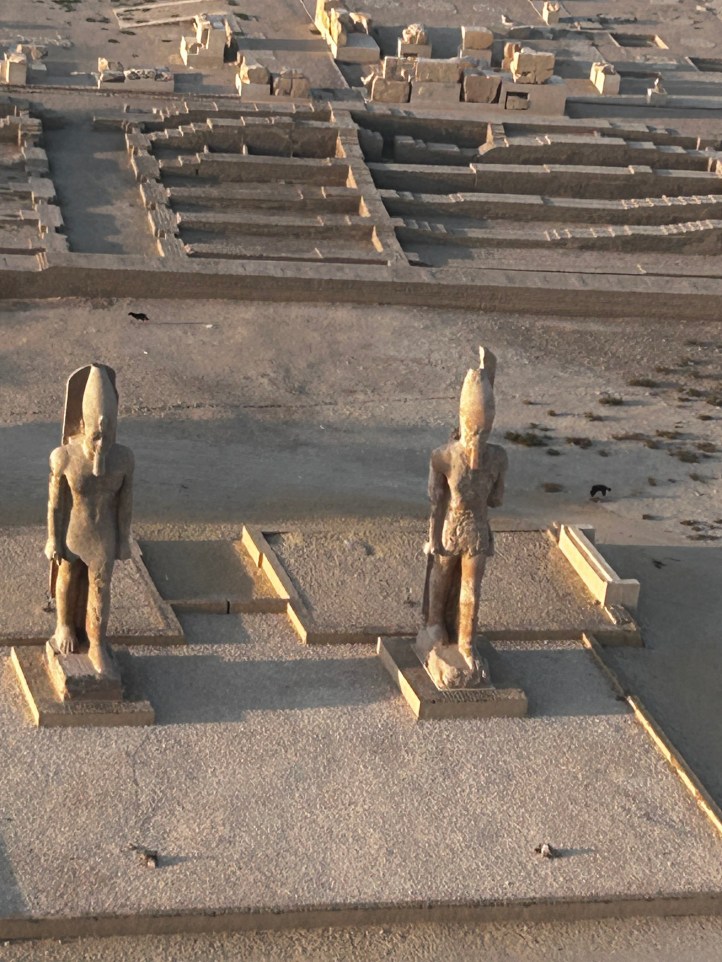
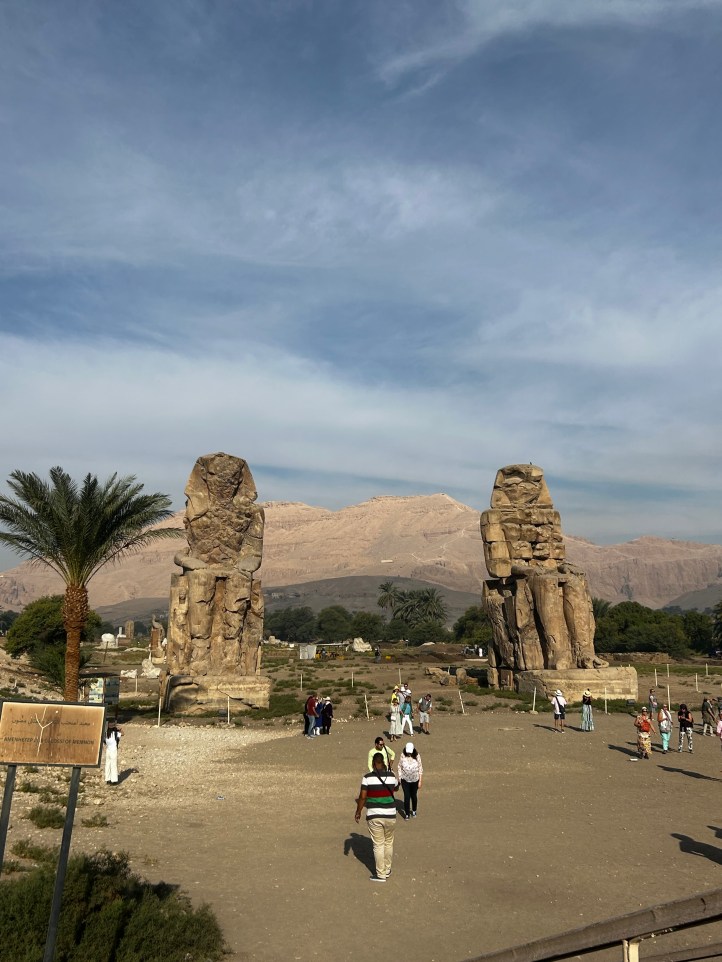
    We met up with Ahmad at the Ali Baba Cafe which turned out to be remarkably nice for a restaurant in the middle of what seemed like nowhere, situated as it was in front of two colossal statues known as the Colossi of Memnon.

    The Colossi of Mnemon

    The Valley of the Kings

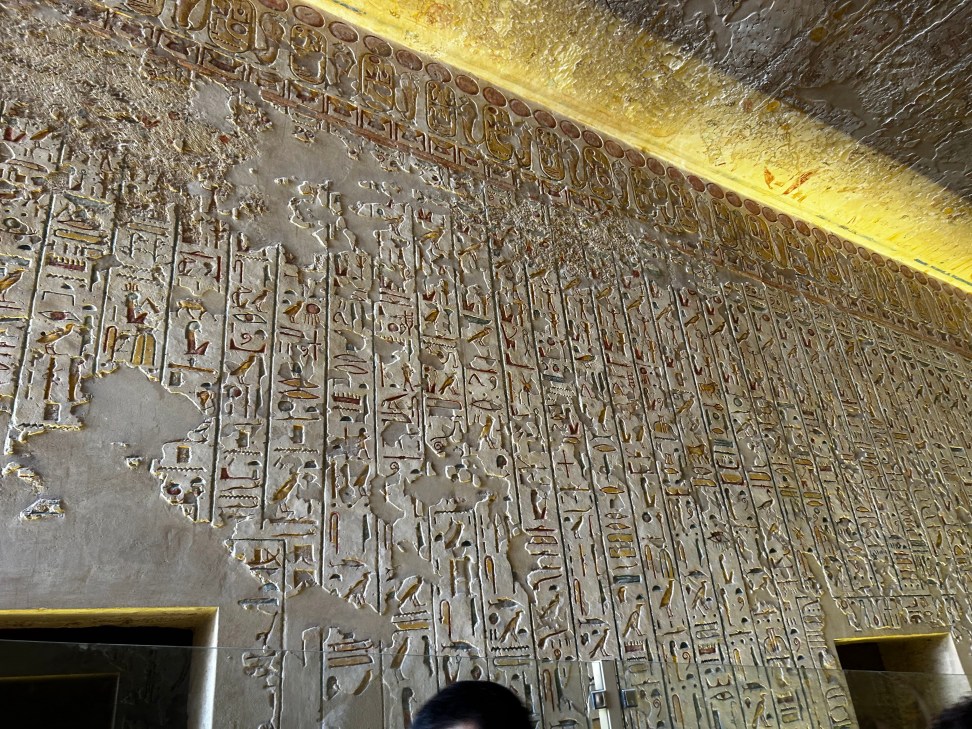
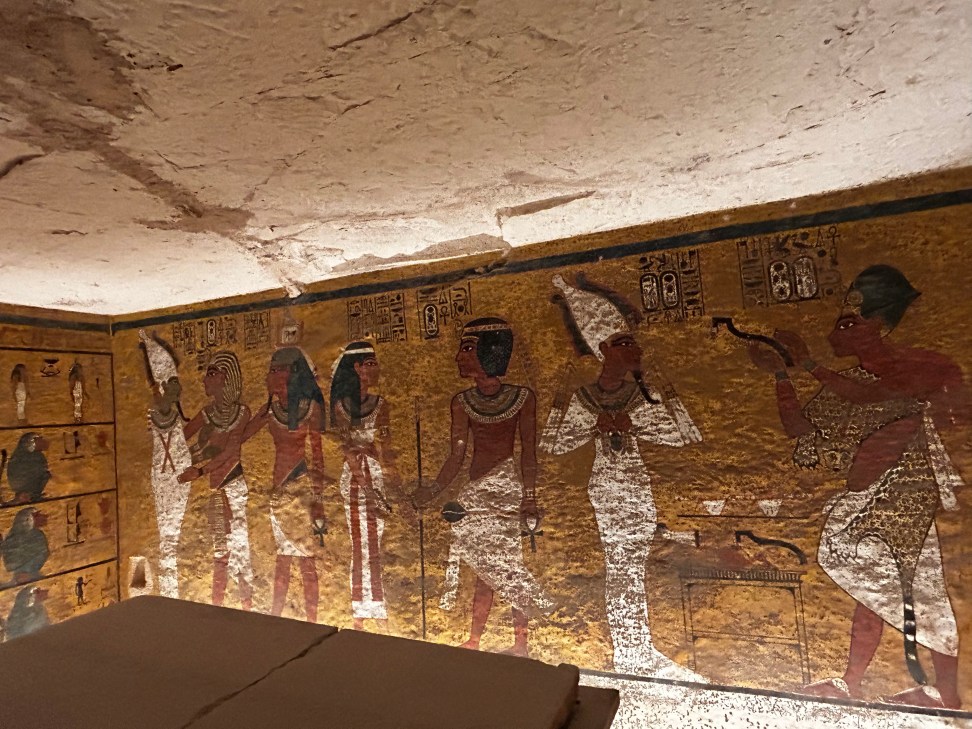
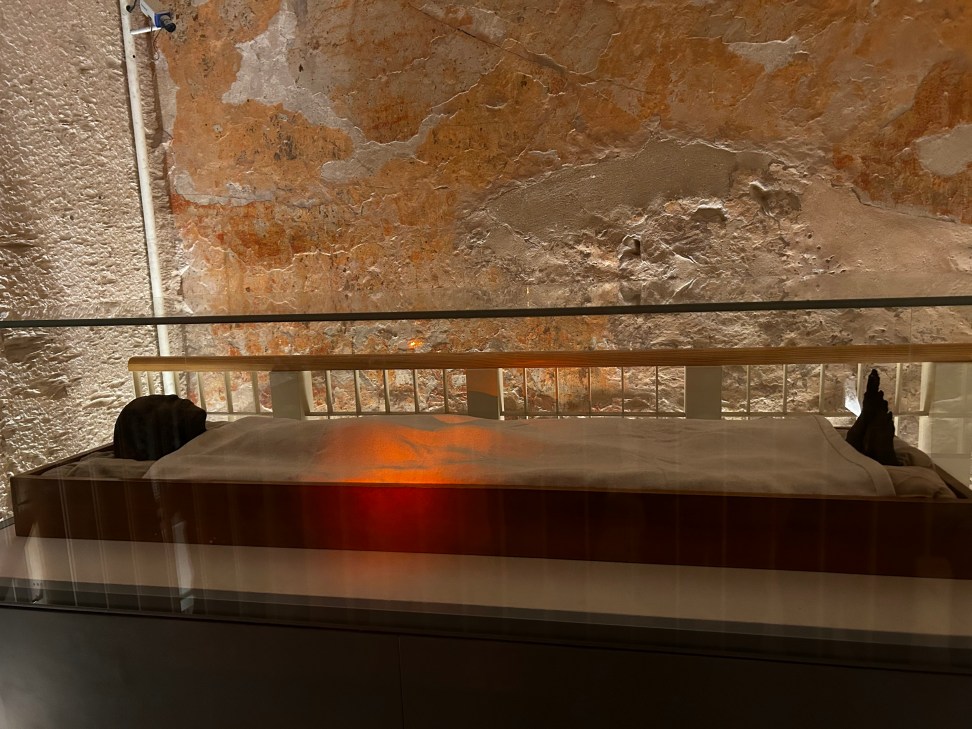
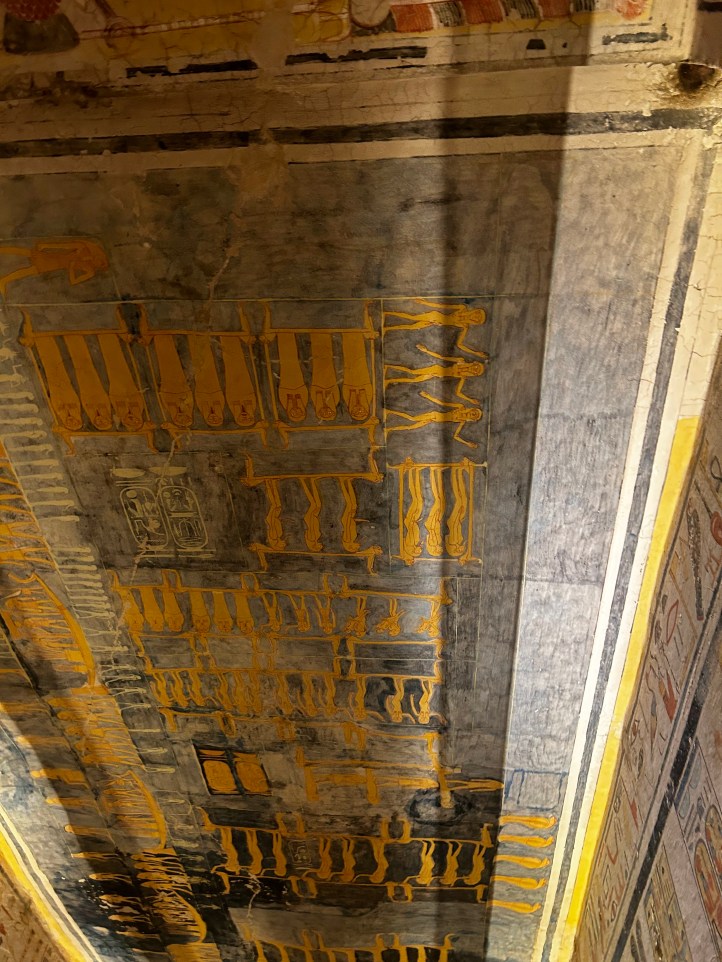
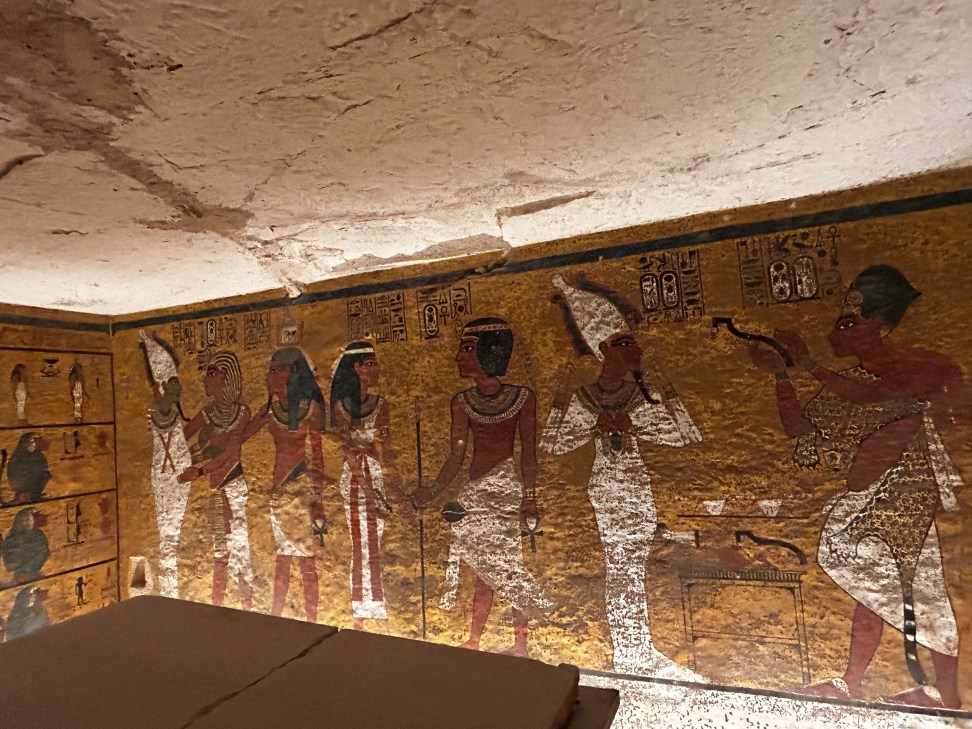
    After a quick breakfast that was packed for us by the cruise ship, we made our way to the Valley of Kings to see the much awaited mummy of King TutAnkhAmun.

    The tomb was one of the tombs which had all the artifacts intact and would have remained so had it not been for accidental discovery of the water carrier during the dig of Howard Carter an English archeologist. It seems that this young lad was digging a hole to balance the pitcher of water and came upon the first step of what turned out to be the staircase to the intact chamber ofTutAnkhAmun’s tomb!

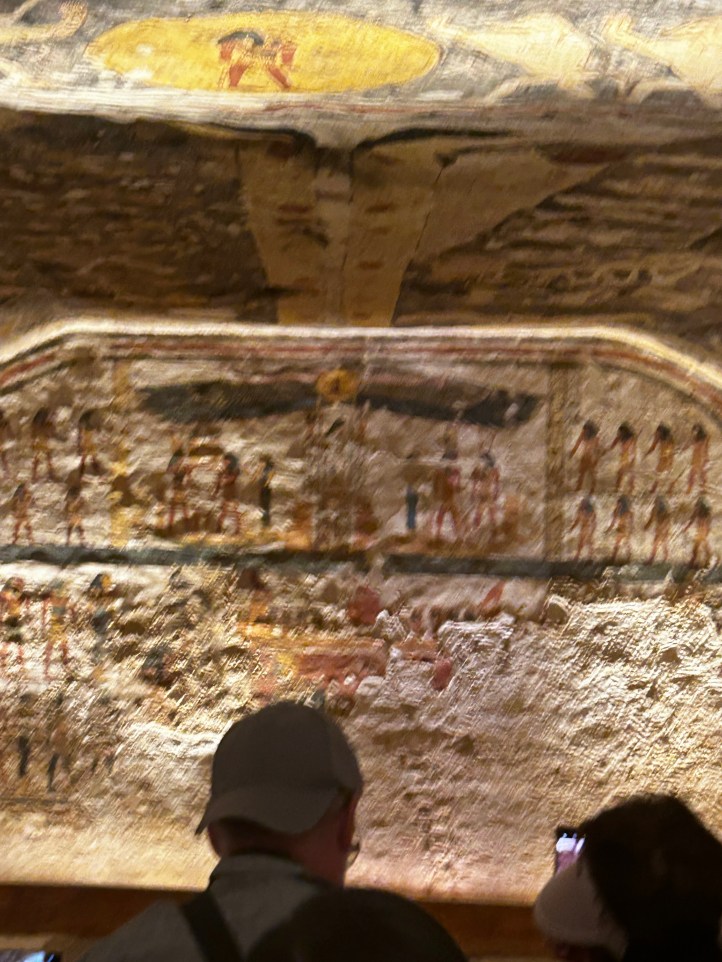
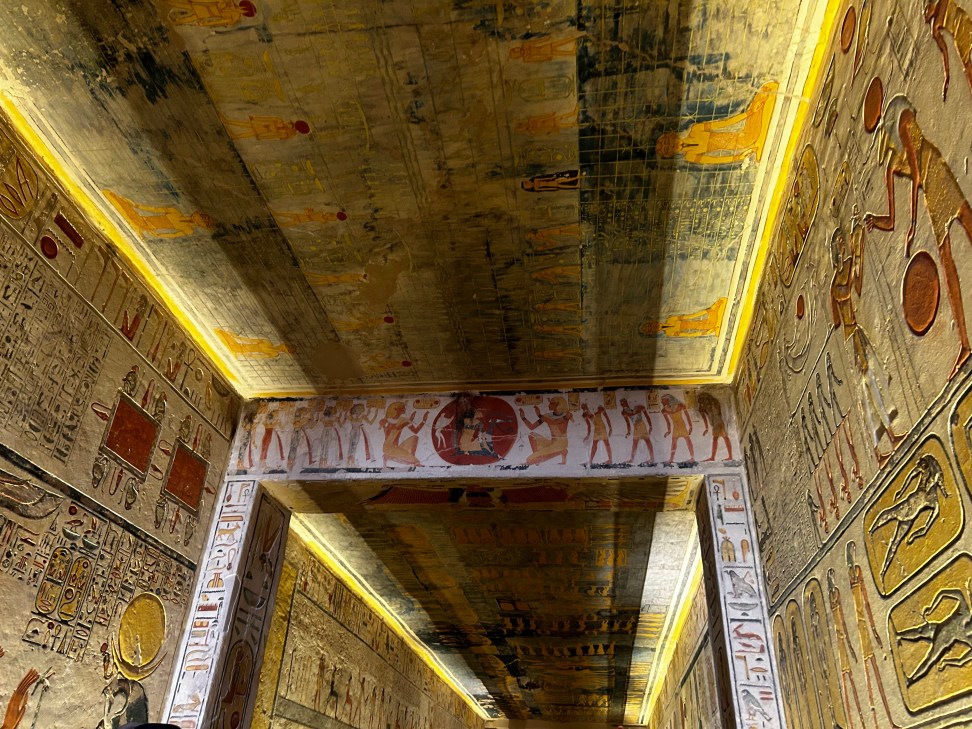
    This discovery led to the discovery of several other tombs and is yet another UNESCO World Heritage site. It is beautifully maintained with a museum in the complex and has golf carts to ferry passengers and well maintained pathways. Inside the tombs, the walkways were well made and passages well lit.

    The Valley of Kings has around 52 tombs and it is quite difficult to see all of them at one go. So we just saw two tombs before going on to see the Valley of Queens on the other side.

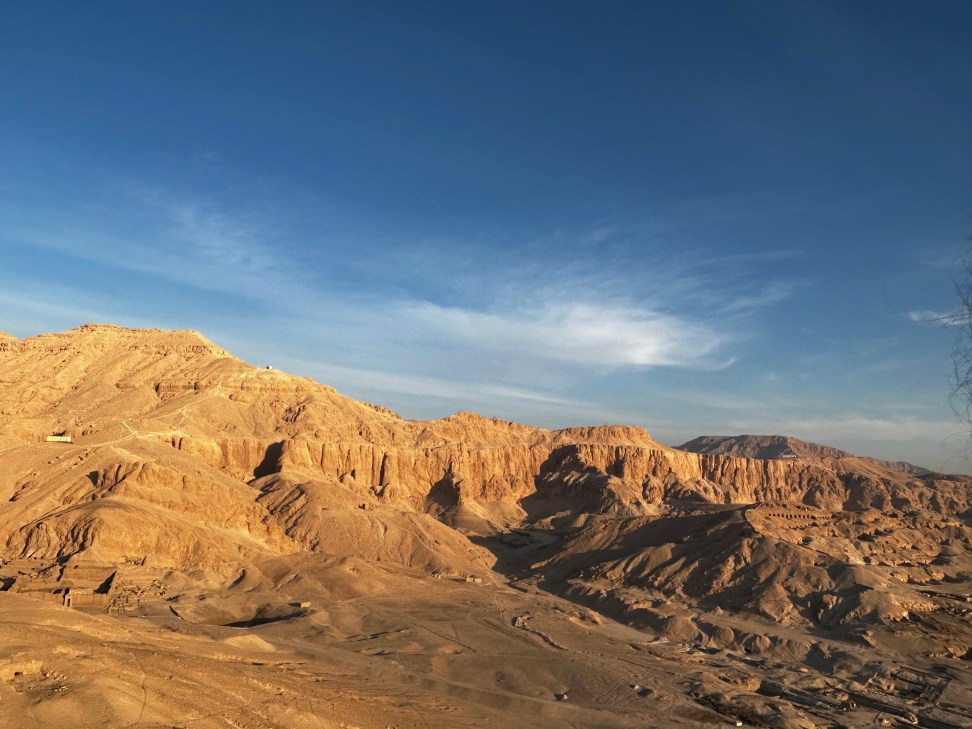
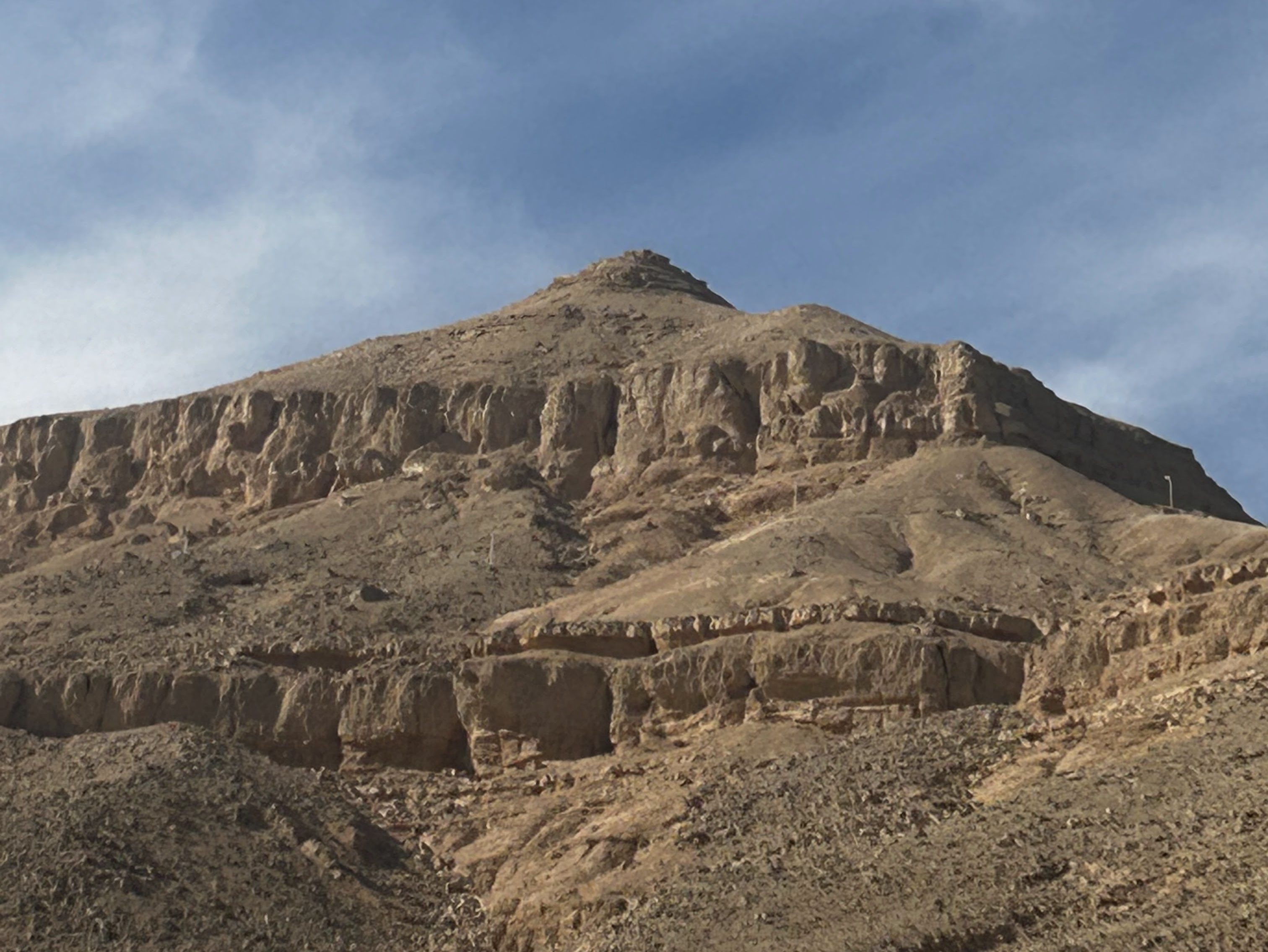
    The guide pointed out to the mountains in which the tombs were made. They were natural pyramids!

    Did the later Pharaohs become lazy too lazy to construct Pyramids? Or were they just too practical and made them in mountains to prevent tomb raiders from destroying their after life homes?

    The Valley of the Queens

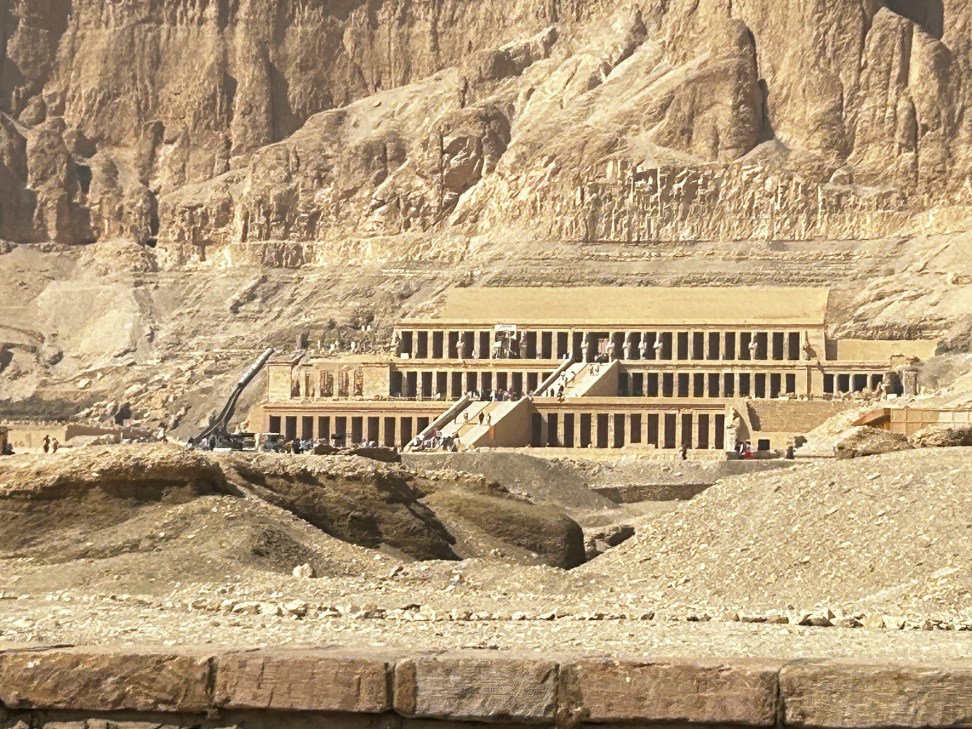
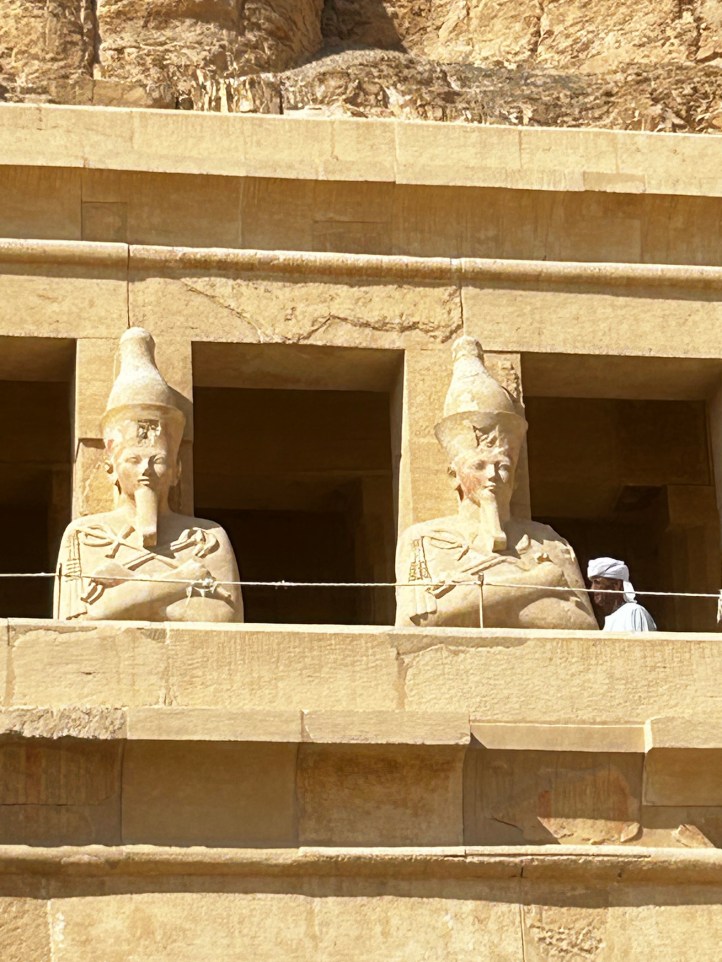
    There are many nobles and queens buried in the Valley of Queens but we were more interested in the mortuary temple of Egypt’s famous female Pharaoh. Hatshespsut . She was the only Royal descendent of King Thutmose I so she married her half brother Thutmose II who was born of a secondary queen. Thutmose II died leaving a son born of another secondary wife so Hatshepsut ruled on behalf of her stepson Thutmose III.  Hatshespsut was a powerful ruler and was depicted as a male with the false beard in all her images but traces of her rule were almost wiped out by her stepson Thutmose III who immediately over threw her once he came of age.

    The funerary temple was another grand two storied structure with traces of painted ceilings and walls.

    The Karnak Temple

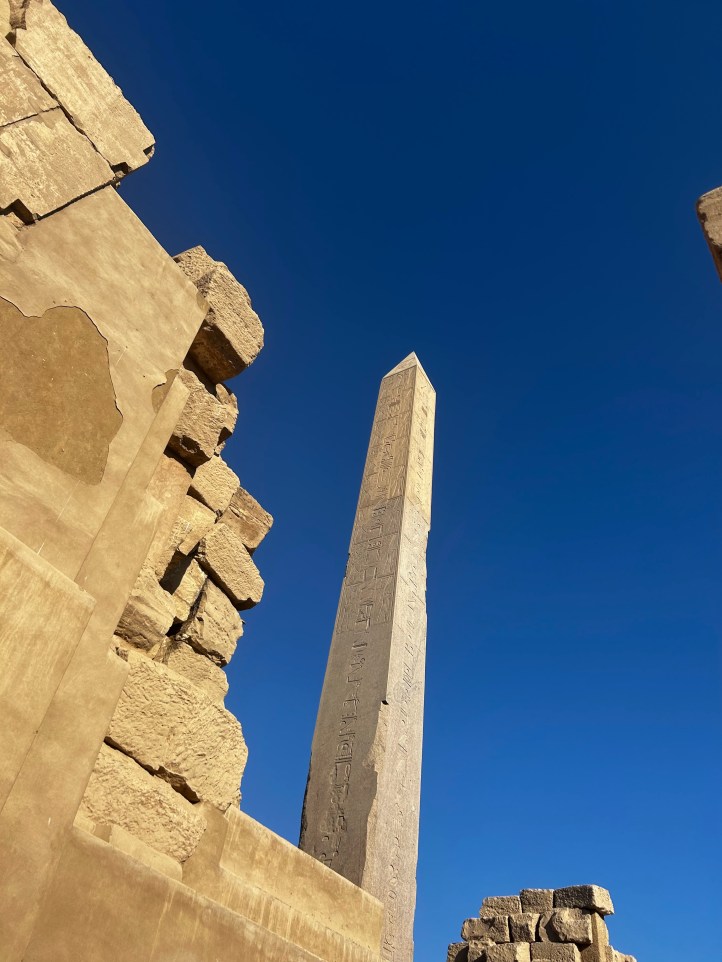
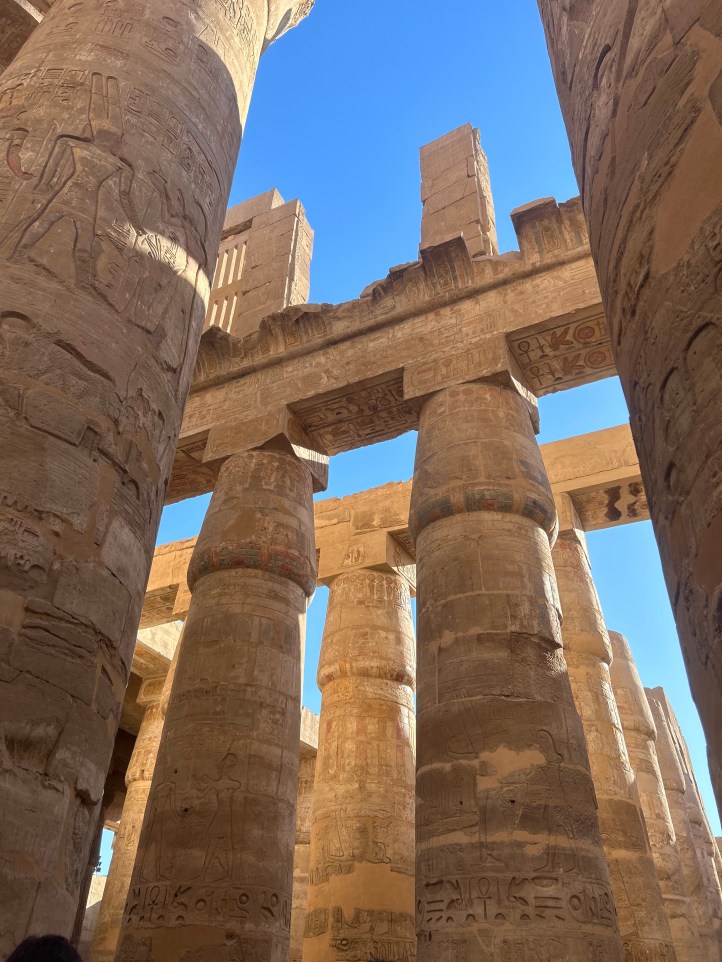
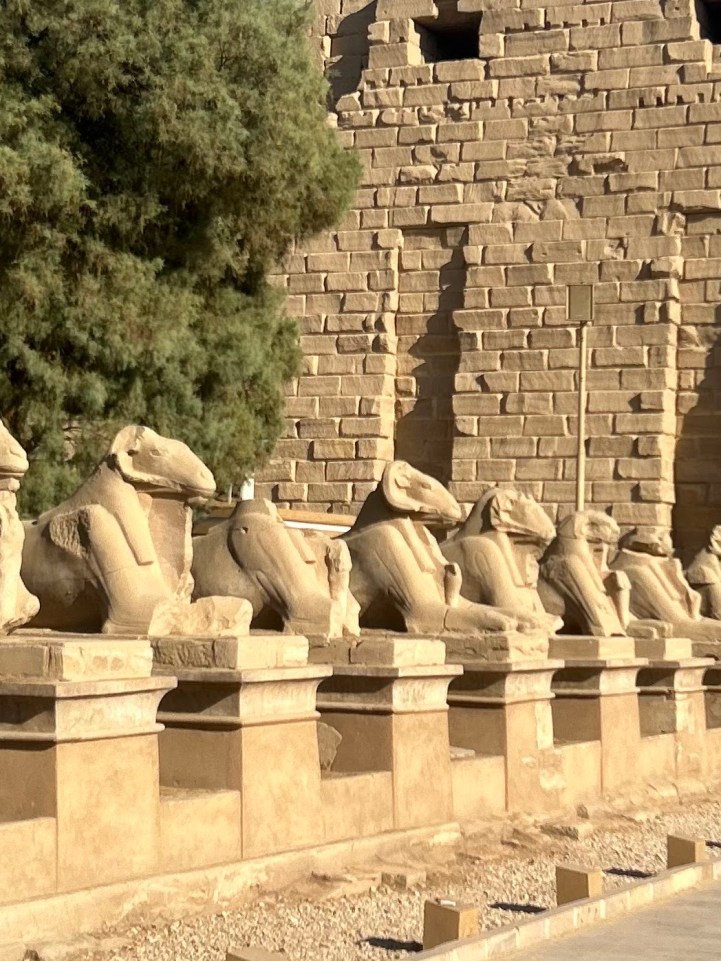
    The true grandeur of ancient Egypt is only apparent when you see the temple of Karnak with its tall columns, obelisks and the grand avenue linking it to the Temple of Luxor.

    These two temples must have indeed been imposing and majestic in their hey day. Unfortunately, it was not only high noon and too hot to really wander around the temple complex, but we also had to make our way to the airport to catch the flight back to Cairo. So we had to make another rushed visit through this temple which is still being reconstructed.

    No flight to Cairo

    Finally, after a quick lunch at McDonald’s overlooking Luxor Temple, we made our way to Luxor International Airport.

    Ahmad was in a rush and didn’t even look back once he dropped us off at the airport . Of course, this is normal at normal times but we found ourselves unable to even enter the airport as the guard told us that our flight was cancelled! With great difficulty we contacted our Egyptian tour operator and managed to convince him to let us sit inside.

    Our original 1.30 flight would now be taking off at 7! This put paid to our plans of seeing the Son-et-Lumiere show at Giza. It also put paid to our plans of having a grand Egyptian meal .
    By the time we reached our hotel all catering service was closed so we asked Tifa ( terribly late again this time) to arrange for some Shawarma. I have to admit this was the first time ever I’d eaten a Shawarma and was pretty much hooked.

    Too tired to think, we collapsed into bed hoping that there wouldn’t be any hiccups the next day.

  • Passing through the Locks

    Passing through the Locks

    As the crow flies , the distance between Aswan and Luxor is 181 km but we were on a boat and depended on various factors, chief among them being the locks at Esna. We were scheduled to dock at Luxor around noon but there was heavy traffic at the locks and we only got our slot by around 1 – 2.

    While the boys played pool, the rest of us spent the morning on deck sipping wine and munching on some munchies we had got from home. Carrying nibbles is very important because we didn’t find any shops close to our hotel. Nor did the ship have any stuff on board. Ms Papaya tried sunbathing.

    A strange shopping experience

    Have you ever had your goods tossed at you from a distance of about 25 feet below and then tossed the money back?

    Well this unique shopping experience can only happen at Esna while you are waiting your turn to go through the lock. As the cruise boats are line up on one side of the river, tiny row boats with one or two men come paddling alongside with bundles of cotton goods – table cloths, caftans, shirts which they fling up to the upper deck of your ship. Suddenly you may find something flying past you and when you pick it up it could be a shirt or a skirt. If you choose to keep it, you can ask the deckhand at the railing to bargain for you or toss it back and ask for another. This tossing back and forth goes on till both sides are satisfied and the deckhand finally seals the deal by throwing the money to the merchants below.

    A village perched along the hillside as we sailed to Luxor

    The locks are essential to maintain the water levels for agriculture that is prevalent along the banks of this ancient river. The lock is as ancient as the Ptolemaic era whence it was built and has been modified and updated over the time. Old Esna lock was built in 1908 during the reign of Khedive Abbas Hilmi II ( The the great-great grandson of Muhamad Ali Pasha) . Then, it was renovated and reopened on January 1st, 1996.

    Esna a city on the West bank of the Nile is definitely worth a visit . Unfortunately, we had too few days so we had to be satisfied with just passing through the locks.

    Light show at the temple of Luxor

    So by the time we actually docked it was once again sunset and we had to see the much awaited Luxor temple in darkness. Of course Ahmad told us that we were lucky to see it in the dark as it is quite spectacular all lit up. Besides, he said that all the temples were similar in structure and we could also see it in the day time as we would pass it again. But if we wanted a proper tour of this grand ancient Temple, it was now or never.

    So, I joined in with the rest of the ship who got off to see the Temple.

    Ahmad explained to us that that this temple that was built in the 14th Century BC and though it was a major temple made in honour of the god Amun Ra, it somehow lost its importance and lay abandoned and buried in sand for centuries till it was discovered by a French Archeologist Gaston Maspero in 1884.

    AHmad told us that no one had the faintest idea of anything so grand existing below the city and locals often used bits of stone that were from the ruins in the construction of their own homes. He claims that his own grandfather had used some stones while building his house.

    This seemed quite logical because the temple is actually in the middle of the town square and the Abu Haggag Mosque which is still in use has a doorway half way up proving that most of the temple was buried under sand till it was completely excavated.

    The Abu Haggag mosque with the original doorway on the left is halfway up the wall showing that the mosque was built on top of the Temple that was buried in the sand.

    And sure enough the guide was right. The next day on our way to the Balloon ride, we passed the temple again. As a matter of fact, we had our lunch later that day at a McDonalds actually overlooking the Temple.

    But even though it was really dark and at times we had to shine our phone torches to see our way, it was a wonderful , magical experience walking down the Avenue of Sphinxes. This UNESCO designated Heritage site is also marked as the largest outdoor museum in the world.

    Undoubtedly, the night light made for splendid photography like the panoramic view of the Temple taken by none other than Ms. Papaya. It is beautiful isn’t it?

    We returned to the ship for a good night’s rest, looking forward to our balloon ride the next day.

    Ciao

  • On the way to Luxor

    According to our original itinerary, we were supposed to see the Unfinished Obelisk, drive down to the High Dam and visit the market on our first day at Aswan. However, we realised soon enough that ‘the best laid plans of mice and men’ is more the rule rather than the exception when it comes to travel.

    So after the first day, I decided to really go with the flow and not expect too much.

    Once again, after breakfast, we were scheduled to see the Botanical Garden, and the Nubian Village, and have a dip in the Nile. The other option was to visit Abu Simbel. Now this was a good four-hour drive to and fro and also required an early start. Since the shower area was really tiny even for tiny me, I didn’t want to get stressed right from the start of a new day. Besides, I already had an idea of what the temple would be like – grander and bigger than the ones we were to see. Not meaning to sound jaded, but after the temple at Philae, I was kind of bored. After oohing and aahing over the magnitude and the skill and the improbability of mere mortals working on such structures, the temples were more or less similar – pillars, carvings, murals and a lot of history.

    What really struck me was the unnatural preoccupation with death and life after death.

    “There’s the The Tombs of the Nobles located in Aswan are also called the Tombs of Qubat El ‎Hawa,’ pointed Ahmed in the direction of a mountainside with holes in them.

    The banisterless steps leading up to them and the sheer incline completely deterred me from making this trek and even though the wall paintings are supposed to be spectacular, I would rather give this a miss.

         The Tombs of the Nobles or Tombs of Qubat El ‎Hawa

    Sailing down the river Nile

    We stopped at Elephantine Island to see the Botanical Gardens where we saw many wonderful specimens of plant life that were brought here from all over the world. My main interest in this garden was largely because this garden was the brainchild of Field Marshal Lord Kitchener during his Governorhip of Egypt. History buffs would know that before Egypt, Lord Kitchener was commander in chief of the British Indian Army.

    As Botanical Gardens go, this is small and not very impressive, and quite frankly worth a miss; so after a quick walk-through, we went on ahead.

    Suddenly; Ahmed called out, “Pirates!” as two urchins paddling ferociously on surfboards came alongside and began to sing “waka, waka”. They looked so cute and full of spunk and of course, foolishly , we walked into their trap and parted with a few Egyptian pounds each before Anna Shetty pointed out that this was just another ploy at begging.

    However, it was peaceful to sail down the river, passing the tomb and property of the 48th Aga Khan who wintered in Aswan. He used to suffer from the most horrendous body aches and apparently enjoyed the winter sun while he took treatment from the Nubian doctors who had herbal remedies for arthritis.

    Sailing on a small boat is different from being on the big ship. The waters were clear and we passed through tiny islands covered with grass and bushes. It looked idyllic – fishermen catching fish, some wading birds sitting on the rocks. We even passed a rock where all the pigeons were surprisingly brown! Apparently these rock pigeons are common all over Egypt and can be seen in paintings of the Ancient Egyptians too!

    The White house in the foreground and the Mausoleum of Aga Khan III in the background

    We also took a small break at a spot where the Little People dipped their toes in the water. Wow Dinga managed to splash around a bit, emboldened by the fact that his dad was in the water to look out for him, but Little Po was scared of the great unknown. Perhaps Ms. Papaya would have joined in but there was no place for her to change her clothes. So the rest of us stayed on board, watching them, and the other people ashore who were getting ready for their camel ride into the desert.

    The Wonders of the Nubian Village

    Blue ! A startling, vibrant shade of blue , balanced with white was the first thing that struck me about The Nubian Village . This settlement is purely touristic. The indegenous Numbians who live in the southern part of Egypt were displaced by the rising waters of the Aswan dam and re-settled in the hills nearby. They are a distinct people with racial and ethnic features quite dissimilar to the people we’d seen so far.

    Many of them have opened their homes to tourists and we were treated to a visit to a home at the top of the hill. The lady of the house brought forth a bottle of chilled, refreshing homemade Hibiscus tea that was a treat after the uphill walk in the hot sun. We were then shown the pet crocodile that lazily opened one eye while it rested in its cage. The Little Ones were given a baby croc to touch and feel which they did rather gingerly. The Nubians greatly revere the crocodile and keep them at home to ward off the Evil Eye. According to Ahmad, this is a society where women rule the roost and newly wed couples spend the first few years in the bride’s home till the husband builds his own home for his family.

    The big signboard at the Pharmacy next to the Doctor’s Clinic explained why the Nubian women looked so happy!

    The Nubians maintain their distinct identity and their children are taught Nubian alongside Egyptian Arabic. Ahmad took us to the local school where the Little People got a private lesson from a Nubian school master. They were fascinated with the idea of writing from left to right and recited the numbers from 1-10 with great enthusiasm.

    Learning the alphabet in the village school

    Back to Aswan

    On the way back, Ahmed played some peppy music expecting us to dance…..The Little People reluctant to dance, shied away and were horrified to find uptight me shake a leg!

    We sailed back on a different route and passed several hotels like the Old Cataract. The hotel with this intriguing name was really old and was said to have hosted Winston Churchill. Ahmad even pointed out the large mansion of a famous Egyptian pop star Mohamed Munir.

    And when we got back, the ship set sail for our next stop – Kom Ombu where we were supposed to see the Crocodile Temple as a sunset visit. Once again, it was pitch dark, when we docked at Kom Ombu and I refused to go out in the dark. I was wary of the steps that one had to climb and the uneven surfaces of the floors in the ancient temple. But, having held a baby croc earlier in the day, the Little People were eager to see the Temple and went off for their first night visit to a temple.

    Little Ms Papaya was bold enough to hold a baby crocodile!

    The Little People

    I must say, the Little People were real troopers. They were on a holiday which was completely different from what they had been on before but took to it like a duck to water. What surprised me really was the unflagging enthusiasm of the Little People: they tried new and unfamiliar food, they followed a schedule that was completely fluid, and managed to keep out of our hair with their own activities. The ship had nothing really organised for children since this wasn’t a cruise ship for ‘families’, but they managed to find a tatty Pool table and rushed for a quick game at the slightest opportunity.

    So all in all the boat trip was proving to be quite a lot of fun for all.

    Ciao

Design a site like this with WordPress.com
Get started