Considering that we live in Mumbai which is 1091.521 km from Munnar (as the crow flies), it would seem impossible to do a day trip to Munnar and back. But believe it or not, we actually did!
You may wonder why we chose to do so.
Actually, we had planned a relaxed, leisurely three-day break in the lush green hill station of Munnar, in God’s Own Country or Kerala.
Ever since Anna Shetty came back from a short vacation to Munnar, raving about the lovely stay she’d had at the High Range Club, we thought it would be a great destination for a three-day break.
So the day after Diwali, we got up bright and early to catch the morning flight to Kochi, the nearest airport, as there is no way you can directly go to Munnar except by road.

The High Range Club, an original colonial gem that served as a home away from home for the Planters who lived in the Kannan Devan Hills
First off, the flight from Mumbai to Kochi was a morning flight which meant that we had to be at the airport around 8.30 am. Working backwards, we woke up at 6 so that we could leave by 7.15. This was my first attempt at DigiYatra, and I was thrilled with the seamless check-in at Mumbai’s Terminal 1. Luckily, the flight left on time and reached a few minutes ahead of schedule. Kochi’s new airport was swanky as was the taxi waiting for us outside. and the taxi waiting for us outside. The driver was polite, and as we sat in the car, we felt that we were off to a good start.
Well, the road to Munnar is being repaired, but the roadwork and ensuing traffic was well managed. We had asked the driver to find us a place for a quick lunch and he stopped at a wayside eatery Al Madeena where we had a sumptuous meal of a Kingfish Kerala style fried in a banana leaf. Paired with fresh, hot toddy hoppers or appam, we couldn’t have asked for a more auspicious welcome.
As we climbed the long and winding road, we were enthralled by the small towns, thick tropical forest with warning signs of Elephant crossing , gushing waterfalls and busy small towns. The three and half hours with steep, hairpin bends went by quickly enough.


Along the way, as we came closer to Munnar, we spotted several new ‘resorts’ offering adventurous Jeep rides in the jungle, zip lining and sky cycling. We even came across a hot air balloon. Not for us, we thought, we were interested in a quiet relaxed holiday in the environs of the genteel High Range Club, Even though we weren’t planning on any Golf, we had planned a three-day trip with lots of walks, some local sightseeing and meeting up with the Planters, whose club this basically was and chit-chatting with the other residents.
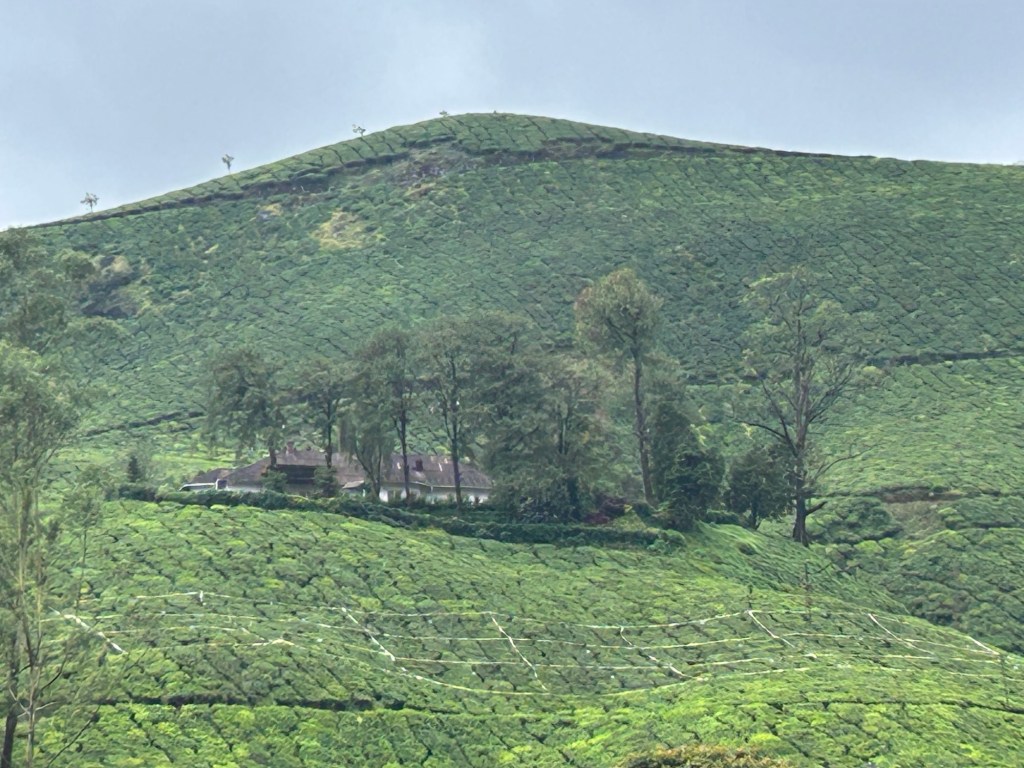
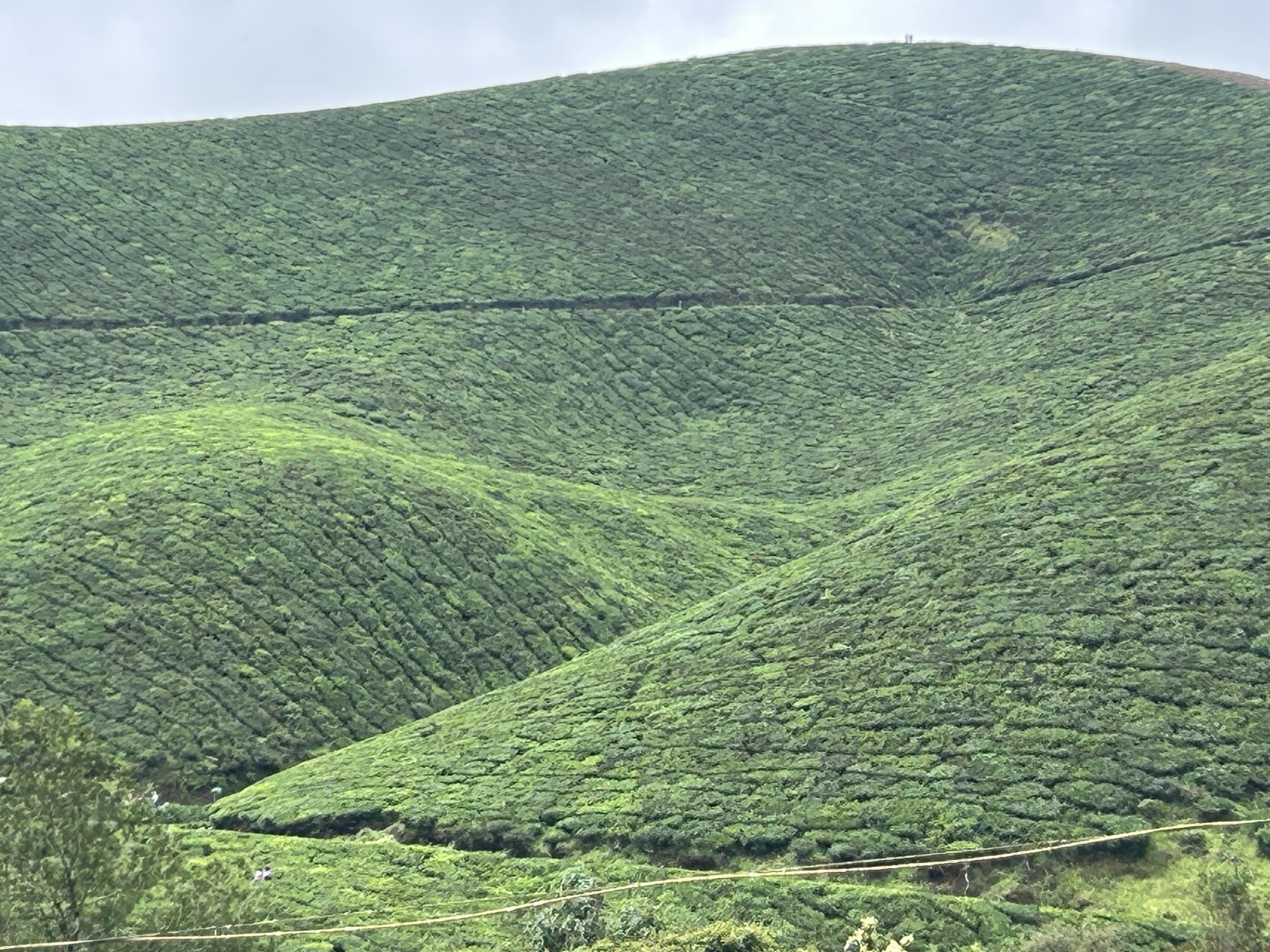
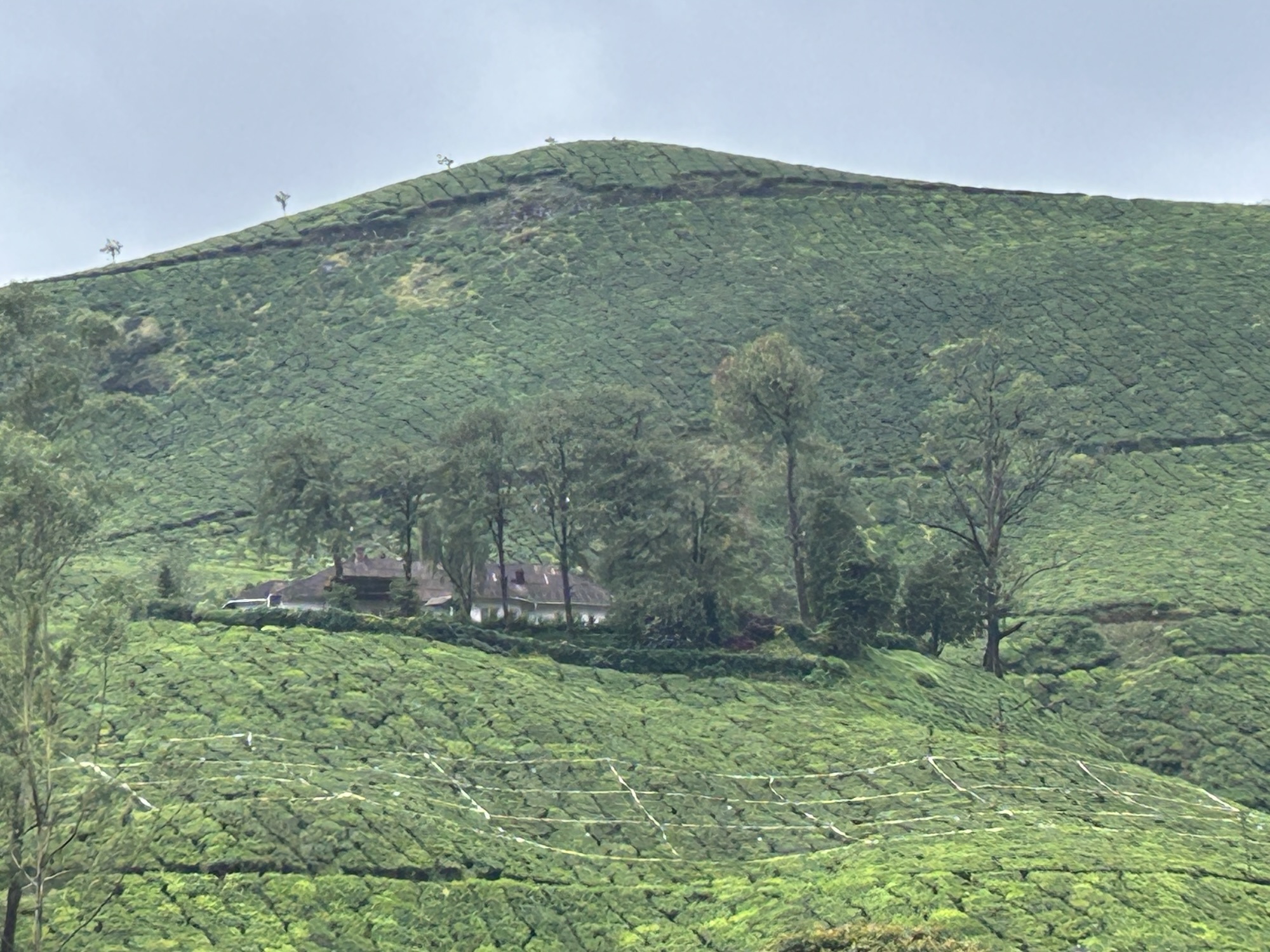
The sky was growing darker, and the hills in the distance were being swallowed up by thick clouds. It looked beautiful: tall eucalyptus trees reaching out for the sky, terraced tea gardens making undulating patterns in the rolling hills.
By the time we reached the club, the drizzle had turned into a veritable downpour, and the last half mile or so was such a bad road that it made Mumbai’s pot holes seem like mere pimples on a bad day.
We entered the Club premises, which looked strangely deserted. And when we got down, we were in for a shock. There was not a soul to be seen. There were no signs of a Reception, an office or even a human being! We sent our driver to check out, and he found a kitchen boy who showed him Reception next door. A bearer came with him and asked us to reload the car with our bags as he took us to the cottages that we were booked in.
Having recently had an experience of a room far from the main building, this set alarm bells ringing.
But we were reassured by the fact that the room was not too far and the slope very gradual. The room itself was large, as was the bathroom. The enclosed verandah looked cosy with a breakfast table and two armchairs. The room was welcoming a huge double bed, a large cupboard, a luggage rack, a dressing table and a coffee table with four comfortable armchairs. It even had a fireplace with the tea and coffee caddies placed on the mantelpiece. Save for the television and electric kettle, and of course the electric lights, it could have well been a room from an earlier time. With its lace curtains on the windows and polished wooden floors, it was the perfect room to spend a month or two.
DISAPPOINTMENT SOON SETS IN
By the time we settled in, it was tea time and we asked for a pot of tea, hot chocolate and some cheese sandwiches. Alas! We soon found that there was no cheese so we had to do with jam sandwiches instead.
We were quite exhausted and wanted to have dinner in the room. But we soon found out that not only was room service not an option, nor was there an a la carte menu to choose from. We had to go to the dining room where all meals were buffet style. And if it was raining, ask for an umbrella.

We were a bit disappointed to see the bare tables.and the deserted dining room. But the big vase of luscious colourful roses cheered us up. Luckily, the serving bowls on the buffet table were full and we were free to help ourselves to a chicken curry, dal, celery soup, parathas, rice, a vegetable dish and some curds. For dessert there was a chocolate cake and a jug of fresh cream. By and by, the other residents wandered in, but there was none of the friendly chatter I had expected to experience.
While Prima Donna and I enjoyed the meal (I particularly enjoyed the fiery hot pepper water or rasam) had enough to eat, Ms Papaya went hungry as the food was too spicy for her palate. We walked home in the gentle drizzle and quickly got into bed hoping that the next day would be brighter and better.
DAY 2 :
We got up refreshed but the sky was still overcast.
We had a quick bath because the water was cold and brownish. And the newly refurbished bathroom lacked a clothes stand and towel hooks to use while we bathed.
We had checked out the weather forecast before breakfast and realised that the rain wasn’t going to let up at all. Perhaps it would make more sense to cut short our trip and go to Kochi instead.
Luckily, our local driver cum guide turned out to be a real gem and he took us around the sights, but by lunch time, we had made up our minds to go back home as Kochi didn’t promise to be any drier.
So after a quick lunch of toast and tea ( the only thing available at the club since we had opted out of lunch for the day), we changed our tickets to come back to Mumbai after just a day in Munnar.
That is how we made a day trip to Munnar!
Ciao

THE LAST WORD


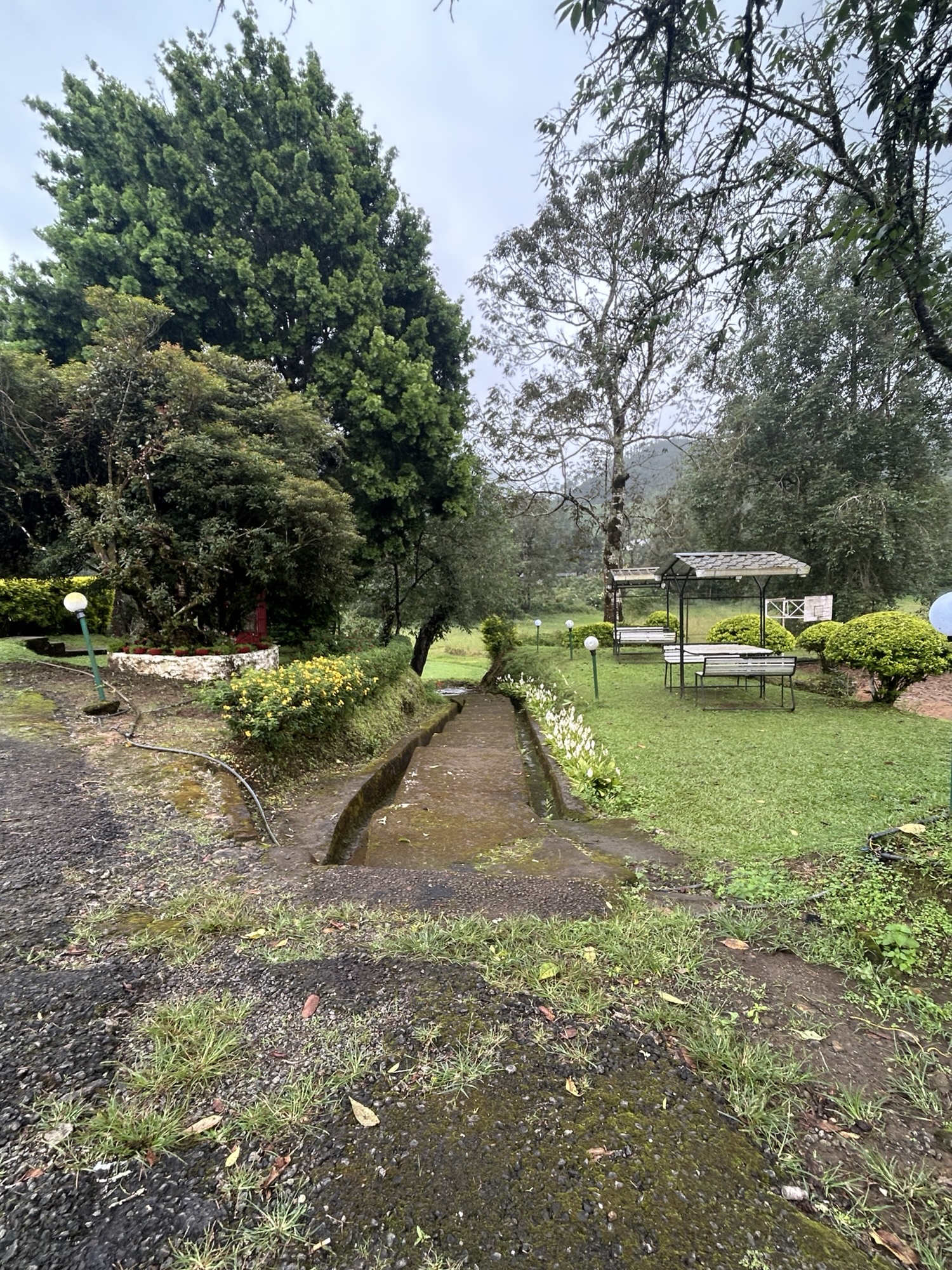


I wouldn’t say all is really lost. With its enviable location up in the hills, far from the madding crowd, The Club definitely has an old-world charm which no modern resort can ever match. With better housekeeping and management, a more extensive menu and obviously better weather, this would have been an ideal three-day break